








































Government Opens Fast-Track Grid Access for AI Data Centres
The U.S. government is accelerating power grid connections for AI data centres to support growing artificial intelligence infrastructure, reduce project delays, and strengthen national technology leadership.
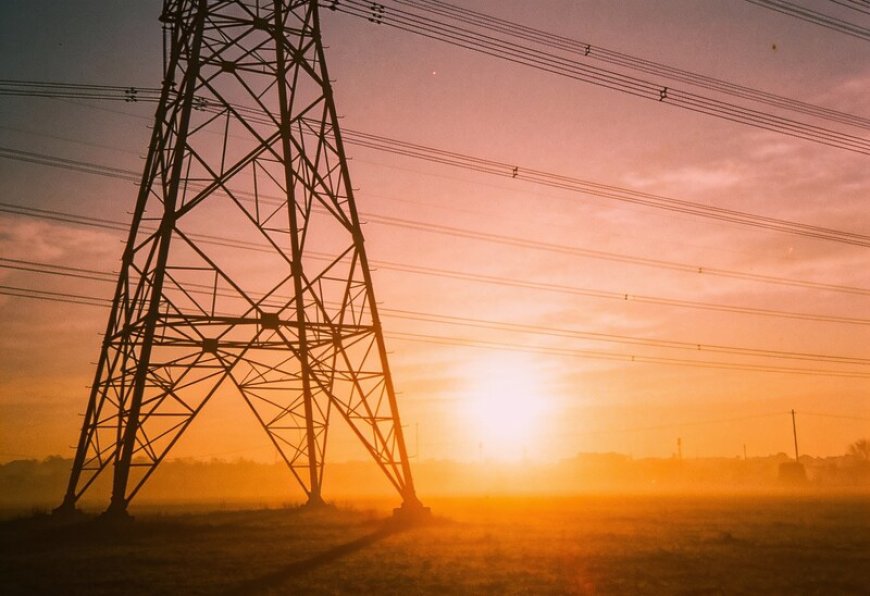
The Federal Energy Regulatory Commission (FERC) on Thursday directed grid operators across the United States to expedite the processing of interconnection requests from AI data centres and other large-scale electricity consumers.
Under the new orders, six of the nation’s major grid operators must demonstrate that data centres can connect to the transmission network in a timely and organised manner. The commission also made clear that the data centre developers themselves will bear the cost of those interconnections. FERC commissioners unanimously approved the directives.
The commission also opened the door for innovation from grid technology companies by instructing grid operators to evaluate the use of “alternative transmission technologies.” Although FERC did not identify any specific solutions, the guidance could include technologies such as solid-state transformers, superconducting transmission lines, or other advanced transmission systems.
Grid operators have now been given 30 days to submit reports detailing how much available electricity generation capacity exists within their systems, if any. In addition, they have 60 days to either justify or revise electricity pricing across their respective regions. FERC also instructed operators to be more accommodating of behind-the-meter power solutions that supply electricity directly to data centres.
Although the commission’s actions create a faster path for data centres to connect to the grid, they do not solve the broader challenge of insufficient power generation capacity.
One reason grid connections have slowed is that new power plants have faced lengthy delays in securing access to the transmission network. By the end of 2023, requests from new power generation projects seeking grid connections had surpassed the total generating capacity of the existing power plant fleet, meaning the queue for connecting to the grid had effectively become larger than the grid’s current capacity.
Against this backdrop, electricity demand from data centres is forecast to nearly triple by 2035. Grid operators, which had experienced almost no meaningful growth in electricity demand over the past two decades, have struggled to adapt to the sudden increase. Some operators, including PJM—the largest regional grid operator in the United States—have faced mounting challenges, with several major utilities even threatening to withdraw from parts of the system.
As a result, technology companies and data centre developers that have been unable to secure timely grid connections in many regions have increasingly turned to behind-the-meter or on-site power generation. While these alternatives can provide faster access to electricity, they are generally more expensive and operationally more complex.
Despite those challenges, enough new projects have connected to push electricity prices significantly higher in several markets. According to Bloomberg, wholesale electricity prices have climbed by as much as 267% compared with levels seen five years ago.
FERC’s decision follows calls from U.S. Secretary of Energy Chris Wright, who stated in October that prolonged delays in connecting data centres to the electrical grid threatened America’s competitiveness in artificial intelligence. Since then, however, public opinion toward AI infrastructure and large data centre developments has become increasingly negative.
Meanwhile, the Trump administration announced on Wednesday that it would provide $765 million to energy developer Invenergy to terminate offshore wind lease projects located near California, Maine, and New York. Invenergy said it plans to redirect those funds toward building natural gas power plants in the Midwest and developing geothermal energy projects across the western United States. One of the cancelled offshore wind developments was expected to generate up to 2.4 gigawatts of electricity at peak capacity, enough to supply power to approximately 1.8 million homes.
With this latest agreement, the Trump administration has now committed roughly $2.6 billion toward cancelling offshore wind development projects across the country.
What's Your Reaction?
 Like
0
Like
0
 Dislike
0
Dislike
0
 Love
0
Love
0
 Funny
0
Funny
0
 Angry
0
Angry
0
 Sad
0
Sad
0
 Wow
0
Wow
0