





























Hello Robot believes home robots are closer than Silicon Valley thinks
Hello Robot is advancing home robotics with assistive technologies designed for everyday living, helping bring practical robots into people’s homes.
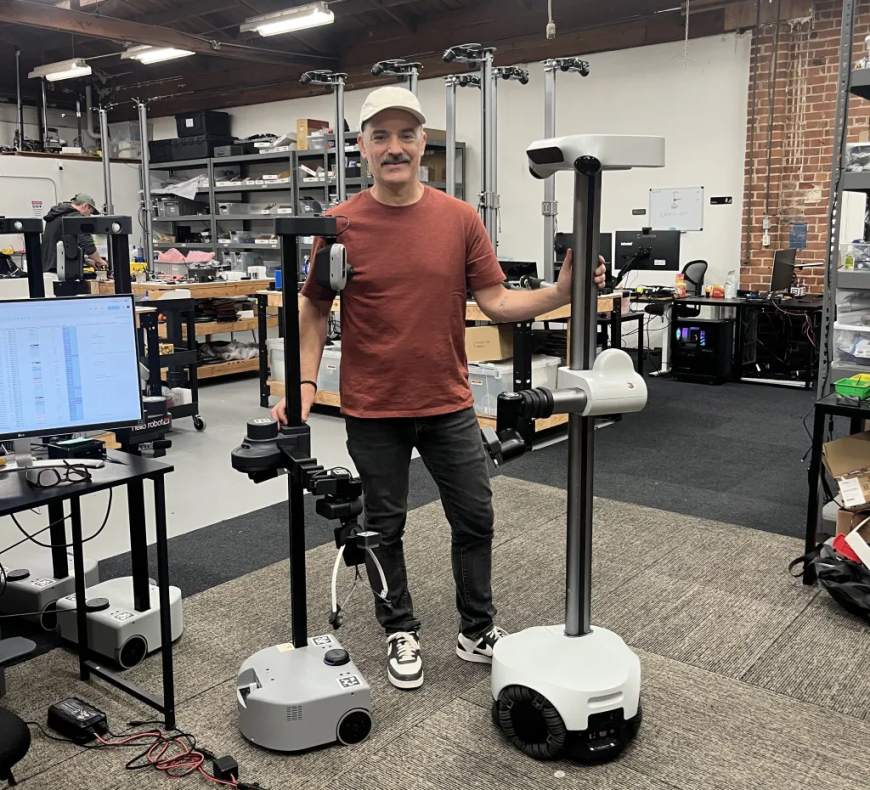
Located in Martinez, California, a city on the northeastern edge of the San Francisco Bay Area, Hello Robot occupies a very different corner of the robotics industry than many of the ambitious startups clustered closer to Silicon Valley. While competitors often promote visions of humanoid machines capable of replacing human labour on a massive scale, Hello Robot is focused on a more immediate goal: creating robots that can help people in real homes today.
Last month, the company introduced Stretch 4, the latest version of its home-assistance robot. While some might loosely describe Stretch as a humanoid robot, its appearance differs significantly from the human-like machines that often dominate robotics headlines. Stretch features a torso-like structure and a sensor-filled head, but instead of arms and hands resembling a person’s, it relies on a telescoping arm equipped with pinch-style grippers and moves on a sturdy omnidirectional wheeled base.
Engineers at the company even joke about theRobot’ss personality. When Stretch’s battery runs low, the lights around its eye-like sensors illuminate, making it appear irritated or angry.
HelloRobott was founded in 2017 by CEO Aaron Edsinger, formerly a robotics director at Google, and CTO Charlie Kemp, a professor at the Georgia Institute of Technology. Unlike many robotics startups that pursue large-scale artificial intelligence systems or broad automation goals, the company has focused on building a robot that can operate safely and effectively in people’s homes.
That practical focus may prove increasingly valuable. While recent advances in AI have dramatically expanded what robots may eventually be capable of doing, the industry still faces a shortage of real-world training data. Simulations continue to improve, but investors are placing greater emphasis on actual deployment and real-world experience.
A recent report from Bullhound Capital highlighted this shift, arguing that companies deploying robots today gain operational knowledge and practical experience that competitors cannot easily replicate. In robotics, accumulated real-world usage can be just as valuable as patents or intellectual property.
A Different Approach to Human-Robot Interaction
One of Hello Robot’s strongest advocates is Keith Platt, a Georgia-based investor who later joined the company’s board. Platt developed quadriplegia in 2021 and retains control of only parts of his shoulders, neck, and head. Seeking technologies that could improve his independence, he began working with Hello Robot in 2024.
The company includes an occupational therapist on its team, helping tailor Stretch’s capabilities for people with mobility challenges.
Using a voice-controlled application on his iPhone, Platt can direct Stretch to navigate independently through his home. Once the robot reaches a desired location, it can assume more direct control to manipulate objects and perform everyday tasks.
One seemingly simple challenge involved preparing and serving a protein shake. A task that normally required assistance from another person became a testing ground for theRobot’ss capabilities.
“When we first started with that activity, it took me independently — no one there — almost two hours,” Platt explained. “But I stayed with it. Eventually, I got it down to just a few minutes to drink the shake and put it back on the counter.”
For Platt, the ability to perform everyday activities independently carries significance far beyond convenience. Actions such as brushing his teeth, putting on reading glasses, or completing small household tasks can have a meaningful impact on both his quality of life and the burden placed on caregivers.
He believes robotic assistants could dramatically improve life for families caring for individuals with mobility limitations by enabling people to remain safely at home for longer periods without requiring constant supervision. Notably, Stretch is intentionally designed with limited autonomy. The company views maintaining human control as an important feature rather than a limitation.
“Being in control is a feature — it’s desired to be embodied in the robot,” engineer Blaine Matulevich explained. Platt also points out a practical advantage over humanoid robots: he does not have to worry about Stretch falling over if something goes wrong.
The Reality of Robotics Hardware
While significant investment continues to pour into companies developing increasingly sophisticated AI systems for robots, the physical hardware remains a major challenge.
Robotic limbs are often heavy, expensive, and power-hungry. Even as components become cheaper, many advanced robots still require constant balancing and consume substantial amounts of energy. Unlike the human body, which combines strength, flexibility, and efficiency, robotic systems often struggle with delicate tasks.
Mistakes can also be costly. When robots malfunction, they can damage property and create safety concerns. One robotics startup, Bot Company, is currently facing legal action from a San Francisco Airbnb property owner who alleges that robots being tested in his apartment damaged furniture, appliances, and bathroom fixtures.
“The state of hardware today is actually abysmal from the perspective of ‘I want to have robots in my parents’ place,’” said Mahi Shafiullah, a postdoctoral researcher working on robotic hands at the University of California, Berkeley.
Shafiullah recalled instances in which industrial robots accidentally destroyed objects they were supposed to handle carefully. During his doctoral studies at New York University, he used an earlier version of Stretch in robotics research. The work contributed to demonstrations that earned recognition at last year’s Computer Vision and Pattern Recognition (CVPR) conference.
While Hello Robot does not claim Stretch matches the complexity of the humanoid systems receiving widespread attention across Silicon Valley, the company believes its simpler design may offer practical advantages.
Edsinger compares the company’s philosophy to Waymo’s, which built its leadership position in self-driving vehicles by emphasising safety and gradual deployment rather than flashy promises.
By contrast, some competitors have pursued ambitious consumer rollouts. Robotics company 1X generated considerable interest when it introduced its Neo humanoid robot and announced plans to sell units for household chores. Although the company reported selling out its planned production run, no customer units have been delivered yet.
According to Shafiullah, Hello Robot’s careful approach reflects a focus on safety and practical utility. “Hello Robot has been really cautious and really caring about this problem, because I think they’re designing it to be around people first,” he said. “Then they’re thinking about where the capabilities fit within those limitations.”
Building Toward the Future of Home Robotics
Stretch 4 carries a price tag of approximately $30,000, which Edsinger argues remains relatively affordable within the robotics industry. While some Chinese-manufactured robots may appear less expensive initially, additional costs for sensors and software often increase the final price considerably.
The company expects to manufacture between 200 and 300 units at its Martinez facility, and the first production run has already sold out.
Accessibility remains a major design consideration. Edsinger wants Stretch to remain available to researchers, developers, and hobbyists with limited budgets. One requirement during development was to ensure the robot could be shipped in a standard cardboard box via carriers such as UPS or DHL. Once robots require specialised installation teams and large shipping crates, costs rise significantly.
Today, Stretch serves a diverse customer base. Researchers use it to test advanced AI systems; enterprise clients evaluate potential applications in environments such as data centres; and healthcare-focused organisations explore how robots can assist people with disabilities in their homes.
With its extensive sensor array, practical mobility, and safety-oriented design, Stretch may help address one of robotics’ biggest challenges: gathering real-world operational data.
“The algorithms may be there, but the data is not, and data is actually like 80% of the ingredient that matters,” Shafiullah said.
A robot capable of safely collecting that information represents meaningful progress. For Hello Robot, Stretch 4 is not the final destination but another step in an ongoing development process. The company plans to use lessons from current deployments to shape future versions of the platform, reducing costs and expanding capabilities. If those improvements continue, Hello Robot believes the vision of meaningful robot-human collaboration inside the home may arrive sooner than many in Silicon Valley currently expect.
What's Your Reaction?
 Like
0
Like
0
 Dislike
0
Dislike
0
 Love
0
Love
0
 Funny
0
Funny
0
 Angry
0
Angry
0
 Sad
0
Sad
0
 Wow
0
Wow
0