

















Light Phone partners with Andrew Yang’s Noble Mobile to reward users for reducing screen time
Light Phone and Noble Mobile have partnered to encourage healthier smartphone habits by rewarding users who spend less time scrolling and more time offline.
For consumers searching for a reason to step away from the constant distractions of modern smartphones, a new partnership between Light Phone and Noble Mobile could offer an appealing alternative. The minimalist phone maker has announced a collaboration with Noble Mobile, the wireless service provider founded by entrepreneur and former presidential candidate Andrew Yang, creating a package that rewards users for consuming less mobile data and spending less time glued to their screens.
Beginning Tuesday, 500 units of the Light Phone III will be available for immediate shipment through Noble Mobile. If you're interested in one of the devices, please enrol in a two-year Noble Mobile wireless plan at $50 per month. Over the course of the contract, the total commitment amounts to $1,200.
For many prospective buyers, the arrangement offers an important advantage. The Light Phone III has typically required customers to pay its $699 retail price upfront and has faced lengthy shipping delays due to demand and manufacturing constraints. Through the new Noble Mobile partnership, customers can obtain the device immediately without paying the full hardware cost in advance.
According to Light co-founder Joe Hollier, immediate availability represents one of the most significant aspects of the launch.
"I think what's exciting about the Noble launch is not just that the barrier to entry is lower. It's the first time that we've ever had the Light Phone III available for an immediate purchase," Hollier said.
Customers purchasing the device directly from Light currently face an estimated delivery timeline extending into September. With the Noble Mobile partnership, you can avoid the wait period for the limited number of devices available through the promotion.
The collaboration brings together two companies that share a similar philosophy regarding the use of technology. Noble Mobile's business model encourages customers to use less mobile data by offering financial rewards for reduced usage. At the same time, the Light Phone was designed to minimize distractions and reduce dependence on digital devices.
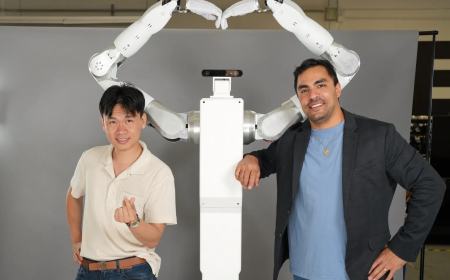
The origins of the Light Phone date back to 2014, when co-founders Joe Hollier and Kaiwei Tang met through Google's 30 Weeks incubator program, an initiative created specifically for artists and designers. Together, they developed a phone designed to occupy a middle ground between fully featured smartphones and extremely limited flip phones.
Over the last decade, the Light Phone has attracted attention from consumers seeking relief from constant notifications, social media feeds, and the addictive design elements that dominate many modern mobile devices. Rather than offering an endless stream of apps and content, the device focuses on essential functionality while intentionally limiting distractions.
Its appeal has grown among users who feel overwhelmed by their relationship with smartphones and are searching for a healthier balance between connectivity and attention. However, operating as a small hardware startup has presented challenges. Competing against technology giants such as Apple and Samsung has made manufacturing and distribution more difficult, particularly during ongoing component shortages affecting the broader electronics industry. The continued shortage of RAM components has added further pressure to production schedules. Despite those challenges, Light has successfully shipped approximately 20,000 Light Phone III devices since the model launched last spring.
The Noble Mobile partnership may be particularly attractive to customers who appreciate the incentives built into the carrier's pricing structure. Under the Light Phone-specific plan, users receive 5 GB of data per month. For every unused gigabyte, Noble Mobile offers up to $5 in credits back to the customer.
Given the Light Phone's intentionally limited nature, most users are unlikely to consume large amounts of mobile data. As a result, many customers may qualify for monthly rebates under the program.
Noble Mobile's traditional plans generally provide unlimited talk, text, and data for $50 per month, and allow users to earn up to $20 back for each unused gigabyte under a 20 GB threshold. The Light Phone package adapts the same concept to a device specifically designed for minimal data usage.
"The Light Phone is designed to be used as little as possible, so it's on brand with Noble," Hollier explained.
How the Light Phone Works
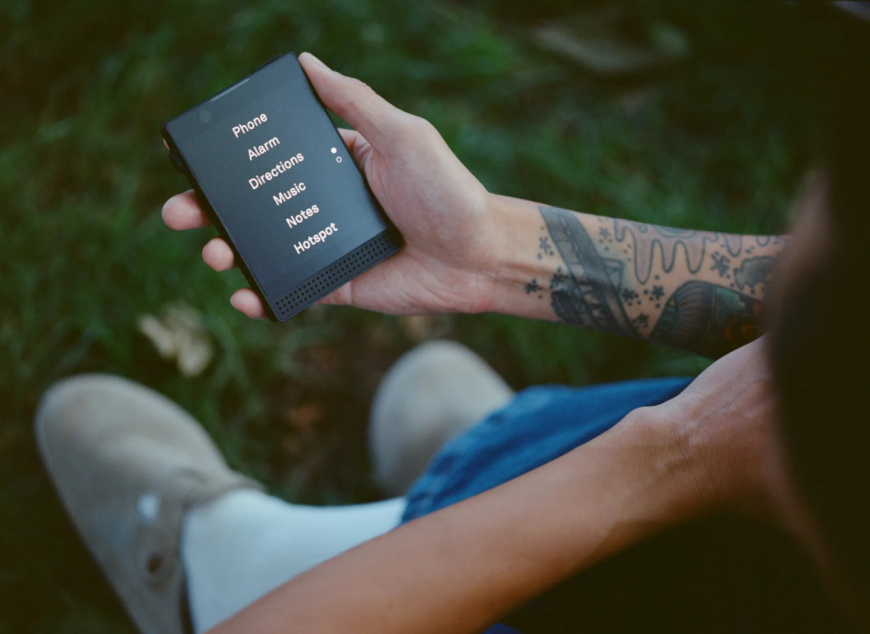
Although marketed as a minimalist device, the Light Phone III still includes many of the practical functions users expect from a modern mobile phone. Owners can make calls, send text messages, and perform a variety of essential communication tasks. At the same time, Light's founders acknowledge that modern life makes complete disconnection difficult. The device includes selected utility tools to support daily needs without introducing unnecessary distractions.
For example, the phone features navigation and directory applications. These utilities have already proven useful for customers. One Reddit user described how the phone's basic tools helped them find a towing company after a vehicle breakdown.
Reflecting on the experience, the user joked that the device provided ample time to "intentionally" reflect on life decisions while waiting 45 minutes for assistance.
One of the biggest challenges facing the company has been determining exactly how minimalist the device should be. Decisions about which features to include on the phone often involve balancing convenience with the company's philosophy of intentional technology use.
Questions frequently arise regarding whether services such as ride-sharing applications should be included for safety reasons or excluded to maintain the product's minimalist principles. Similar debates emerge around communication platforms like WhatsApp, which many users rely on to stay connected with family members living abroad.
According to Hollier, most Light Phone owners use the device as their primary phone. However, some users maintain an older smartphone without an active SIM card. Those secondary devices can connect via the Light Phone's hotspot feature when additional functionality is needed.
While practical, carrying two devices may seem contradictory to some people seeking simplicity. Nevertheless, Hollier said customers continue finding creative ways to integrate the phone into their lifestyles.
"It's really interesting to see how people fit [Light Phone] into their lives," Hollier said. "Some people are actively switching between two phones, and we've seen a new trend of users actually getting two phone numbers, kind of like a work phone, home phone balance." He added that the flexibility demonstrates how differently people define digital balance. "It's been really cool to see all the different ways that people fit the Light Phone in, because it's not really a one-size-fits-all situation," he said.
Unlike earlier versions of the device, the Light Phone III replaces the company's traditional e-ink display with a colour OLED screen. The addition of a colour display opened the door to several new features, including front-facing and rear-facing cameras. The cameras will also support future video calling functionality that the company plans to introduce.
The decision to include cameras was not made lightly. Both Hollier and Tang are passionate film photographers who appreciate photography as a creative medium. While they acknowledge that smartphones have democratized photography by making cameras widely accessible, they also believe modern mobile photography can sometimes diminish the intentionality traditionally associated with taking pictures.
Tang noted that many smartphone users capture enormous numbers of photos without ever revisiting them. "We talked to people who are like, I took 27,000 iPhone photos last year, and I've looked at them zero times, because it's like, 10 of one meal," Tang said. "I can tell you how many film photos I took last year."
Ultimately, the founders concluded that a camera remains an important everyday tool. However, they designed the feature to encourage deliberate use rather than endless sharing and engagement. "We just tried to design our camera by taking out what we felt like was the culprit of people actually falling out of the moment, which is sharing, and then waiting for this dopamine hit of reactions," Hollier said.
The camera includes a dedicated physical shutter button that supports half-press focusing, similar to traditional point-and-shoot cameras. The design intentionally embraces simplicity and nostalgia rather than computational photography enhancements. "We wanted it to be fun, sort of nostalgic," Hollier explained. "It's not doing any AI sharpening or covering your blemishes. It's just exactly like an old point-and-shoot camera."
Despite its appeal, the Light Phone III does have limitations. Most notably, it does not currently support the industry-standard RCS messaging protocol. Instead, the device relies on traditional SMS messaging, which lacks end-to-end encryption and offers a less polished experience for group conversations. In practical terms, that means group chats may function less smoothly, shared media will often be compressed, and users will not benefit from many modern messaging features available on smartphones.
For the device's target audience, however, those compromises may be acceptable. People drawn to the Light Phone are often motivated by a desire to reduce distractions and regain control of their attention rather than to maximize convenience. That mindset aligns closely with Noble Mobile's broader mission to encourage healthier technology habits and reward users for consuming fewer digital resources.
"It's not about asking people to either give up their technology or use this AI 6G smartphone," Tang said. "There's a middle ground of having the right technology tools that design without the attention and advertising layer of it."
As Light Phone and Noble Mobile move forward with their partnership, both companies are betting that a growing number of consumers are ready for technology designed around intentional use rather than constant engagement, offering an alternative vision for what mobile devices can be in an increasingly connected world.
What's Your Reaction?
 Like
0
Like
0
 Dislike
0
Dislike
0
 Love
0
Love
0
 Funny
0
Funny
0
 Angry
0
Angry
0
 Sad
0
Sad
0
 Wow
0
Wow
0