








































Major Tech Companies Cutting Jobs in 2026 as AI Reshapes the Workforce
Explore the latest list of major tech layoffs in 2026 as leading companies reduce jobs while expanding AI investments. Learn which employers cited artificial intelligence as a key factor behind workforce changes.
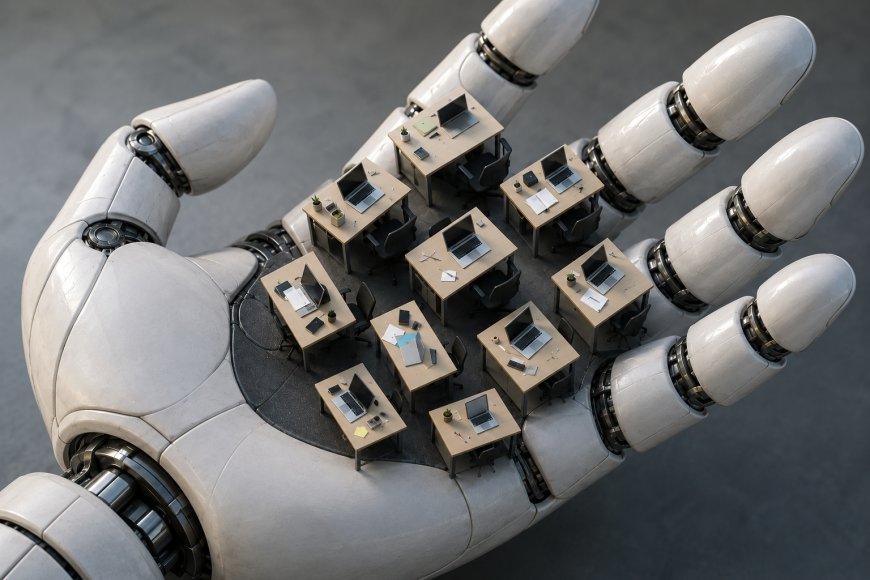
Oracle revealed on Monday that it reduced its workforce by approximately 21,000 employees over the past 12 months, representing a 13% decline and indicating that its job cuts were more extensive than previously disclosed. In its annual regulatory filing, the company said, “The adoption and deployment of AI technologies across our operations have resulted, and may continue to result, in reductions to our workforce.”
The disclosure adds fresh data to what many across the technology industry see as a growing trend: companies reporting strong financial performance while simultaneously reducing headcount and identifying artificial intelligence as a major driver behind those decisions. According to outplacement firm Challenger, Grey & Christmas, technology layoffs reached their highest monthly level in years during May, with AI emerging as the most frequently cited reason for workforce reductions.
Although many observers argue that the explanation deserves closer scrutiny—particularly because several of these companies significantly expanded hiring during the pandemic—AI has increasingly become a central theme in corporate restructuring. Below is a running list, presented in reverse chronological order, of major technology companies that have announced significant layoffs during 2026, citing AI as a contributing factor.
GitLab — June 3, 2026: GitLab announced plans to eliminate roughly 350 positions, representing around 14% of its workforce, as it redirects resources toward AI infrastructure and addresses rapidly growing demand from AI-powered workloads. CEO Bill Staples said agentic AI workloads are placing enormous pressure on existing infrastructure. They described the company’s efforts as a “generational rebuild” designed to support growth requirements of up to 100 times the current capacity. GitLab is also withdrawing operations from 22 countries, simplifying management layers, and partnering with an unnamed AI company to redesign its platform for large-scale AI agent workloads. The company reported first-quarter revenue of $264 million, up 23% year over year, while expecting restructuring expenses of $30 million to $35 million.
Google — Ongoing through May: Alphabet’s Google has continued reducing staff across several business units, including its Cloud division, Threat Intelligence Group, and cybersecurity teams associated with Mandiant, despite Cloud revenue increasing 63% to exceed $20 billion and its backlog nearly doubling to more than $460 billion. During the past year, Google has reduced the number of managers supervising smaller teams by over one-third. Rather than announcing a single layoff event, the company has carried out reductions through performance reviews, voluntary buyouts, and organisational restructuring, with outside estimates suggesting between 1,500 and more than 3,000 engineering positions have been eliminated during 2026.
Intuit — May 20, 2026: Intuit announced approximately 3,000 job cuts, equal to around 17% of its workforce, as part of a restructuring intended to simplify operations while reallocating resources toward artificial intelligence. CEO Sasan Goodarzi reportedly told employees that reducing organisational complexity would allow the company to deliver stronger products.
Meta — May 20–21, 2026: Meta eliminated roughly 8,000 positions, representing about 10% of its workforce, while simultaneously moving approximately 7,000 employees into AI-focused roles. CEO Mark Zuckerberg said the restructuring reflected the company’s belief that success in artificial intelligence could not be taken for granted.
Cisco — May 14, 2026: Cisco announced plans to reduce its workforce by nearly 4,000 employees, or about 5%, despite reporting stronger-than-expected revenue and profits. Chief Financial Officer Mark Patterson said the restructuring was focused on reallocating resources toward silicon, optics, cybersecurity, and AI rather than simply reducing costs.
Cloudflare — May 7–8, 2026: Cloudflare reduced its workforce by approximately 20%, affecting around 1,100 employees, despite reporting record quarterly revenue of $639.8 million, up 34% from the previous year. CEO Matthew Prince said the majority of the eliminated positions were within management and administrative functions, including finance, legal, internal audit, and revenue recognition.
General Motors — May 12, 2026: Eliminated between 500 and 600 positions, primarily in IT departments in Austin, Texas, and Warren, Michigan. The company said it was reassessing workforce requirements as part of a broader transformation of its information technology organisation. Sources familiar with the decision told CNBC that AI contributed to the restructuring, although it was not the only factor. GM also confirmed it continued hiring for around 80 technology-related roles, including positions involving AI, motorsports, and autonomous driving.
Coinbase — May 5, 2026: Coinbase announced approximately 700 layoffs, representing about 14% of its workforce, as part of an organisational restructuring focused on improving AI efficiency and responding to market conditions. CEO Brian Armstrong said engineers are now using AI to complete projects that previously took weeks, adding that the company intends to integrate AI into every aspect of its operations.
PayPal — May 5, 2026: PayPal said it intends to reduce its workforce by around 20% over the next two to three years, affecting more than 4,500 employees. The initiative forms part of a broader transformation strategy centred on artificial intelligence and organisational simplification. CEO Enrique Lores said AI would become deeply integrated across development, customer service, operational support, and risk management while helping eliminate unnecessary organisational layers.
Microsoft — April–May 2026: Microsoft introduced voluntary buyout programmes without revealing how many employees would participate. Chief Financial Officer Amy Hood said the company’s overall workforce had declined year over year and would likely continue shrinking as Microsoft prioritises agile, high-performing teams while increasing investments in AI.
Snap — April 16, 2026: Snap reduced approximately 16% of its global workforce, affecting around 1,000 full-time employees, while also eliminating more than 300 vacant positions. CEO Evan Spiegel said rapid advances in artificial intelligence allow teams to automate repetitive work, improve productivity, and accelerate development across products including Snapchat+, advertising systems, and infrastructure.
IBM — Throughout 2026: Estimates suggest IBM eliminated between 3,000 and 9,000 U.S. positions through a combination of late-2025 reductions and engineering layoffs at Red Hat during 2026. Bloomberg reported that IBM plans to significantly expand entry-level hiring in AI and hybrid cloud roles, even as AI systems replace certain HR functions. The company characterised the restructuring as routine workforce rebalancing.
Atlassian — March 11, 2026: Atlassian eliminated approximately 1,600 jobs, or around 10% of its workforce, as it shifted resources toward artificial intelligence and enterprise sales. CEO Mike Cannon-Brookes said AI does not replace people outright but acknowledged that it changes both the mix of required skills and the number of employees needed in some areas.
Dell — January 30, disclosed in March 2026: Dell’s workforce declined by roughly 10% during fiscal 2026, falling from approximately 108,000 employees to 97,000 after eliminating around 11,000 positions. The company spent $569 million on severance while forecasting that revenue from AI-optimised servers could double during fiscal 2027.
Oracle — March 5–31, 2026: Oracle began notifying employees of large-scale layoffs through termination emails during March. The workforce reductions occurred despite quarterly net income rising 27% year over year to $3.7 billion and remaining performance obligations increasing 325% to $553 billion. The savings were redirected toward AI data centre investments. Oracle later confirmed in its June annual filing that total workforce reductions reached approximately 21,000 employees over the previous year.
Block — February 26–27, 2026: Jack Dorsey’s Block reduced its workforce by approximately 4,000 employees, leaving fewer than 6,000 staff after previously employing more than 10,000 people. Dorsey wrote on X that AI-powered tools, combined with smaller and flatter teams, were fundamentally changing how companies are built and operated. He predicted that many businesses would reach similar conclusions within the following year.
Salesforce — February 10, 2026: Salesforce eliminated fewer than 1,000 positions across marketing, product management, data analytics, and its Agentforce AI division. The company said the efficiency gains delivered by Agentforce reduced the need to refill customer support engineering positions. The announcement followed an earlier reduction of approximately 4,000 customer support roles, with CEO Marc Benioff stating that AI agents allowed the company to operate with fewer employees.
Amazon — January 28, 2026: Amazon eliminated approximately 16,000 corporate positions after cutting another 14,000 jobs during October 2025, reducing its corporate workforce by roughly 9% within three months. The company said the restructuring was intended to simplify operations, reduce organisational layers, and remove bureaucracy. CEO Andy Jassy had previously stated that expanding the use of generative AI and autonomous agents would fundamentally change how work is performed and ultimately reduce Amazon’s corporate workforce by increasing efficiency.
What's Your Reaction?
 Like
0
Like
0
 Dislike
0
Dislike
0
 Love
0
Love
0
 Funny
0
Funny
0
 Angry
0
Angry
0
 Sad
0
Sad
0
 Wow
0
Wow
0