Salesforce pulled out every tool it had to reassure investors that the AI revolution won’t be the thing that takes the company down, as it reported fourth-quarter earnings on Wednesday.
The company posted a strong quarter with $10.7 billion in revenue, up 13% year over year. For the full year, Salesforce reported $41.5 billion in revenue, a 10% increase from the previous year, with both figures lifted by its $8 billion acquisition of data management firm Informatica last May.
Net income came in at $7.46 billion, and Salesforce issued upbeat guidance for the year ahead, forecasting revenue between $45.8 billion and $46.2 billion — representing 10% to 11% growth. It also said its “remaining performance obligation” (RPO) has climbed to more than $72 billion. That metric reflects revenue already under contract but not yet delivered or recognised as earned.
Even so, the numbers could only do so much to calm nerves. Software-as-a-service stocks — with Salesforce often seen as the category’s flagship — have taken a beating recently. Investors are increasingly worried that the rise of AI agents could threaten the core SaaS model, especially businesses built around per-employee-seat pricing, by making that structure less relevant. The trend has picked up a nickname: the “SaaSpocalypse.”
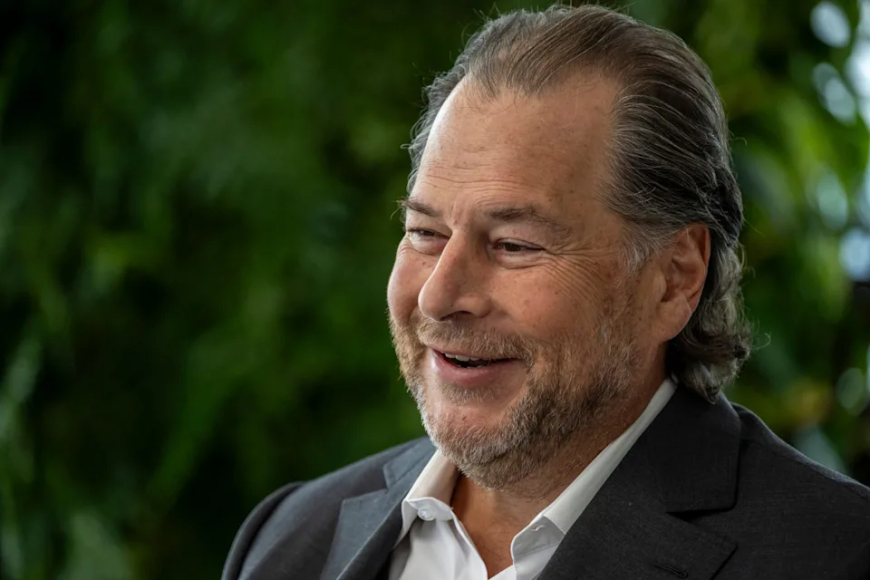
The idea was so central to the conversation that CEO Marc Benioff referenced it at least six times during the earnings call.
“You’ve heard about the SaaSpocalypse? And it isn’t our first. We’ve had a few of them,” he said, later adding, “If there is a SaaSpocalypse, it may be eaten by the Sasquatch because there are a lot of companies using a lot of SaaS because it just got better with agents.”
To reinforce the message that Salesforce is doing fine — and positioning itself for what comes next — the company added a long list of shareholder-friendly moves and announcements to the earnings package. Salesforce raised its dividend by nearly 6% to $0.44 per share. It also unveiled a new $50 billion share buyback program, a move typically welcomed by shareholders because it creates a major buyer in the market and reduces the share count, which can support the stock price.
Salesforce also reworked the earnings call format. It was part podcast, part infomercial, and part traditional Q&A, with only a handful of questions from Wall Street analysts.
Rather than spending most of the call walking through financial details, Benioff conducted on-camera interviews with three Salesforce customers, effectively putting them forward to endorse the company’s new agentic offerings: the CEO of home appliance maker SharkNinja, the CEO of Wyndham Hotels and Resorts, and — in a particularly pointed choice — the CEO of SaaStr, the software industry conference and media company. To keep the takeaways simple: all three praised Salesforce’s AI agent products.
Salesforce also introduced a new way to measure usage of its agentic products: agentic work units, or “AWU.” Instead of relying solely on “tokens,” the common unit used to measure AI processing volume, AWU is intended to reflect real business value—whether an agent actually completed a task. Salesforce reported processing 19 trillion tokens last quarter, which may sound massive but is not especially large by broader AI standards.
“You can ask it a question, and it can write you a poem, but that’s not really all that valuable in the enterprise world,” Salesforce president and CMO Patrick Stokes said on the call. The idea behind AWU is to track verifiable work, such as an agent writing to a record or completing another measurable action.
On top of that, Salesforce outlined its own architectural view of where the agent-driven world is heading. In Salesforce’s framing, SaaS providers like itself would control most of the technology stack, while AI model builders would sit beneath as largely unseen, interchangeable, and commoditised work engines.
That vision stands in direct contrast to one of the triggers behind a SaaS sell-off earlier this month, which followed OpenAI’s release of its enterprise agent, Frontier. OpenAI’s model suggests it could own most of the stack, with systems-of-record SaaS providers—the databases and business software platforms where companies keep their core data—pushed down to the bottom as background infrastructure.
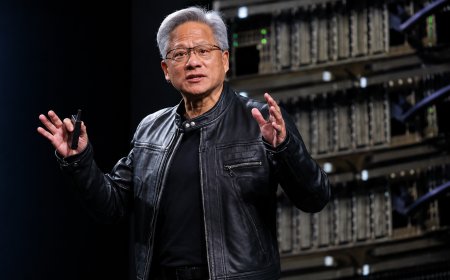
And if the presentation still wasn’t enough to send a message to investors, Benioff appeared in a black leather jacket, leaning into the signature style of the tech CEO currently seen as dominating the AI era, like Nvidia chief Jensen Huang.