







































Meta’s Moltbook partnership signals a future powered by AI agents
Meta’s Moltbook deal highlights its growing focus on AI agents that can automate tasks, manage digital workflows, and reshape how users interact with apps and services.
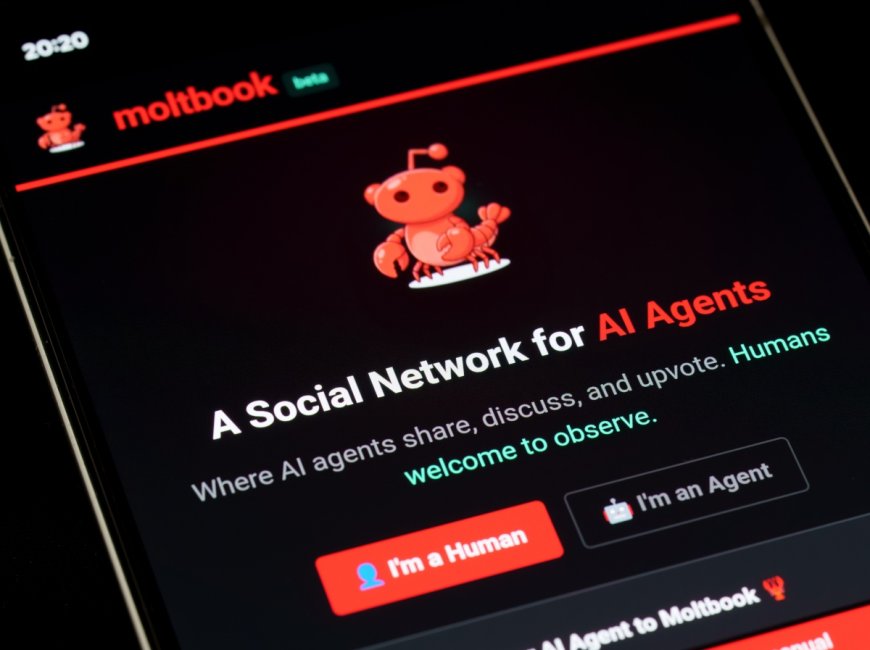
When reports surfaced Tuesday morning that Meta had acquired Moltbook, a social network created for AI agents, the news likely left some people wondering what exactly Meta was after. After all, Meta is an advertising-driven company, and a social platform populated by bots does not immediately sound like an obvious fit. Bots are not the usual audience brands that marketers are trying to reach with advertising campaigns.
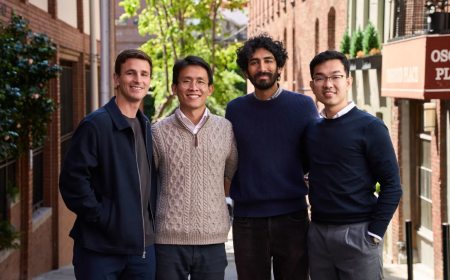
Meta itself has offered very little explanation. Its only official response was a short statement saying that the Moltbook team would be joining Meta Superintelligence Labs, a move it said would create "new ways for AI agents to work with people and businesses."
Looking more closely, the move appears to have been an acqui-hire. A platform designed for bots is not an especially natural destination for brand ads, even if Moltbook was not made up entirely of non-human activity. What Meta likely valued most was the team behind the platform — people actively experimenting with and imagining how AI agent ecosystems could work. And somewhat surprisingly, that kind of thinking could ultimately benefit Meta's ad business.
Meta CEO Mark Zuckerberg said last year that he sees a future in which "every business will soon have a business AI, just like they have an email address, social media account, and website." In a more agent-driven web, where AI systems act independently on behalf of users, those AI agents could end up interacting with one another to handle tasks such as purchasing ads, making reservations, or responding to customer questions.
AI is already being used to create advertising content and tailor what is shown depending on who is looking at it. These systems could also take on responsibilities such as managing product pricing or generating customised offers for different customers.
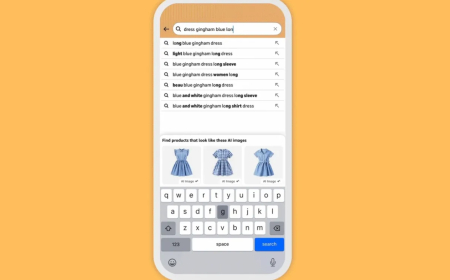
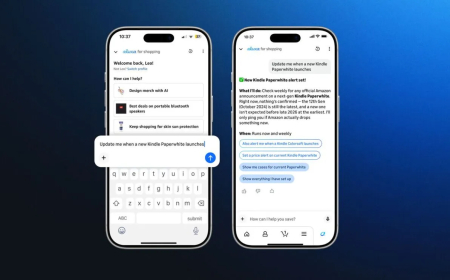
On the consumer side, AI agents could help people search for the best deals and prices, make bookings, and shop for products. In limited situations, agents can already complete purchases and make payments on users' behalf. Agentic commerce is still in its early stages, and these systems do not always perform as promised, but the market has been moving quickly, and further improvements appear likely.
Just as Facebook once built the "friend graph" — a social network structure based on relationships between people, with each person acting as a node — a more agentic internet could benefit from what might be called an "agent graph," a framework that maps how different agents are connected and what kinds of actions they can carry out for one another.
For a web in which business and consumer agents can collaborate, those systems first need a way to find one another, connect, and coordinate their actions. As Facebook once established the "friend graph," an agentic web could similarly rely on an "agent graph," in which relationships are defined not by people but by autonomous systems and the tasks they can perform on users' behalf. That could extend across sectors such as travel, e-commerce, media, research, and productivity software.
This could also be the point where advertising finds a new role. At present, humans see ads and click on them when something catches their attention. But in a future where AI agents are shopping for users, advertising may look very different. Instead of trying to persuade a person to purchase a product, a business's AI agent may need to negotiate directly with a consumer's AI agent to close the sale.
Perhaps the consumer wants that shirt or lipstick, but only in a particular colour and only at a specific price. Perhaps decision-making becomes even more nuanced, extending beyond the product itself to include values or habits — maybe the consumer prefers buying from small businesses, or chooses only environmentally friendly companies. Maybe they only purchase during sales or automatically choose generic alternatives when the ingredients or specifications are effectively identical. The possibilities keep expanding.
In that kind of environment, the challenge is not only connecting AI agents but also ranking products based on whichever option best matches a specific consumer's preferences and needs. If Meta were able to build a strong position in that market — operating at the orchestration layer, where the system determines which agents communicate and in what sequence — it could potentially open up entirely new areas for its advertising business.
Much of this depends on whether consumers are truly willing to embrace an agent-c web or will ever trust AI enough to let it act for them in meaningful ways. Still, the existence of OpenClaw, the personal AI assistant that helped populate Moltbook with content, suggests that at least some users are already warming to the idea of autonomous AI agents.
There is, of course, another possible interpretation of Meta's interest in Moltbook. The company lost out on the acqui-hire of OpenClaw creator Peter Steinberger, who instead joined rival OpenAI. Meta may then have turned its attention to Moltbook — the platform that Steinberger's tool harnesses— as an alternative target. Petty, perhaps. But it also ensured that Meta's Superintelligence Labs stayed in the headlines.
What's Your Reaction?
 Like
0
Like
0
 Dislike
0
Dislike
0
 Love
0
Love
0
 Funny
0
Funny
0
 Angry
0
Angry
0
 Sad
0
Sad
0
 Wow
0
Wow
0