






































Mirendil Signs $100M+ Google Cloud Deal to Advance Self-Improving AI
AI startup Mirendil has signed a multiyear Google Cloud agreement worth more than $100 million to accelerate research into self-improving AI.

AI startup Mirendil has signed a multiyear agreement with Google Cloud worth more than $100 million to secure the computing infrastructure needed for its research into self-improving artificial intelligence, marking another major cloud partnership as competition for AI compute continues to intensify.
The agreement reflects two trends reshaping the AI industry. Large cloud providers are increasingly competing to attract promising AI startups with substantial infrastructure commitments, while AI companies are racing to lock in long-term access to computing resources as model development becomes more expensive and resource-intensive.
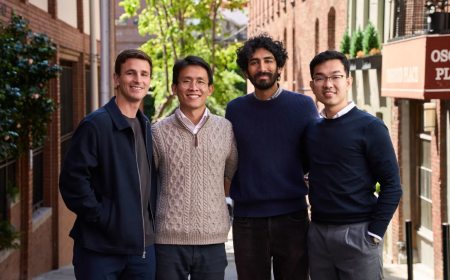
Mirendil co-founder and Chief Executive Officer Behnam Neyshabur said the Google Cloud agreement is valued at more than $100 million. The commitment represents roughly half of the capital the company raised during its seed funding round in late June, when Mirendil secured funding at a reported valuation of $1 billion.
Under the partnership, Mirendil will gain access to Google’s Tensor Processing Units (TPUs), Nvidia graphics processing units (GPUs), and managed AI training clusters. The startup plans to use the infrastructure to advance its work on recursive self-improving AI, a concept centred on developing systems capable of continuously improving their own performance with minimal human intervention.
Pursuing self-improving AI
Recursive self-improvement has become an increasingly important area of AI research. Several frontier AI companies, including Anthropic, have explored the concept, while newer startups such as Recursive Superintelligence and Ricursive Intelligence have also emerged with similar ambitions. Mirendil’s founders previously worked at Anthropic before launching their own company.
Mirendil believes AI systems can eventually learn in a way that resembles human researchers by steadily acquiring knowledge, refining expertise and improving their ability to solve increasingly complex scientific problems over time.
Neyshabur said the company’s long-term goal is to develop AI capable of conducting much of the research currently performed inside frontier AI laboratories. Rather than solving a task once, the system would continue learning and becoming more effective as it works.
He said such technology could eventually accelerate research across fields including medicine, biology and materials science. As an example, he suggested an AI system could continuously work on challenges such as Alzheimer’s disease, improving both its understanding of the disease and the quality of its research over time without requiring repeated retraining.
Matching workloads to the right hardware
Training self-improving AI requires enormous amounts of computing power, making infrastructure partnerships increasingly important for startups operating at the frontier of AI research.
Co-founder Harsh Mehta said successful AI development is no longer simply about having access to more chips, but about intelligently matching different workloads to the most appropriate hardware architecture.
Because Google Cloud provides multiple types of AI accelerators, Mirendil expects to distribute workloads across TPUs and Nvidia GPUs depending on which platform is best suited for a particular task. Mehta said that flexibility should improve efficiency while reducing computing costs for both the company and future enterprise customers using its technology.
Strategic benefits for both companies
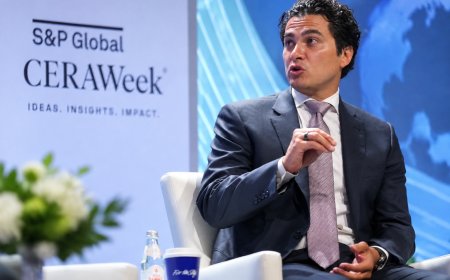
Google also sees the partnership as part of its broader AI infrastructure strategy. Amin Vahdat, Google’s senior vice president and chief technologist for AI and infrastructure, said future advances in artificial intelligence will depend not only on faster chips but also on orchestrating entire computing systems capable of scaling efficiently.
Neyshabur said Mirendil’s software and systems layer is designed to help customers extract greater performance from Google’s AI infrastructure. In return, Google gains a strategic partner developing frontier self-improving AI technology that could eventually be offered to enterprise customers running advanced AI workloads on Google Cloud.
What's Your Reaction?
 Like
0
Like
0
 Dislike
0
Dislike
0
 Love
0
Love
0
 Funny
0
Funny
0
 Angry
0
Angry
0
 Sad
0
Sad
0
 Wow
0
Wow
0