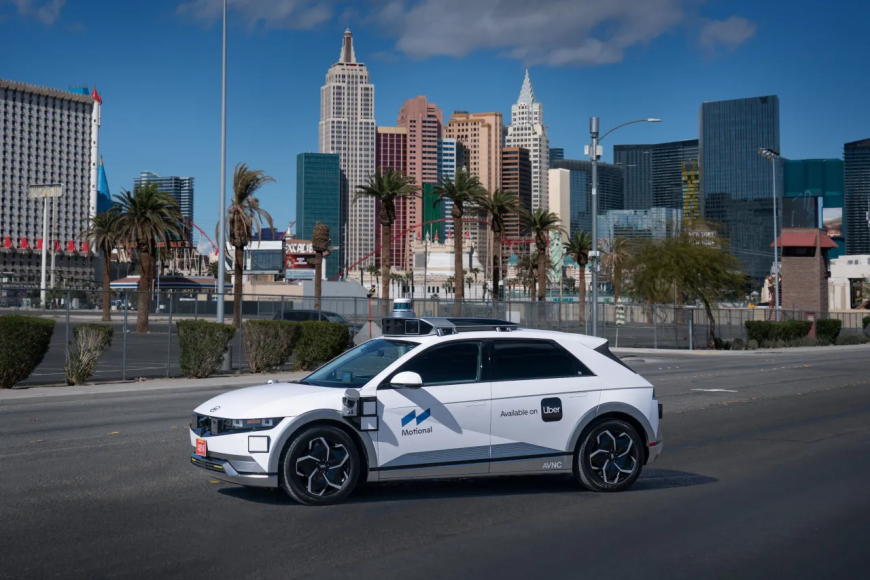
Uber has added yet another autonomous vehicle provider to its expanding robotaxi network. Motional, the self-driving company owned by Hyundai, is now offering rides on Uber in Las Vegas using its autonomous version of the Ioniq 5 — though, for the time being, each vehicle still includes a safety monitor inside.
Beginning Friday, the vehicles will provide pickups and drop-offs in rideshare areas at Resorts World and Encore on the Las Vegas Strip, as well as at the Westgate hotel casino next to the Las Vegas Convention Centre. Motional’s autonomous vehicles will also serve rides to and from the Town Square shopping centre near the airport, along with curbside pickups and drop-offs in Downtown Las Vegas.
Uber and Motional said on Friday that they plan to broaden the service area over time, though they did not provide details on where or when that expansion will happen. As with Uber’s robotaxi offerings in other cities, riders cannot specifically request a self-driving vehicle. However, users can improve their chances of being paired with one by enabling autonomous vehicle pickups in the Uber app.
The two companies said they expect to be operating a fully driverless service in Las Vegas by the end of this year.
The launch marks an important milestone for Motional, which found itself in serious difficulty two years ago. Formed as a joint venture between Hyundai and Aptiv, the company had fallen behind on its target of launching a robotaxi service with Uber rival Lyft. Aptiv eventually stopped funding the joint venture, leaving Hyundai with the choice of either committing more money or walking away from the project.
Hyundai chose to inject another $1 billion into Motional, while the now wholly owned autonomous-vehicle startup underwent a restructuring that included layoffs affecting around 40% of its workforce. The company also changed the way it was developing its self-driving technology. Like several others in the industry, Motional shifted toward a strategy more heavily based on neural networks.
“We saw that there was tremendous potential with all the advancements that were happening within AI; and we also saw that while we had a safe, driverless system, there was a gap to getting to an affordable solution that could generalize and scale globally,” Motional president and CEO Laura Major said during a presentation at the company’s Las Vegas facility at the 2026 Consumer Electronics Show. “And so we made the very hard decision to pause our commercial activities, to slow down in the near term so that we could speed up.”
Demonstration rides at the major technology event in January appeared encouraging, even though some parts of the user-facing software still seemed a bit unfinished. Since then, Motional has been running a robotaxi service in Las Vegas for its own employees. The company has previously said it intends to launch in multiple cities through partnerships with both Uber and Lyft.
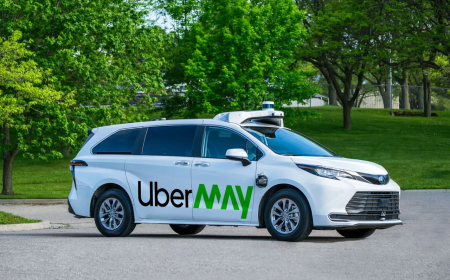
For Uber, Motional is just one of many autonomous-vehicle partners worldwide. Over the last two years, the ride-hailing company has signed deals with more than 25 firms globally to bring self-driving vehicles onto its platform. This week alone, Uber also announced plans to add self-driving Nissan Leaf EVs in Tokyo — powered by U.K.-based autonomous driving startup Wayve — and to launch Zoox robotaxis on its app in Las Vegas later this year.


























 Like
0
Like
0
 Dislike
0
Dislike
0
 Love
0
Love
0
 Funny
0
Funny
0
 Angry
0
Angry
0
 Sad
0
Sad
0
 Wow
0
Wow
0