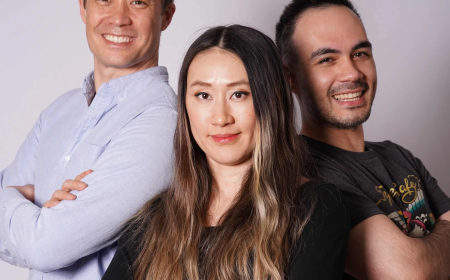
The number has narrowed: out of the 11 original co-founders who launched xAI alongside Elon Musk three years ago, only two remain as the company continues a major internal reshuffle aimed at strengthening its position against rivals Anthropic and OpenAI. According to Musk, this rebuilding phase is intentional.
"xAI was not built right first time around, so it is being rebuilt from the foundations up," Musk wrote Thursday on his platform, X. However, by many accounts, the transition has not been entirely smooth.
One of the most pressing challenges is competition. This week, co-founders Zihang Dai and Guodong Zhang departed after Musk expressed frustration that xAI's AI coding tools were failing to compete effectively with Anthropic's Claude Code and OpenAI's Codex. Musk revealed that the company held an all-hands meeting on Wednesday to address the gap, adding that he believes xAI can catch up by mid-year.
The importance of coding tools cannot be overstated, as they are widely seen as a primary revenue driver for AI companies. While xAI initially gained traction earlier in the year through Grok — its AI model known for fewer restrictions, including the ability to generate explicit or controversial content — long-term financial success depends heavily on the performance of its coding-related products. Falling behind in this area represents not just a reputational concern but a direct business challenge.
The internal changes extend beyond recent departures. About a month ago, 11 senior engineers, including two co-founders, left the company as part of what Musk described as a restructuring effort to align with a larger operational scale. Even that overhaul appears to have fallen short. Reports from the Financial Times indicate that executives from SpaceX and Tesla have been brought in to assess staff performance and remove underperforming employees.
With only two co-founders — Manuel Kroiss and Ross Nordeen — remaining alongside Musk, the leadership team now faces a significant task in stabilising and advancing the company.
In response, Musk is broadening the company's hiring approach. He shared on X that he and his colleague, Baris Akis, are reviewing previously rejected job applications to reconnect with candidates who may have been overlooked. Addressing those applicants directly, Musk apologised for the lack of follow-up.
For context, LinkedIn data suggests that xAI currently employs just over 5,000 people, compared to more than 7,500 at OpenAI and over 4,700 at Anthropic.
There are, however, some positive developments on the hiring front. Andrew Milich and Jason Ginsberg, both previously leading product engineering at the AI coding tool company Cursor, are joining xAI. Unlike xAI, Cursor relies on external AI models from major labs. Their move could indicate the growing importance of having direct access to large language models and the infrastructure needed to run them — and suggests that xAI's own foundational model still holds appeal for top talent.
At the same time, the company faces pressure both internally and externally. Now operating as part of SpaceX, and with a potential public offering of SpaceX shares on the horizon, xAI is under increasing scrutiny to demonstrate meaningful adoption of Grok. A struggling AI division is not the narrative Musk wants potential investors to focus on.
Looking ahead, Musk is aiming beyond coding tools. xAI's "Macrohard" project — a name he has described as a humorous nod to Microsoft — is designed to create an AI agent capable of performing the full range of tasks typically handled by white-collar workers on a computer. However, progress has been uneven. Toby Pohlen, who was appointed to lead the project in February, departed within weeks, and recent reports indicate that the initiative has been paused.
In response, Musk has brought another of his companies into the effort. He disclosed that Macrohard is now a joint initiative with Tesla, which is also developing a complementary system called "Digital Optimus," inspired by Tesla's humanoid robot project. In this setup, xAI's language model would guide the Tesla agent in executing tasks.
While ambitious, this vision is not unique. Similar concepts are emerging elsewhere in the industry. For example, Perplexity is working on its "Everything is Computer" platform, designed to provide enterprise users with AI systems that manage digital workflows. The approach also mirrors efforts by entrepreneur Peter Steinberger, who is now at OpenAI following the development of OpenClaw's product. As xAI continues to rebuild, its ability to execute on both immediate priorities and long-term ambitions will determine whether it can close the gap with its leading competitors.





























 Like
0
Like
0
 Dislike
0
Dislike
0
 Love
0
Love
0
 Funny
0
Funny
0
 Angry
0
Angry
0
 Sad
0
Sad
0
 Wow
0
Wow
0