




































New Report Explores How David Sacks Could Benefit Financially From Role in Trump Administration
A New York Times report explores whether David Sacks’s White House role in AI and crypto may benefit his investments. Sacks denies any conflict of interest.
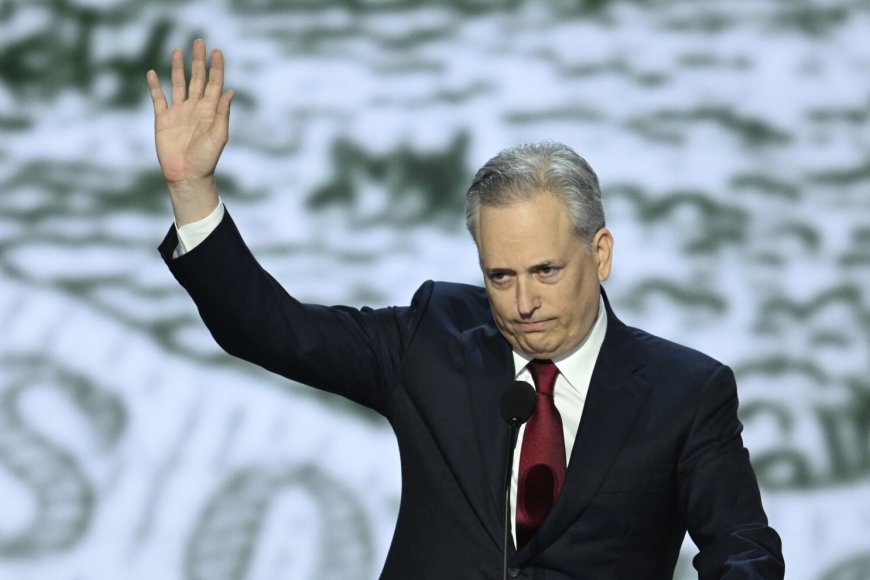
A new investigation by The New York Times suggests that David Sacks’ position as President Donald Trump’s chief adviser on artificial intelligence and cryptocurrency may offer significant advantages to his personal investments — and potentially to those of his associates.
Sacks, however, pushed back firmly. In a post on X, he criticised the paper’s five-month reporting effort, claiming that every allegation had been “completely disproven” during the process.
“Today they simply gave up and published a meaningless piece,” Sacks wrote. “Anyone who actually reads the story can see that it’s just a cluster of unrelated anecdotes that don’t match the headline.”
Concerns about potential conflicts of interest around Sacks are not new. Earlier this year, Senator Elizabeth Warren — a Democrat from Massachusetts — argued that Sacks’ dual position as a technology investor and White House policymaker created an “explicit conflict,” noting that federal ethics rules would not normally allow such overlap. Warren said Sacks “runs a firm invested in crypto while shaping national crypto policy,” calling this unacceptable.
The NYT’s latest report, titled “Silicon Valley’s Man in the White House Is Benefiting Himself and His Friends” and written by five reporters, takes a broader look at his financial footprint. According to their analysis, 449 of Sacks’ 708 technology investments are in the AI sector — companies that could directly benefit from the policy initiatives he supports.
Sacks has been granted two White House ethics waivers requiring him to sell the majority of his AI and cryptocurrency holdings. Even so, the NYT noted that his publicly available ethics filings do not reveal the value of his remaining assets, nor do they detail when the required divestitures occurred.
Government ethics specialist Kathleen Clark of Washington University raised similar concerns in July after reviewing one of Sacks’ waivers. She described the situation to TechCrunch as “graft,” arguing that the arrangement raises serious ethical questions.
The NYT also reported that Sacks categorised hundreds of his investments as “hardware” or “software,” rather than AI, even though many of these companies market themselves as artificial-intelligence firms.
To highlight what it described as Sacks’ “interconnected interests,” the report referenced his involvement in Trump’s AI summit at the White House in July. According to the NYT, chief of staff Susie Wiles intervened to prevent the All-In podcast — co-hosted by Sacks — from becoming the exclusive host of the event. The story also claimed that the All-In team sought sponsorship packages priced at $1 million, which would have included access to a private reception and related gatherings.
The newspaper further reported that Sacks has grown close to Nvidia CEO Jensen Huang this year and has played a role in scaling back restrictions on Nvidia’s global chip sales, including those involving China.
Former Trump adviser and right-wing media figure Steve Bannon, who has openly criticised several of Trump’s Silicon Valley allies, described Sacks as symbolic of an administration where “tech bros are out of control.”
In response to the NYT’s claims, Sacks’ spokesperson Jessica Hoffman said the narrative of a conflict of interest is inaccurate. Hoffman stated that Sacks has followed all applicable regulations for exceptional government employees and complied fully with the Office of Government Ethics, which determined the assets he was required to divest. She argued that his government role has come at a financial cost, not a gain.
White House spokesperson Liz Huston praised Sacks’ contributions, calling him “an invaluable asset for President Trump’s mission to strengthen America’s technological leadership.”
Sacks’ rebuttal also included a letter from law firm Clare Locke to the NYT, asserting that reporters were instructed from the outset to identify a conflict of interest, regardless of the facts. The firm stated that the investigation appeared to be designed to reach a predetermined conclusion.
The letter also challenged specific claims, including those about the All-In podcast’s involvement in the AI summit. Sacks’ legal team said the event was organised on a not-for-profit basis and that the podcast ultimately “lost money hosting the event.” According to the letter, two sponsors helped offset a portion of the costs and received only logo placements — no access to President Trump and no exclusive receptions were ever offered.
What's Your Reaction?
 Like
0
Like
0
 Dislike
0
Dislike
0
 Love
0
Love
0
 Funny
0
Funny
0
 Angry
0
Angry
0
 Sad
0
Sad
0
 Wow
0
Wow
0