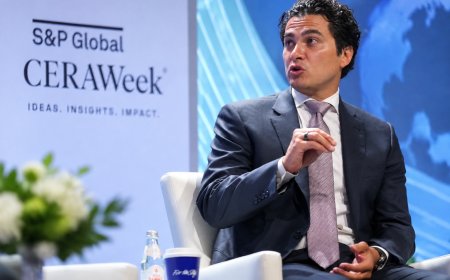
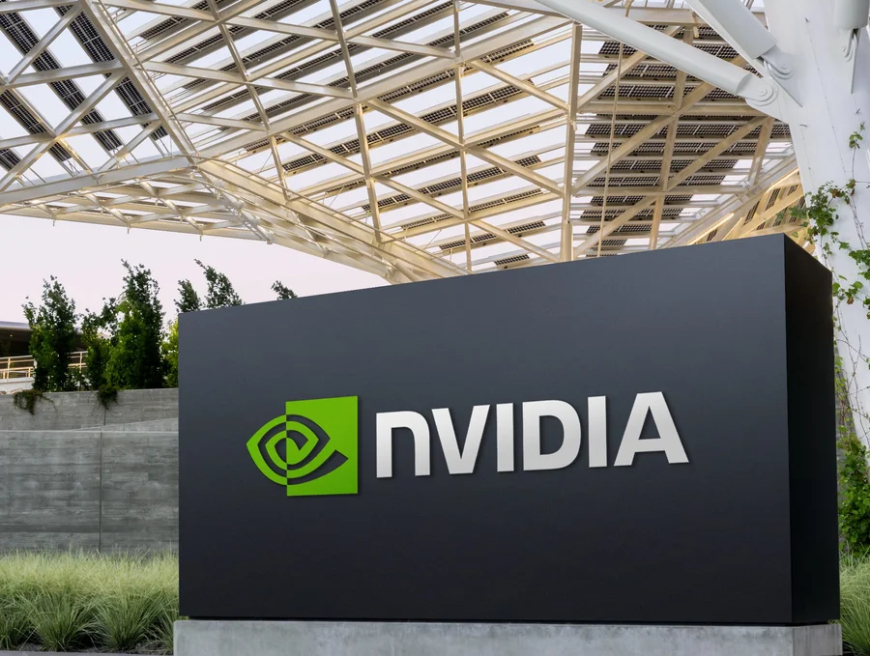
Speaking at the Morgan Stanley Tech, Media and Telecom conference in downtown San Francisco on Wednesday, Nvidia CEO Jensen Huang said the company’s recent investments in OpenAI and Anthropic will probably be its final ones in both businesses, explaining that once they go public, as expected later this year, the window for investing effectively closes.
It may really be that straightforward. Although companies do sometimes continue investing in businesses right up until the edge of an IPO in hopes of squeezing out additional upside, Nvidia is already generating enormous revenue from selling the chips that power both OpenAI and Anthropic — so it is not as though the company needs to boost returns further by committing even more capital to either of them.
For now, Nvidia is not saying much beyond that. When asked for comment earlier in the day after Huang’s remarks, a company spokesperson referred to a transcript from Nvidia’s fourth-quarter earnings call. On that call, Huang said all of Nvidia’s investments are “focused very squarely, strategically on expanding and deepening our ecosystem reach,” which is a goal its earlier stakes in OpenAI and Anthropic could reasonably be said to have already achieved.
Even so, there may be several other factors helping explain the company’s retreat, including the self-reinforcing nature of these relationships. When Nvidia first revealed that it planned to invest up to $100 billion in OpenAI last September, MIT Sloan professor Michael Cusumano told the Financial Times that the arrangement was “kind of a wash,” noting that “Nvidia is investing $100 billion in OpenAI stock, and OpenAI is saying they are going to buy $100 billion or more of Nvidia chips.”
Rising concern that agreements like this might be contributing to an investment bubble could help explain why the final commitment ended up being smaller. The investment Nvidia ultimately completed last week as part of OpenAI’s $110 billion funding round totalled $30 billion — far below the earlier $100 billion figure. Huang has already rejected another commonly floated explanation — that relations between Nvidia and OpenAI have soured — calling that idea “nonsense.”
At the same time, Nvidia’s relationship with Anthropic has appeared strained. Just two months after Nvidia announced a $10 billion investment in November, Anthropic CEO Dario Amodei took the stage at Davos and, without explicitly mentioning Nvidia by name, likened the decision by U.S. chipmakers to sell advanced AI processors to approved customers in China to “selling nuclear weapons to North Korea.” That was a sharp comparison.
Looking back, however, the nuclear weapons analogy proved only part of the story. Only days ago, the Trump administration placed Anthropic on a blocklist, preventing federal agencies and military contractors from using its technology after the company declined to permit its models to be used for autonomous weapons or mass domestic surveillance.
Within hours of that development, OpenAI announced it had reached its own agreement with the Pentagon—a move Anthropic later described as “mendacious,” and one that the public seems to view in a similar light. In the 24 hours following the back-to-back announcements, Anthropic’s Claude surged to the top of the free app rankings on Apple’s U.S. App Store, passing ChatGPT. At the end of January, Claude ranked outside the top 100, according to Sensor Tower data.
That leaves Nvidia owning stakes in two companies that, at least right now, appear to be moving in very different directions and may also be pulling customers and business partners with them.
Whether Huang anticipated any of these complications, given Nvidia’s broad network of partnerships, is impossible to say. But the reason he offered on Wednesday for likely stepping away from future investments — that an IPO closes off this type of opportunity — does not fully align with how late-stage private investing usually works. It seems increasingly likely that Nvidia is stepping back from a situation that has become far more complex in a very short period.

























 Like
0
Like
0
 Dislike
0
Dislike
0
 Love
0
Love
0
 Funny
0
Funny
0
 Angry
0
Angry
0
 Sad
0
Sad
0
 Wow
0
Wow
0