





































Omen AI Targets Smarter Data Centre Cooling With Real-Time Fluid Monitoring
Omen AI is helping data centres improve cooling efficiency with real-time coolant monitoring technology that detects bacterial growth early, reducing downtime and improving AI infrastructure performance.
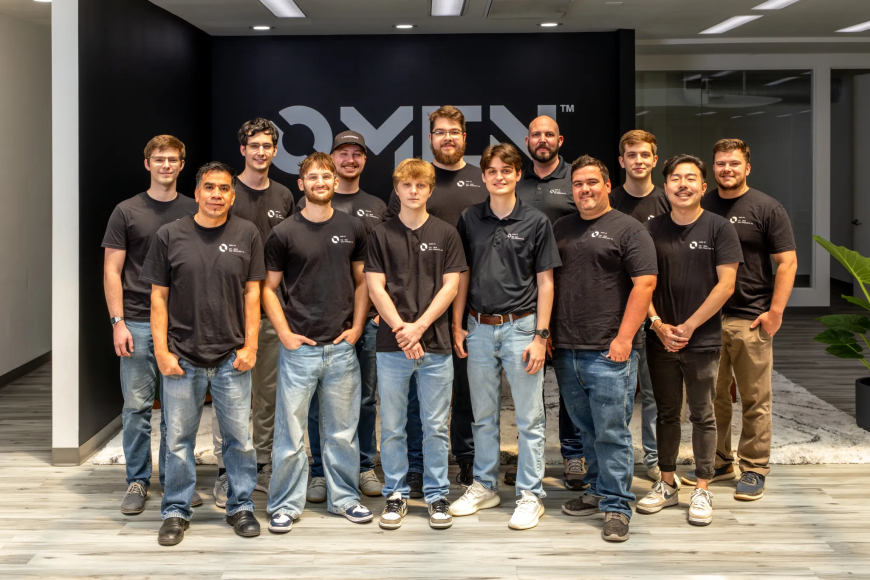
The rapid growth of AI workloads has pushed data centres to maximise the performance of every GPU rack. One unexpected challenge that has emerged from this shift is bacterial contamination inside liquid cooling systems.
The cooling fluid used for liquid-cooled chips consists of water combined with additives that suppress bacterial growth. As operators increase the water content to improve heat absorption and allow chips to run at higher temperatures, they also raise the risk of bacterial contamination that can clog cooling systems. When this occurs, operators are often forced to flush the entire system, a process that can take five to six hours per rack and potentially result in millions of dollars in downtime.
Omen AI believes it has a solution. The company has developed a compact spectrometer capable of continuously monitoring coolant health in real time, detecting bacterial growth before it develops into a major operational issue. According to founder and CEO Zach Laberge, the technology provides visibility into the chemical condition of cooling fluids, helping operators avoid costly interruptions caused by undetected contamination.
On Tuesday, Omen AI announced that it had secured $31 million in Series A funding. The round was led by Nava Ventures and included participation from CRV, Vanderbilt University, Mann+Hummel, Starhill Holdings, Hard Launch Capital, as well as personal investments from executives at Bridgestone, General Motors, Johnson Controls, and TensorWave.
Laberge founded his first company in 2020 at the age of 14, raising $3 million to install sensors on construction equipment before eventually leaving high school to pursue entrepreneurship full time. He has said both of his parents, including his mother, a former Minister of Education for Ontario, supported his decision to follow an unconventional career path.
After that first startup shut down, Laberge launched Omen AI in 2024 to make heavy machinery smarter through continuous monitoring of fluid systems. Rather than relying on the traditional process of collecting samples and sending them to laboratories for analysis, Omen’s technology was designed to provide real-time insights. In addition to detecting bacterial growth, the system can detect early signs of component wear by identifying metals such as copper and chromium. At the same time, traces of silicon can indicate deteriorating seals.
Caterpillar dealerships became some of Omen’s earliest customers in its heavy equipment business. Since Caterpillar is also a major supplier of gas-powered turbines and generators that provide on-site electricity for data centres, the company soon recognised a growing opportunity in AI infrastructure.
Laberge said the transition began around six months ago, when dealerships started asking whether Omen’s monitoring technology could also be applied to systems within data centre facilities, particularly as they expanded sensor deployments across turbines.
The company soon realised that modern datacentres rely on fluid systems throughout their operations, from HVAC equipment to advanced chip-cooling networks. Seeing strong demand in this rapidly expanding market, Omen shifted its focus to serving data centre operators.
Cory Rellas, a partner at Nava Ventures and a member of Omen’s board, said it is uncommon to find such a young founder who has already earned the confidence of large industrial companies operating in traditionally slower-moving sectors. According to Rellas, conversations with major enterprise customers quickly validated Omen’s technology and overall approach.
Since its founding in 2024, Omen AI has raised approximately $40 million and is currently working with about a dozen data centre customers as it refines its platform. Among them is TensorWave, a company developing an AI cloud infrastructure powered by AMD chips.
TensorWave President Piotr Tomasik said cooling fluid is one of the most critical variables in large-scale AI infrastructure, yet much of the industry still lacks continuous visibility into its condition. He added that Omen’s monitoring technology aligns closely with TensorWave’s vision of building more reliable infrastructure for AI compute customers.
Although many organisations still depend on sending coolant samples to laboratories for testing, Omen is not alone in pursuing on-site analysis. Earlier this month, water-monitoring company Pyxis introduced its own coolant-monitoring solution designed specifically for data centres.
Laberge said recent advances in optical hardware and signal-processing software have made this new approach commercially practical. According to him, hardware costs have fallen enough to support large-scale deployment, while improvements in signal processing make it possible to extract meaningful insights from increasingly complex sensor data.
What's Your Reaction?
 Like
0
Like
0
 Dislike
0
Dislike
0
 Love
0
Love
0
 Funny
0
Funny
0
 Angry
0
Angry
0
 Sad
0
Sad
0
 Wow
0
Wow
0