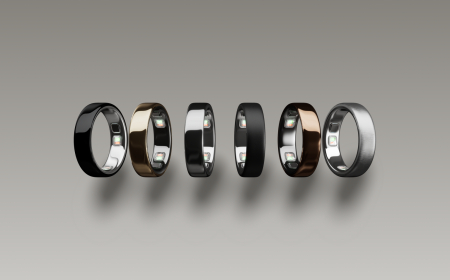
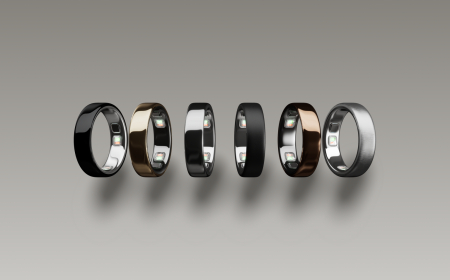
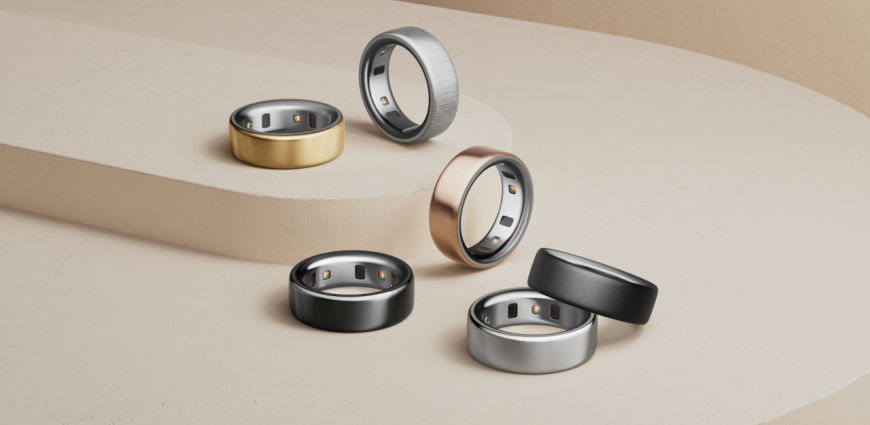
Finnish smart ring company Oura has officially entered the Indian market, introducing its Ring 4 and positioning itself against local competitors like Ultrahuman in an emerging category increasingly shaped by price sensitivity due to the arrival of lower-cost alternatives.
Oura's Ring 4 is priced from ₹28,900 (approximately $313) to ₹39,900 (around $432), with a required monthly membership fee of ₹599 (about $6). In the United States, the ring starts at $349 with a $5.99 subscription fee. By comparison, Ultrahuman's Ring Air is available at ₹28,499 (roughly $308), while its newer Ring Pro model is priced at ₹42,990 (about $465).
Despite growing interest, India's smart ring segment remains relatively small. According to IDC, shipments declined by 30.6% in 2025 compared to the previous year, while average selling prices dropped 8.7% to $159.7 as more affordable brands entered the market.
The downturn reflects the category's early-stage nature in India. Smart rings are still considered niche devices, with limited consumer awareness and relatively high pricing, even as cheaper options become available. Vikas Sharma, a senior market analyst for wearable devices at IDC, noted that the segment initially gained traction as a new tech trend but has struggled to sustain that momentum. He also pointed out that marketing efforts have remained limited, as most companies continue to prioritise larger global markets.
Growth has also been held back by a lack of broad competition and ecosystem development, Sharma added, noting that only a handful of players are actively driving innovation and awareness in the category.
Ultrahuman led India's smart ring market last year with a 30.4% share, followed by Gabit at 18.3%, according to IDC data.
Oura is positioning its Ring 4 as a premium, health-focused wearable that combines hardware with a subscription service that offers personalised insights into sleep, activity, and recovery. This approach differentiates it from many local competitors, which tend to focus more on competitive pricing than on bundled services.
The competition between Oura and Ultrahuman is not limited to India. The Finnish company has taken legal action against Ultrahuman in the United States, affecting Ring Air's availability in that market. Ultrahuman has responded by redesigning its Ring Pro to avoid infringing on Oura's patents and has submitted the updated version to U.S. Customs and Border Protection for clearance.
Alongside the product launch, Oura also shared findings from a study analysing sleep patterns among its Indian users, based on data collected between October 2024 and September 2025. The report showed that users averaged about 6 hours and 28 minutes of sleep per night, falling short of recommended levels, and spent less time in restorative sleep stages than global averages.
These insights highlight both the potential and the challenges in India's market. While interest in health and wellness is growing, converting that awareness into demand for premium, subscription-based devices remains uncertain in a cost-conscious environment.
According to Sharma, broader adoption will likely depend on more brands entering the space and offering a wider range of pricing options and product positioning to appeal to different consumer segments.




























 Like
0
Like
0
 Dislike
0
Dislike
0
 Love
0
Love
0
 Funny
0
Funny
0
 Angry
0
Angry
0
 Sad
0
Sad
0
 Wow
0
Wow
0