Particle, an AI news app built by former Twitter engineers, is expanding beyond web-based reporting and can now keep up with news that breaks on podcasts, too.
Just ahead of its Android launch, Particle introduced a new feature called Podcast Clips. The tool identifies the most interesting and relevant moments across a wide range of podcasts and places those audio snippets directly alongside related news stories in the app's feed.
Instead of listening through a full episode to find a brief but important statement, users can play a short clip while reading the connected story on Particle. If they prefer, they can also view the transcript of the clip, with the text highlighted in sync with the audio as it plays.
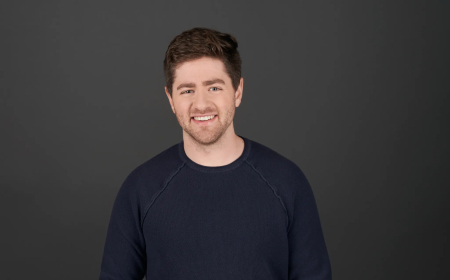
Particle CEO Sara Beykpour, who previously served as Senior Director of Product Management at Twitter, said the system is designed to pair podcast discussions with the news people are already following. "We've done that basically for any news story — if there is a podcast that is talking about it, or relevant at all, we've got all those clips," she said. She added that the feature offers a quick way to understand how people are reacting to a story and what kind of commentary is circulating.
The update reflects a broader change that has been unfolding in the news ecosystem for years. More audiences are turning to podcasts for news and increasingly trusting them as a reliable source. At the same time, podcasts are becoming a place where breaking news and major announcements appear first, especially when public figures choose the format to deliver messages directly.
In recent years, tech executives in particular have increasingly preferred appearing on friendly podcast platforms to share talking points, rather than relying on traditional media interviews, as Bloomberg reported in 2024. That shift makes podcast monitoring more important for anyone trying to follow news as it develops.
Beykpour explained that Particle uses embedding models to detect when podcast content connects to a particular news story. She noted that these embeddings come from the same companies that offer large language models, but the approach is not the same as generative AI. "We use vector embeddings to understand that these different parts of the podcasts are related to these different stories," she said. "A single podcast might cover 10 or 20 stories, so we use AI to understand that. We also use AI to do some of the logic around clipping, and understanding when to start a clip and end a clip."
For transcription, Particle uses ElevenLab's technology. At the same time,e some clip-detection methods—especially how the system determines the precise start and end points—are retained as part of Particle's proprietary approach.
The push to analyse podcasts for insights into news commentary is also gaining attention in newsrooms. Nieman Lab reported this month that The New York Times has been using a custom AI tool that relies on LLMs to transcribe and summarise new episodes of dozens of right-wing and more conservative podcasts. The goal is to better understand the influential voices on that side and how their narratives shape the conversation.
Particle's Podcast Clips feature is not limited to single news stories. Because the app already tracks and understands entities—such as people, places, and topics—users can also explore an entity page for a major figure and see podcast appearances organised as a feed. For example, someone visiting the page for OpenAI CEO Sam Altman can view a stream of his podcast appearances and related content.
Beyond podcast clips, Particle has been building additional features and has now made an early move toward monetisation. The company recently launched Particle+, an optional subscription priced at $2.99 per month (or $29.99 per year). The subscription unlocks premium features such as the ability to request summaries in a preferred style using natural language, choose from different voices for the app's personalised audio feed, use the "Listen to the News" feature, access unlimited crossword puzzles, ask private questions through Particle's AI chatbot, and more.
The Android release also includes other updates to the app experience. Particle's browse tab now highlights timely topics—such as the 2026 Winter Olympics—alongside standard categories like politics, technology, and entertainment. In addition, tapping on an entity now opens an expanded page showing a definition, related stories and articles, associated entities, and connected topics.
Particle is not publicly sharing metrics on user engagement or conversion performance. However, Beykpour highlighted the app's strong international audience before the Android rollout. Every week, she said 55% of Particle's users are outside the United States, and India accounts for 15% of users, making it the company's largest market after the U.S.