The Securities and Exchange Commission has closed its investigation into electric-vehicle startup Faraday Future, even though SEC staff working on the case had recommended enforcement action last year.
According to four sources familiar with the matter, the SEC notified the company and individuals involved in the probe about the closure earlier this week. The sources were granted anonymity due to the sensitive nature of the case.
The decision comes during a period of historically low enforcement activity by the SEC. A recent report indicates that the agency initiated only four cases against publicly traded companies in its 2025 fiscal year. The SEC did not respond to requests for comment.
The investigation into Faraday Future lasted nearly four years. It focused on whether the company made false or misleading statements when it went public through a 2021 merger with a special purpose acquisition company. Regulators were also examining allegations that the startup may have fabricated sales of its first electric vehicles in 2023, claims raised by multiple former employee whistleblowers.
Faraday Future disclosed in regulatory filings that it received multiple subpoenas from the SEC. Investigators also conducted depositions of former employees and executives throughout 2024 and 2025.
In July 2025, the company revealed that it and several executives, including founder Jia Yueting, had received Wells Notices, which signal that SEC staff intend to recommend enforcement action.
“We can now put all our energy into strategy execution. Over the past five years, we had to spend a great deal of time, effort, and money on cooperating with the investigation,” Jia said in a statement. The company also confirmed that the SEC will not pursue action against its executives.
It remains unclear whether Faraday Future formally responded to the Wells Notices. As recently as February, the company stated in filings that it planned to engage with the SEC to argue against enforcement action. Separately, the Department of Justice also requested information from Faraday Future after the SEC launched its probe in 2022. While the company has referred to this as an investigation, the DOJ has not confirmed whether it conducted a full inquiry and declined to comment.
It is unusual for the SEC to drop a case after issuing Wells Notices. A 2020 study from the Wharton School found that about 85% of companies receiving such notices ultimately face enforcement action.
The SEC has scrutinised nearly all electric vehicle startups that went public via SPAC mergers in recent years, typically reaching settlements. However, it dropped investigations into Lucid Motors in 2023 and bankrupt EV startup Fisker last year.
Origins of the investigation
Faraday Future was founded in California in 2014 by Jia Yueting, who at the time led a major Chinese technology conglomerate called LeEco. The company emerged during a wave of startups aiming to rival Tesla.
Faraday recruited talent from Tesla, traditional automakers, and tech firms such as Apple, at one point employing around 1,400 people. Early attention came during the 2016 Consumer Electronics Show, where the company unveiled a concept car and ambitious plans to disrupt the auto industry.
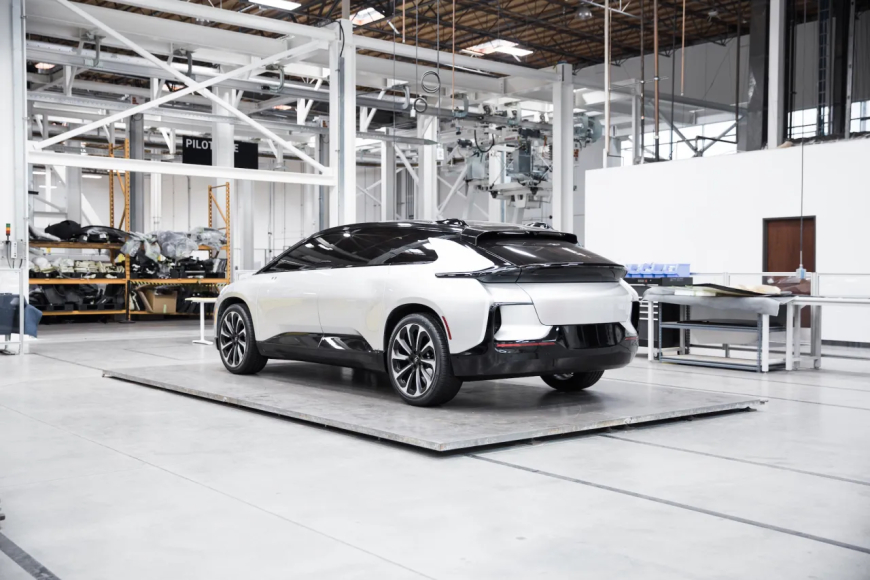
Its first production vehicle, the FF91 luxury electric SUV, was revealed in 2017. However, financial troubles quickly followed. By the end of that year, the company was running low on cash and had laid off or furloughed hundreds of employees. Jia’s business empire in China collapsed, and he relocated to California after being placed on a debtor blocklist.
An investment from the Chinese real estate giant Evergrande briefly stabilised the company, but the partnership unravelled in 2018, leading to further layoffs. Jia stepped down as CEO in 2019 and filed for personal bankruptcy, but he remained influential behind the scenes. This became a concern when Faraday Future went public in 2021, raising about $1 billion. Members of the board later questioned whether executives had misrepresented Jia’s level of control, particularly after a short seller report raised similar concerns.
A special committee was formed, hiring external legal and forensic accounting firms. Within months, it began sharing findings directly with the SEC.
Between January and April 2022, Jia was sidelined, senior executive Matthias Aydt was placed on probation, and Jerry Wang, Jia’s nephew, was suspended before later resigning. The investigation also uncovered that the company had relied on multimillion-dollar loans from employees connected to Jia before going public, classified as related-party transactions.
Faraday Future disclosed the SEC investigation on March 31, 2022, and later confirmed DOJ information requests in June of that year.
Dodging another bullet
Throughout 2022, internal power struggles emerged as employees and allies of Jia attempted to regain control of the company. This led to serious tensions, including reported threats against board members, some of whom eventually resigned, allowing leadership aligned with Jia to return.
The company began delivering its FF91 vehicles in early 2023. However, former employees filed lawsuits alleging that these deliveries did not constitute legitimate sales and that investors had been misled. SEC investigators issued subpoenas related to these claims.
Depositions of former staff continued into 2024 and early 2025.
The Wells Notice issued in July 2025 stated that SEC staff had made a preliminary determination to recommend enforcement action over alleged violations of anti-fraud provisions, specifically concerning statements made during the SPAC merger about related-party transactions and Jia’s role in the company.
Despite these developments, the SEC ultimately chose not to pursue the case.
Faraday Future continues to market the FF91 but has also shifted its business strategy. The company has begun importing lower-cost hybrid and electric vans from China, appears to be rebranding Chinese robotics products, and has repurposed a publicly traded biotechnology company into a crypto-focused business.
These efforts have not resolved its financial challenges. On Friday, Faraday Future disclosed that it had received a warning from Nasdaq that its stock price had fallen below the $1 minimum requirement, placing it at risk of delisting.


































 Like
0
Like
0
 Dislike
0
Dislike
0
 Love
0
Love
0
 Funny
0
Funny
0
 Angry
0
Angry
0
 Sad
0
Sad
0
 Wow
0
Wow
0