







































Uber plans to use its driver network as a data system for self-driving technology
Uber aims to transform its millions of drivers into a large-scale sensor network to support self-driving companies with real-world road data and mapping insights.
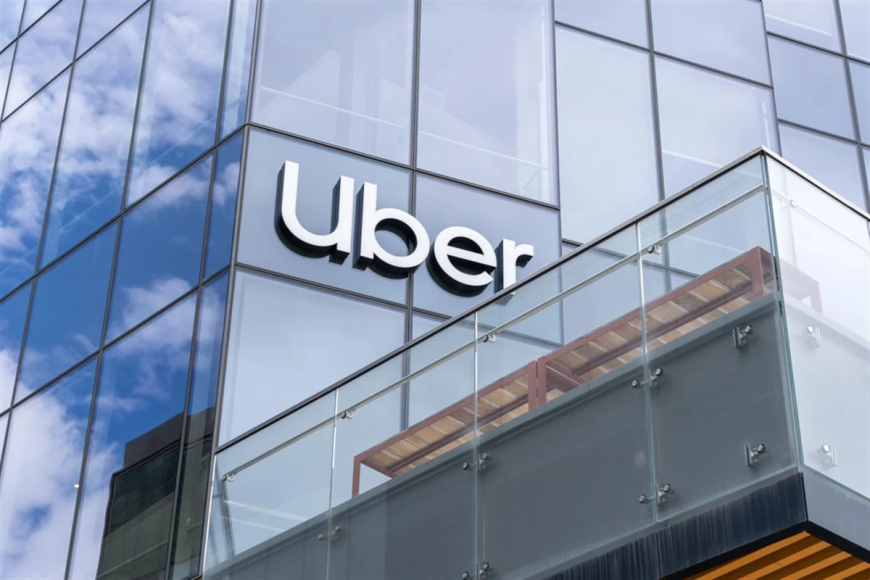
Uber is exploring a long-term strategy that extends far beyond transporting passengers. The company aims to equip cars driven by human drivers with sensor systems to collect real-world data for autonomous vehicle (AV) developers — and potentially for other organisations building AI systems that rely on real-world scenarios.
The concept was outlined by Praveen Neppalli Naga, who described the approach as a natural progression of the company’s recently introduced AV Labs initiative.
“That is the direction we want to go eventually,” Naga said, referring to the idea of integrating sensors into vehicles driven by Uber’s driver base. “But first, we need to get an understanding of the sensor kits and how they all work. There are some regulations — we have to make sure every state has [clarity on] what sensors mean, and what sharing it means.”
At present, Uber’s AV Labs program operates with a limited fleet of sensor-equipped vehicles, managed directly by the company rather than as part of its broader driver ecosystem. However, the long-term vision is significantly more expansive. With millions of drivers operating worldwide, even partial adoption of sensor-equipped vehicles could transform Uber into one of the largest real-world data collection networks available to the AV industry.
Naga emphasised that access to high-quality data, rather than the underlying technology, is now the primary constraint facing autonomous vehicle development. “The bottleneck is data,” he said, pointing to the challenges faced by companies like Waymo in gathering diverse driving scenarios. Collecting such data often requires deploying vehicles across multiple locations and conditions, which can be both expensive and logistically complex.
Uber’s strategy positions the company as a potential data infrastructure layer for the AV ecosystem. This comes after it previously stepped back from developing its own self-driving technology — a decision that former co-founder Travis Kalanick has publicly described as a mistake. As autonomous systems continue to evolve globally, questions have emerged about Uber’s long-term relevance without its own AV technology.
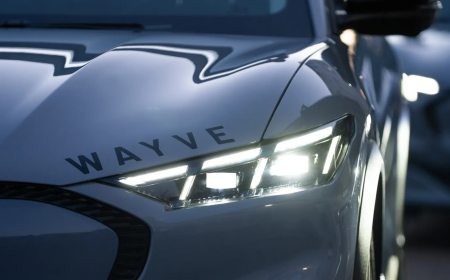
Currently, Uber has partnerships with around 25 autonomous vehicle companies, including Wayve, which operates in London. The company is also developing what Naga described as an “AV cloud” — a structured repository of labelled sensor data that partner companies can access to train their models. Through this system, partners can also test their algorithms in “shadow mode,” running simulations on real Uber trips to evaluate how an autonomous vehicle would perform without actually deploying one on the road.
“Our goal is not to make money out of this data,” Naga said. “We want to democratise it.”
However, given the potential commercial value of such a dataset, that stance may evolve. Uber has already made equity investments in several AV companies, and its ability to provide large-scale proprietary data could strengthen its position within an industry that still depends heavily on its ride-hailing platform to connect with users.
What's Your Reaction?
 Like
0
Like
0
 Dislike
0
Dislike
0
 Love
0
Love
0
 Funny
0
Funny
0
 Angry
0
Angry
0
 Sad
0
Sad
0
 Wow
0
Wow
0