

























Sony and Honda reportedly abandon joint electric vehicle project
Sony and Honda are reportedly stepping back from their joint EV project, signalling challenges in collaboration and shifting priorities in the electric vehicle market.
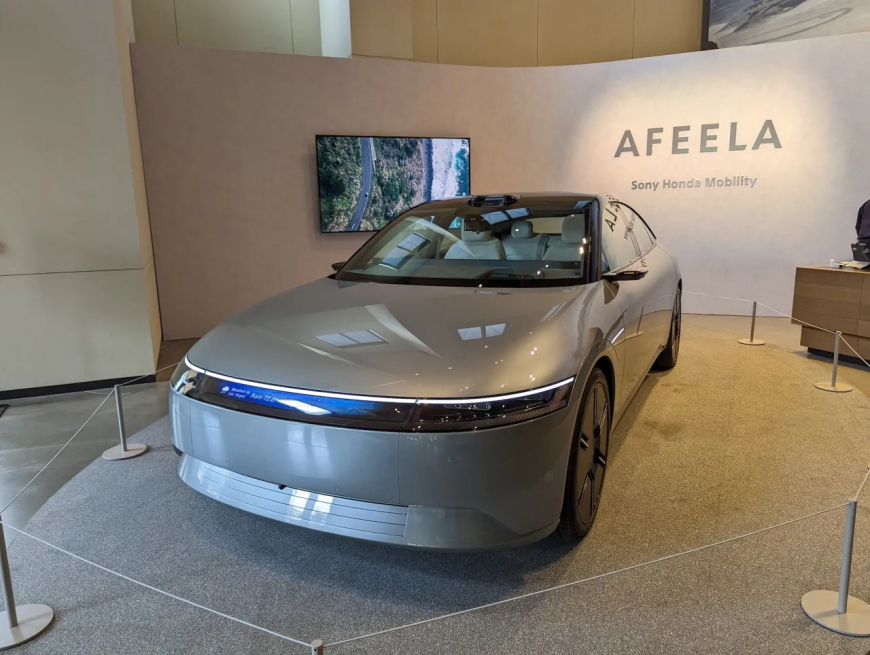
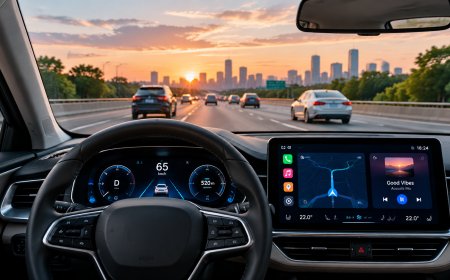
Sony Honda Mobility, the collaboration between Sony and Honda, has reportedly decided to discontinue development of the two “Afeela”-branded electric vehicles that had been in progress over the past few years.
The move follows a major strategic shift by Honda, which earlier this month announced it would cancel three electric vehicles planned for the U.S. market. That reversal is expected to cost the company nearly $16 billion. Honda pointed to factors such as tariffs introduced under Donald Trump and increasing competition from Chinese manufacturers as key reasons behind its decision.
Sony Honda Mobility confirmed on Wednesday that it had intended to rely on “certain technologies and assets” from Honda to develop and support the Afeela sedan and SUV. However, with Honda altering its broader EV strategy, the joint venture can no longer continue developing the vehicles. The Afeela 1 sedan was slated for release later this year, with a starting price of approximately $90,000. Despite the progress made, the project will no longer move forward under the current circumstances.
At this stage, the future of the joint venture itself remains uncertain. It is also unclear what will happen to the several hundred employees working across its operations in Tokyo and California. Sony Honda Mobility stated that it will continue discussions with both parent companies to evaluate the path ahead. The partners will jointly announce decisions on the venture’s future direction, mid- to long-term role, and contribution to the broader evolution of mobility.
Sony’s ambitions in the automotive sector first became public at the Consumer Electronics Show 2020, where the company unveiled a concept car known as the Vision-S. The reveal came as a surprise, even to Sony, as the prototype attracted significant attention from both the industry and the public. At the time, the Vision-S appeared to serve primarily as a demonstration of Sony’s capabilities in entertainment and electronics. The vehicle featured a wide digital dashboard display, immersive 360-degree audio, rear passenger screens, and a network of 33 sensors integrated throughout the car. During the presentation, then-CEO Kenichiro Yoshida described the prototype as a representation of Sony’s contribution to the future of mobility.
Although the Vision-S was presented as a functional vehicle — built on a platform supplied by automotive partner Magna — it remained unclear whether Sony intended to pursue full-scale production. That question was answered in 2022 when Sony announced its partnership with Honda, committing to developing both a sedan and an SUV. The Afeela brand was formally introduced the following year.
Since then, however, the landscape for electric vehicles in the United States has shifted dramatically. Policy changes, including tariffs and a rollback of incentives that previously encouraged EV adoption, have reshaped market dynamics. The federal EV tax credit has been eliminated, although some state-level subsidies remain.
At the same time, the industry has seen significant turbulence. Several EV-focused startups have shut down, while others have pivoted toward hybrid models or delayed product launches. Even established automakers have scaled back or cancelled multiple EV projects that were previously in development.
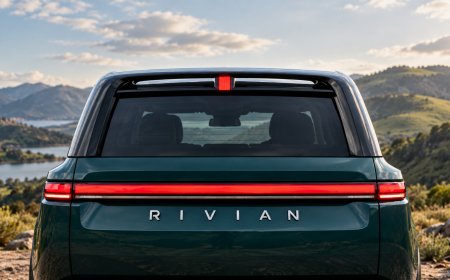
Against this backdrop, the market positioning of Afeela vehicles had already raised questions. The joint venture was entering a highly competitive segment dominated by well-established brands offering strong identities and advanced technology. Companies such as Rivian and Lucid Motors have already built reputations in the premium EV space.
The past decade has consistently shown that launching and sustaining a new automotive brand in the U.S. market is extremely challenging, even for ventures backed by major corporations. Given shifting economic conditions and intensifying competition, the decision to discontinue the Afeela project reflects the broader uncertainties affecting the electric vehicle industry.
What's Your Reaction?
 Like
0
Like
0
 Dislike
0
Dislike
0
 Love
0
Love
0
 Funny
0
Funny
0
 Angry
0
Angry
0
 Sad
0
Sad
0
 Wow
0
Wow
0