
























Three Ambitious Technologies Driving SpaceX’s Massive IPO Expectations
Several high-impact technologies, including reusable rockets, satellite internet services, and next-generation space transportation systems, are driving SpaceX’s growing valuation. These initiatives are strengthening investor confidence ahead of a potential future IPO.

SpaceX is set to enter the public markets on Friday, and investor demand appears exceptionally strong. Reports suggest the company’s $75 billion stock offering has been heavily oversubscribed, with some institutional investors reportedly seeking allocations worth billions of dollars to gain exposure to Elon Musk’s aerospace empire.
There are several reasons investors might approach the offering cautiously. Large IPOs have often struggled after listing; the company remains unprofitable, and Musk’s unpredictable public behaviour would likely concern shareholders at many other major corporations. Yet enthusiasm around the offering remains high. Over the years, many technology investors have learned that betting against Musk has frequently proven costly.
Still, examining SpaceX’s long-term plans provides insight into what the company’s supporters are ultimately backing. At the centre of that vision is an ambitious orbital data-centre strategy that has emerged over the past 18 months as Musk sought a unifying narrative for the company ahead of its public debut.
As with many of Musk’s ventures, the plan relies on several extremely difficult engineering achievements. Success would require a fully reusable rocket system, the creation of a new American semiconductor manufacturing facility, and the ability to accelerate satellite production dramatically.
Those goals make evaluating the company particularly challenging. Recent analyses by the financial research firm Morningstar and New York University finance professor Aswath Damodaran sought to estimate SpaceX’s value using more conservative assumptions. Both arrived at figures well below the nearly $1.8 trillion valuation reportedly being discussed by the company’s bankers. Morningstar estimated a value of roughly $825 billion, while Damodaran placed the figure closer to $1.2 trillion.
Much of the gap reflects the combination of two very different businesses: a highly profitable and dominant space operation alongside a far riskier artificial intelligence strategy. Morningstar’s analysis suggested that the difference between its estimated fair value and the IPO pricing effectively represents a large premium being placed on SpaceX’s ability to deploy orbital data centres at the scale Musk envisions successfully.
Both assessments viewed the company’s launch services and satellite internet operations as its strongest assets, while considering its AI ambitions significantly more uncertain.
The Question of SpaceX’s AI Business
One challenge for investors is understanding exactly what SpaceX intends its AI business to become. In its IPO materials, the company highlighted enterprise AI as its largest opportunity, citing coding products built with talent acquired from Cursor and a project known as Macrohard, which aims to equip digital agents with capabilities traditionally performed by white-collar workers.
SpaceX estimated the addressable market for those opportunities at $22.7 trillion, compared with $2.4 trillion for AI infrastructure and less than $2 trillion for its space-related activities.
At the same time, the company has recently entered into agreements to provide computing capacity to firms such as Anthropic and Google, which could also be considered competitors in AI model development. While Musk’s businesses have previously worked with rivals in other industries, the situation raises questions about where long-term value in AI will ultimately be created.
The broader AI industry continues to operate under the assumption that leading developers must constantly train larger and more capable models to remain competitive. However, advances in lower-cost open-source models have introduced uncertainty into that equation.
Orbital data centres represent one potential solution. If successful, they could provide SpaceX with sufficient computing capacity to participate as both an infrastructure provider and an AI system developer.
Musk’s Vision for Space-Based Data Centres
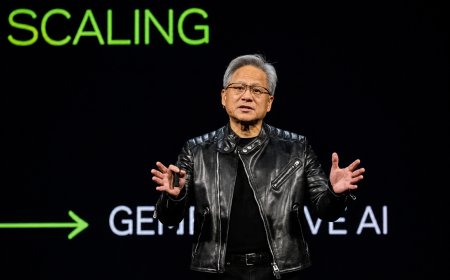
In a recently released interview, Musk explained why he believes SpaceX is uniquely positioned to build large-scale orbital data centres. His argument centres on the company’s ability to launch significant amounts of hardware into orbit at low cost while also producing solar panels and advanced computing systems.
Many industry experts believe large-scale space-based data centres remain roughly a decade away. Musk, however, suggested the timeline could be significantly shorter.
“This is not a promise of what we’ll do,” Musk said. “This is what we are going to try to do, and think we probably can do, which is to get to roughly an annualised rate of a gigawatt per year by the end of next year, in terms of space AI compute.”
Based on SpaceX’s projected power output of 150 kilowatts per satellite, reaching that target would require production of approximately 6,600 satellites annually, or more than 550 every month. That would represent roughly double the company’s current Starlink production rate.
Although Musk argues the proposed AI satellites would be simpler to manufacture, achieving that level of output would be a major challenge, particularly because the required production facilities are still being developed. The company is also continuing to expand its solar panel manufacturing capabilities.
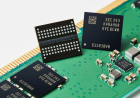
Another major component of the plan is Terafab, SpaceX’s proposed semiconductor foundry. Musk views the project as critical to supporting future growth toward even larger computing targets. Building advanced chip fabrication facilities, however, is among the most difficult industrial projects in the world, often requiring billions of dollars and many years to complete.
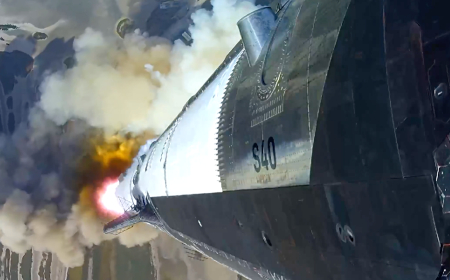
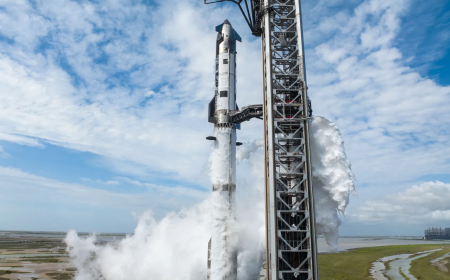
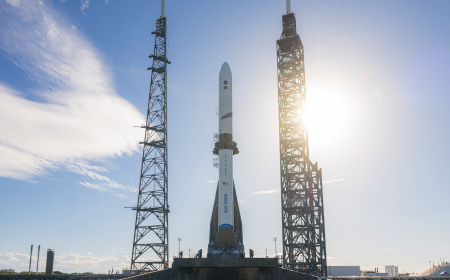
Then there is Starship, the launch vehicle expected to make orbital data centres economically viable.
Although recent Starship testing showed progress, rapid and routine reusability has not yet been demonstrated. Initial operations may involve reusing only portions of the vehicle, increasing deployment costs. SpaceX is also still addressing regulatory reviews related to previous test flights and has not provided a firm timeline for the rocket’s next launch.
The company has indicated that Starship could begin launching Starlink satellites before the end of the year, but timelines around the programme have frequently shifted. Even NASA, which has awarded SpaceX a multibillion-dollar contract to develop a lunar landing system based on Starship, remains cautious about committing to future mission schedules.
A High-Risk, High-Reward Proposition
When public investors gain access to SpaceX shares, they will be buying into a company that already dominates space launch services in the United States and Europe, operates a global satellite communications network, and is pursuing one of the most ambitious AI infrastructure projects ever proposed.
Achieving that vision depends on solving several unprecedented challenges. SpaceX must successfully develop a fully reusable rocket, dramatically expand satellite manufacturing in a fraction of the time required to build Starlink production, and establish a domestic semiconductor foundry despite the immense complexity of the industry.
Musk has often argued that SpaceX is uniquely positioned to attempt these goals. Whether that advantage translates into success remains uncertain, but the scale of the challenge is difficult to ignore.
For years, Musk suggested he would not take SpaceX public until the company had reached Mars, believing public-market pressures could undermine long-term ambitions. While that milestone remains far away, the objectives now being presented ahead of the company’s IPO may prove just as demanding.
What's Your Reaction?
 Like
0
Like
0
 Dislike
0
Dislike
0
 Love
0
Love
0
 Funny
0
Funny
0
 Angry
0
Angry
0
 Sad
0
Sad
0
 Wow
0
Wow
0