



































Why It May Be Time to Phase Out Plug-In Hybrid Vehicles
As electric vehicle adoption accelerates, critics argue plug-in hybrid vehicles are delaying the transition to fully electric cars due to real-world emissions gaps and policy loopholes.
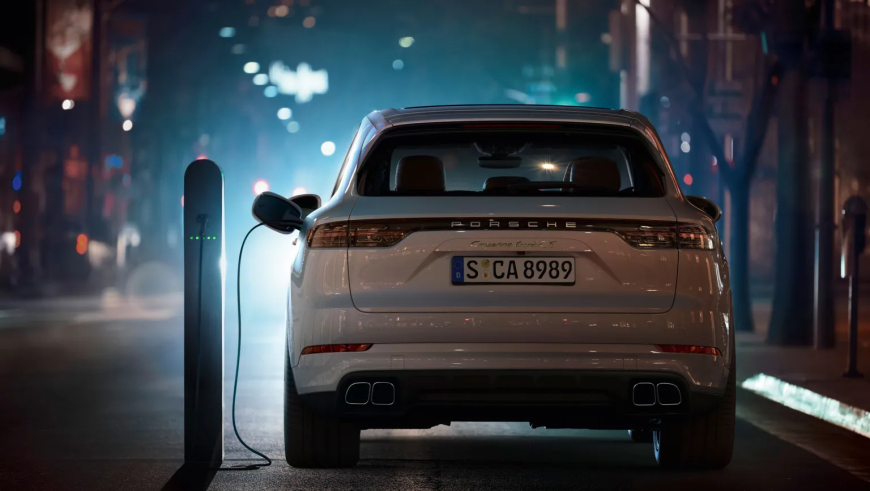
Plug-in hybrid vehicles (PHEVs) are widely promoted as a stepping-stone to fully electric cars. In theory, they cut emissions by driving like EVs on short trips and switching to gasoline for longer journeys.
But that benefit only materialises when owners consistently plug them in. And real-world evidence pulled from the cars’ own onboard systems suggests many drivers don’t.
Using vehicle computer data, researchers at the Fraunhofer Institute were able to separate the energy sources: how much came from the electricity grid and how much from the internal combustion engine. Their findings were stark: grid electricity accounted for under one-third of total driving energy. Most of the roughly 1 million PHEVs in Germany were plugged in either rarely or not at all.
That should be a warning sign for U.S. automakers now pitching upcoming PHEV models as attractive options for American drivers. By combining gasoline and electricity, these companies aim to lift fleet efficiency without depending on a rapid, large-scale EV rollout.
“We’re looking to make CO2 reductions across our lineup, but we’re doing it in a very efficient way,” Ford CEO Jim Farley said earlier this month during an earnings call.
However, the new research indicates that PHEVs often fail to deliver the efficiency improvements they’re marketed for.
Among the brands studied, Toyota drivers appeared to rely most on electricity—yet even they used electric power for only 44% of the energy consumed while driving. At the other extreme were Porsche drivers, who used electricity for just 0.8% of their driving energy. The average Porsche PHEV owner charged only about 7 kilowatt-hours across two years. Put another way: the typical driver added less than half the battery’s capacity—once—over that entire period.
Previous research has already shown PHEVs can emit roughly 3.5 times more pollution than their official ratings imply. This new study helps explain why, because it directly measures how much electricity vehicles actually gain from plugging in. Like other hybrids, PHEVs can operate in blended modes, combining gasoline and electric power. The researchers relied on vehicle-sourced data to disentangle those contributions.
One major limitation is that many PHEVs come with relatively small batteries, designed for short electric distances. Some only manage a few miles, while many models sold in recent years typically offer around 20 to 30 miles of electric range. Regulators in Europe and automakers have floated the idea of longer future PHEV ranges, hoping bigger batteries might push drivers to charge more often.
But a larger battery doesn’t guarantee better behaviour. And even when charged, many PHEVs remain inherently compromised when driving on electricity. That’s because most are built on conventional gasoline platforms, where the electric motor and supporting electronics can’t cover the vehicle’s full power needs. When a driver accelerates hard, the gasoline engine often has to step in. In some models, the engine also turns on in cold weather to provide cabin heat. Once drivers experience those moments, it’s easy to see why many conclude: if the engine turns on anyway, why bother plugging in?
Which leads to the bigger question: what’s the point of PHEVs in the first place?
They’ve long been marketed as a gentle transition tool—something to help hesitant buyers get comfortable with plugging in while public charging networks expand. The idea is that drivers will build the habit over time. Then, when they’re ready to replace their car, the charging infrastructure will be mature enough for them to switch smoothly into a full battery-electric vehicle.
But if owners aren’t charging their PHEVs, they’re not building that habit at all. Without regular charging, the electric drivetrain isn’t delivering the intended benefits. Air quality still suffers. Drivers end up hauling around hundreds of extra pounds of hardware and battery weight. And the more complex dual-power system can mean more recalls, more servicing, and higher ownership costs.
There are ways the formula could be adjusted. One proposed middle path is the extended-range electric vehicle (EREV). The concept is straightforward: the vehicle runs on battery power until it’s depleted, then a gasoline engine acts as a generator to recharge the battery. Importantly, an EREV doesn’t have to be plugged in to keep moving—an owner could theoretically drive for years using only gasoline, never connecting to the grid.
BMW once offered a version of this idea with the i3 range extender, but that model ended production years ago. Ford and Stellantis have both announced EREV pickup trucks, though those vehicles still haven’t reached showrooms.
At the same time, public EV charging continues to grow. It’s increasingly plausible that by the time automakers scale PHEV and EREV production significantly, many drivers won’t need the “safety net” of a gasoline engine at all.
For some households, that shift has already happened. After spending a decade split between a BMW i3 range-extender and a Chrysler Pacifica Hybrid PHEV, one family eventually moved to a fully electric Kia EV9 two years ago—deciding the backup engine wasn’t necessary anymore.
Traditional automakers, many of which have repeatedly revised and re-revised their electrification plans, may end up pivoting yet again.
On paper, plug-in hybrids looked like a clever compromise. In the real world, the evidence increasingly suggests they haven’t lived up to their promises.
What's Your Reaction?
 Like
0
Like
0
 Dislike
0
Dislike
0
 Love
0
Love
0
 Funny
0
Funny
0
 Angry
0
Angry
0
 Sad
0
Sad
0
 Wow
0
Wow
0