






























Apple Scrambles to Close the AI Gap at WWDC 2026
Apple used WWDC 2026 to unveil new AI-powered features, enhanced Siri capabilities, smarter app integrations, and updated developer tools as it works to catch up with rivals in the rapidly evolving artificial intelligence market.
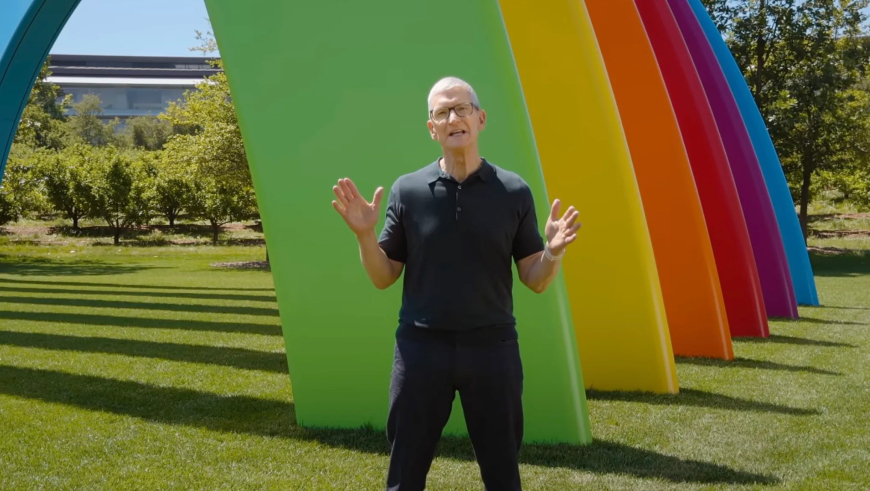
Apple’s Worldwide Developers Conference 2026 opened with an unusual tone. Rather than leading with its long-anticipated AI-powered Siri overhaul, Apple spent much of the early part of the keynote highlighting improvements to existing software and addressing issues that had drawn user criticism over the past two years.
During the presentation, Senior Vice President of Software Engineering Craig Federighi emphasised that Apple’s goal was not only to introduce new capabilities but also to improve the features people already use every day.
“Instead of just introducing a host of new features, we’re also taking the features you already rely on and making them even better, because we believe the best operating systems aren’t just built on big breakthroughs; they’re built on sweating the details,” Federighi said during the keynote.
One of the first topics Apple addressed was its Liquid Glass design language, introduced with iOS 26. While visually distinctive, the interface drew criticism from users for its readability and usability. Over the past year, Apple made adjustments to the design and, at WWDC, announced even more customisation options.
Apple’s Director of Human Interface Design, Shubham Kedia, said the company appreciated user feedback and introduced a new control that lets people adjust the visual appearance of Liquid Glass, including a fully tinted option.
Apple also revealed a series of refinements across its software platforms. macOS is receiving a redesigned toolbar intended to improve the distinction between interface controls and content. App icons have also been updated to appear sharper and more defined, including in clear display modes.
Performance improvements were another major focus. Apple said iPhone and iPad apps can launch up to 30% faster, photos can appear in libraries up to 70% faster, and AirDrop transfers can be completed up to 80% faster. The company noted that many of these improvements extend back to devices as old as the iPhone 11.
Several long-standing usability issues were also addressed. Apple announced smoother transitions between Wi-Fi and cellular connections, a new Messages indicator that alerts users when a message may take longer to send, and a rebuilt search system designed to be more reliable and comprehensive. The updated search experience will index new content almost immediately, while Mailprioritizer will prioritise the most relevant results.
Apple also expanded its Health app with support for perimenopause and menopause tracking. Meanwhile, iCloud Shared Photo Albums can now accept contributions from Android and Windows users, making collaboration easier across platforms.
After discussing updates to parental controls and Screen Time features, Apple shifted its focus to Siri and Apple Intelligence. The sequencing highlighted Apple’s broader effort to strengthen its software foundation before introducing major AI capabilities.
The updated Siri experience will launch in beta later this year. However, Apple noted that availability will not initially extend to the European Union or China because of ongoing regulatory considerations.
Beyond Siri, Apple announced several new AI-powered features throughout its ecosystem. Safari can organise tabs automatically, monitor webpages for updates, analyse page content, and even generate custom browser extensions using text prompts.
Apple Intelligence is also improving password management by helping Safari suggest and automatically apply stronger passwords. In Messages, AI-generated reply suggestions can use conversation context, while the system can also help locate photos based on user requests. Calendar now supports event creation through natural-language commands.
The Phone app is gaining contextual intelligence as well. During calls, Apple Intelligence can surface relevant information from apps such as Mail and Messages, including details like reservation numbers, flight information, or confirmation codes.
The Home app is also receiving AI-powered summaries of important events, while Image Playground is being upgraded with more practical image-generation capabilities. Apple said users can create and edit images using natural-language instructions, generate wallpapers and contact posters, and developers will gain access to image-generation tools through a new API.
Photos is also receiving several AI enhancements. Cleanup now offers improved object removal and image reconstruction, while a new expansion tool can extend photo edges using generative AI. Apple also introduced Spatial Reframing, a feature that allows users to adjust the composition of existing images by repositioning subjects and intelligently generating missing visual elements.
Together, the updates reflect Apple’s effort to strengthen its software ecosystem while gradually expanding Apple Intelligence across everyday experiences. Rather n than centring the entire event on AI, the company positioned its latest Siri and Apple Intelligence features as part of a broader strategy focused on both innovation and long-requested improvements.
What's Your Reaction?
 Like
0
Like
0
 Dislike
0
Dislike
0
 Love
0
Love
0
 Funny
0
Funny
0
 Angry
0
Angry
0
 Sad
0
Sad
0
 Wow
0
Wow
0