
















Apple’s AI Showcase at WWDC Gains Credibility Following $250 Million False Advertising Settlement
Apple’s latest WWDC AI demonstrations appeared more practical and realistic after a $250 million settlement related to misleading advertising claims. Learn how the company is rebuilding trust while advancing its artificial intelligence strategy.
Apple’s WWDC 2026 keynote carried a noticeably different tone from recent years. Rather than focusing entirely on groundbreaking announcements, the company spent much of its presentation highlighting fixes and improvements to existing products, including refinements to its Liquid Glass design, upgrades to search functionality, and enhancements to Image Playground.
Among the most significant announcements was the debut of a redesigned AI-powered Siri, arriving nearly two years after Apple first introduced plans for a more capable version of its voice assistant.
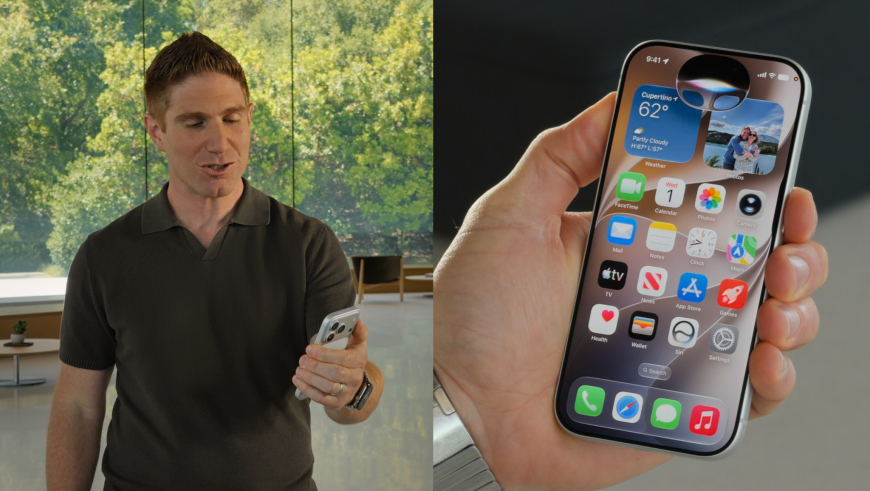
Yet one of the most notable aspects of the presentation was not the features themselves, but how Apple chose to demonstrate them. Many Apple Intelligence features were demonstrated with people actively interacting with iPhones using voice commands and on-screen controls. At the same time, viewers could see the device respond in real time.
Although these demonstrations were pre-recorded rather than live on stage, they appeared far closer to real-world product demonstrations than the highly polished promotional videos Apple used at WWDC 2024 when it first unveiled Apple Intelligence and its next-generation Siri vision.
That earlier presentation later became a point of controversy after several showcased features failed to arrive on the timeline Apple initially suggested. At the time, Apple said the features would be available on iPhone 15 Pro models and newer devices equipped with M1-series chips or later.
However, by March 2025, Apple acknowledged that delivering some of those features would take longer than expected. The delays eventually led to a federal lawsuit alleging false advertising related to the company’s AI demonstrations and feature promises.
Last month, Apple agreed to a $250 million settlement in the case while denying any wrongdoing.
Monday’s keynote appeared structured to avoid a repeat of that situation. While the company still used polished promotional videos for some demonstrations, including Siri voice customisation and voice-to-text improvements, many AI features were presented in a more practical format, showing direct use with working devices.
The presentation style appeared intended to reinforce confidence that the demonstrated capabilities were functioning on actual hardware and would soon be available to users.
Apple also confirmed that many of the new AI capabilities will not require consumers to purchase the latest iPhone models. The upgraded Siri will be available through iOS 27 on iPhone 15 Pro, iPhone 15 Pro Max, all iPhone 16 models, and later devices. With the iPhone 17 currently Apple’s latest generation, many users who upgraded in the past few years will already have compatible hardware.
The decision represents a notable shift, particularly given that Apple originally promoted several of these AI features as coming to iPhone 15 Pro devices at the time of their announcement.
Beyond the iPhone, Apple said Apple Intelligence features will be supported across a broad range of products. Compatibility includes the iPad mini equipped with the A17 Pro chip, iPad models powered by M1 chips or newer, MacBook Neo with A18 Pro, Mac computers running M1 processors or later, Apple Vision Pro, Apple Watch Series 10 and newer, Apple Watch Ultra 2 and later models, and the Apple Watch SE 3 when paired with a nearby Apple Intelligence-capable iPhone.
The broader message from WWDC 2026 was not solely about introducing new AI tools. Instead, Apple appeared focused on demonstrating that its long-promised AI features are closer to reality, while simultaneously rebuilding confidence in its ability to deliver the capabilities it showcases on stage.
By combining software fixes, platform refinements, and more grounded demonstrations of Apple Intelligence, the company used this year’s conference to signal a renewed emphasis on execution alongside innovation as it continues its push deeper into artificial intelligence.
What's Your Reaction?
 Like
0
Like
0
 Dislike
0
Dislike
0
 Love
0
Love
0
 Funny
0
Funny
0
 Angry
0
Angry
0
 Sad
0
Sad
0
 Wow
0
Wow
0