





































Commonwealth Fusion Systems Installs Reactor Magnet, Lands Deal With Nvidia
Commonwealth Fusion Systems installed the first magnet in its SPARC fusion reactor and announced a digital twin partnership with Nvidia.
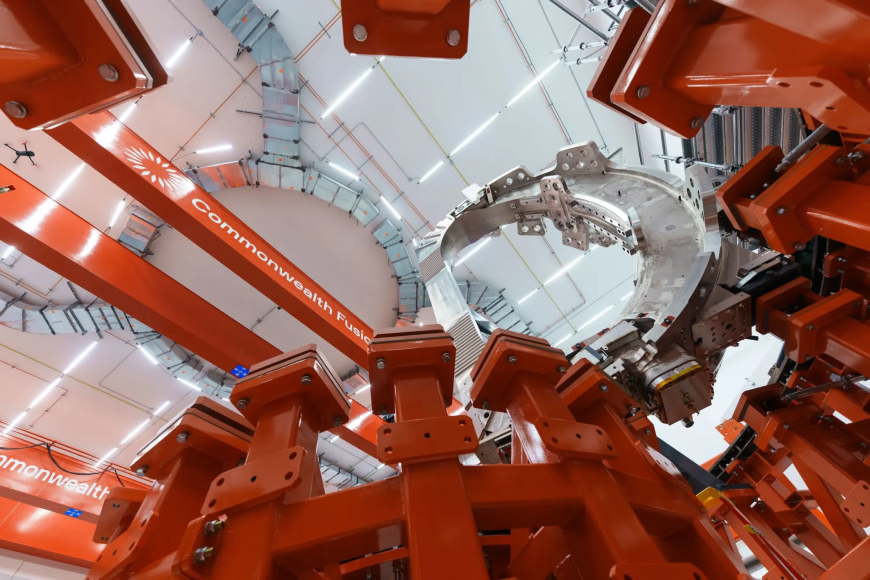
Commonwealth Fusion Systems (CFS) announced Tuesday at CES 2026 that it has successfully installed the first magnet in its SPARC fusion reactor, a demonstration system the company plans to activate next year.
The newly installed component is the first of 18 powerful magnets that will ultimately form a doughnut-shaped configuration designed to generate an intense magnetic field. That field will confine and compress superheated plasma inside the reactor. If successful, the process would allow the plasma to release more energy than is required to heat and compress it, a key milestone for practical fusion power.
After decades of scientific promise and delays, fusion energy is now entering a competitive phase. CFS and several rivals are racing to deliver the first fusion-generated electricity to the grid in the early 2030s. If achieved, fusion could provide a near-limitless source of clean energy using infrastructure similar to conventional power plants.
According to Bob Mumgaard, co-founder and CEO of CFS, significant components of SPARC’s magnet system are already complete. The company expects to install all 18 magnets by the end of the summer.
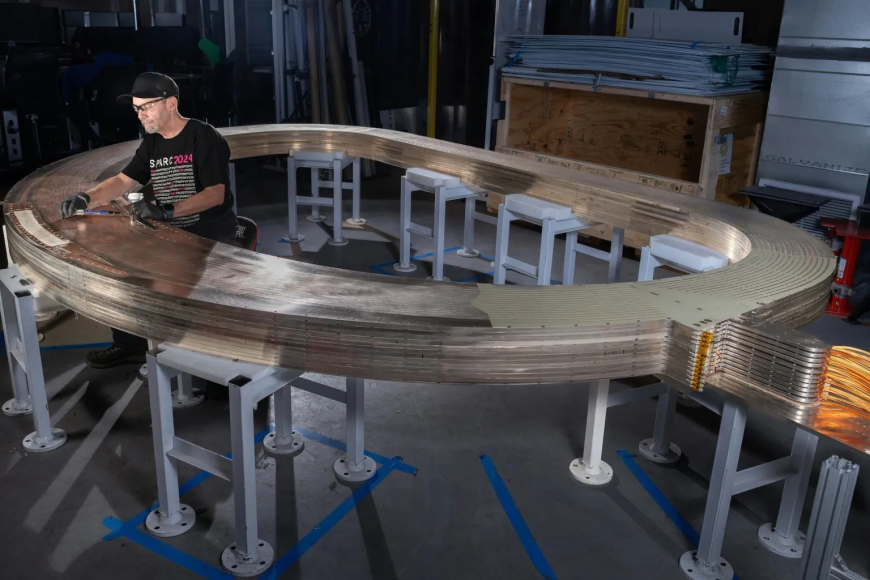
Each magnet weighs 24 tons and can generate a 20 tesla magnetic field
Image Credits: Commonwealth Fusion Systems
“It’ll go bang, bang, bang throughout the first half of this year as we put together this revolutionary technology,” Mumgaard said.
Once fully assembled, the D-shaped magnets will be mounted vertically on a 24-foot-wide, 75-ton stainless-steel cryostat, which was installed last March. Each magnet weighs approximately 24 tons and can generate a 20-tesla magnetic field, roughly 13 times stronger than a typical MRI scanner.
“It’s the type of magnet that you could use to, like, lift an aircraft carrier,” Mumgaard said.
To achieve that level of strength, the magnets must be cooled to –253 degrees Celsius (–423 degrees Fahrenheit), enabling them to carry more than 30,000 amperes of electrical current safely. Inside the magnetic ring, plasma temperatures are expected to exceed 100 million degrees Celsius.
To reduce risk ahead of SPARC’s first operation, CFS also announced a new collaboration with Nvidia and Siemens to create a digital twin of the reactor. Siemens is providing design and manufacturing software, while Nvidia’s Omniverse platform will be used to model and simulate the reactor’s behaviour.
CFS has already been running numerous simulations to forecast reactor performance, but Mumgaard said those efforts have operated mainly in isolation.
“With the digital twin, these are no longer isolated simulations that are just used for design,” he said. “They’ll be alongside the physical thing the whole way through, and we’ll be constantly comparing them to each other.”
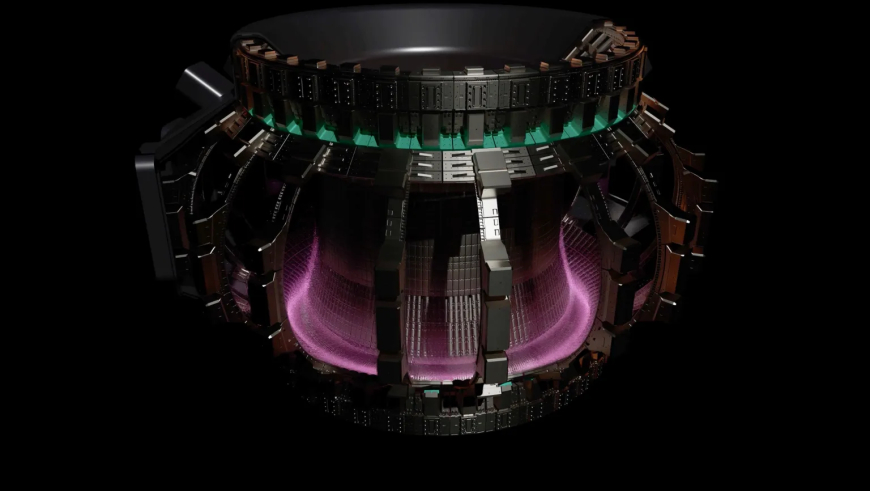
CFS is working with Nvidia and Siemens to produce a digital twin of the Sparc fusion reactor. Image Credits:C ommonwealth Fusion Systems
The goal is to test changes and experiments in the virtual environment before applying them to the physical reactor. “It will run alongside so we can learn from the machine even faster,” Mumgaard added.
Building SPARC has required significant investment. CFS has raised nearly $3 billion to date, including an $863 million Series B2 round completed in August with participation from Nvidia, Google, and dozens of other investors. The company estimates that its first commercial-scale fusion power plant, known as ARC, will cost several billion dollars more to construct.
Mumgaard said digital twin technology and AI tools could help accelerate the timeline for delivering fusion energy to the grid.
“As the machine learning tools get better, as the representations get more precise, we can see it go even faster,” he said. “Which is good, because we have an urgency for fusion to get to the grid.”
What's Your Reaction?
 Like
0
Like
0
 Dislike
0
Dislike
0
 Love
0
Love
0
 Funny
0
Funny
0
 Angry
0
Angry
0
 Sad
0
Sad
0
 Wow
0
Wow
0