































From OpenAI’s offices to a deal with Eli Lilly — how Chai Discovery became one of the flashiest names in AI drug development
Chai Discovery has rapidly emerged as a leading AI drug discovery startup, securing major funding and a partnership with Eli Lilly after early roots tied to OpenAI.
Drug discovery, the process of identifying new molecules for pharmaceutical development, has long been known as one of the most complex, time-consuming, and costly challenges in science. Traditional approaches such as high-throughput screening often involve testing vast numbers of compounds with limited success. In recent years, however, a growing number of biotech startups have turned to artificial intelligence and advanced data technologies to speed up and refine the process.
Chai Discovery, an AI-driven biotech startup founded in 2024, has quickly emerged as one of the most prominent players in this space. In just over a year, the company has raised hundreds of millions of dollars, attracted backing from some of Silicon Valley's most influential investors, and reached unicorn status. In December, Chai completed its Series B funding round, raising an additional $130 million and achieving a valuation of $1.3 billion.
Last Friday, the startup announced a partnership with pharmaceutical giant Eli Lilly. Under the agreement, Lilly will use Chai's software to support the development of new medicines. Chai's core technology, Chai-2, is designed to help generate antibodies — proteins that play a central role in fighting disease. The company has described its platform as a kind of "computer-aided design suite" for molecules, aiming to do for drug discovery what design software has done for fields like engineering and chip development.
The announcement comes at a pivotal moment for the industry. Chai's deal was revealed shortly before Eli Lilly also disclosed a separate $1 billion collaboration with Nvidia to establish an AI-powered drug discovery lab in San Francisco. That initiative, described as a co-innovation lab, is intended to combine large datasets, high-performance computing, and scientific expertise to accelerate the development of new medicines.
Despite the enthusiasm, AI-driven drug discovery has itsscepticss. Some industry veterans argue that pharmaceutical research is inherently complex, so new technologies are unlikely to deliver the dramatic improvements their advocates predict. Still, many believers see AI as a powerful tool that could reshape the field.
Elena Viboch, managing director at venture capital firm General Catalyst and one of Chai's key backers, said she is confident in the startup's approach. She told TechCrunch that biopharma companies that move quickly to partner with AI-focused firms like Chai could be the first to bring new molecules into clinical trials. In her view, that could mean partnerships forming in 2026 and first-in-class medicines entering trials by the end of 2027.
Eli Lilly executives have also expressed confidence in Chai's technology. Aliza Apple, head of Lilly's TuneLab program, which uses AI and machine learning to advance drug discovery, said combining Chai's generative design models with Lilly's biologics expertise and proprietary data could push the boundaries of how new molecules are designed. The ultimate goal, she said, is to accelerate the development of innovative treatments for patients.
Although Chai Discovery is a young company, its roots go back nearly six years. Its origins trace back to early conversations between OpenAI CEO Sam Altman and Chai co-founder Josh Meier, who worked on OpenAI's research and engineering team in 2018. After Meier left OpenAI, Altman reached out to Meier's college friend Jack Dent to explore whether Meier might be interested in collaborating on a proteomics-focused startup — a company centred on the study of proteins.
Meier and Dent met while studying computer science at Harvard. At the time Altman reached out, Dent was working as an engineer at Stripe, another company Altman had backed early. Dent said Altman told him that OpenAI held Meier in high regard and wanted to explore a proteomics spinout. While Dent was receptive, Meier ultimately felt the technology was not yet ready.
Meier instead joined Facebook's research and engineering team, where he helped develop ESM1, the first transformer-based protein language model — work that would later prove foundational for Chai's approach. After Facebook, Meier spent three years at Absci, another AI-driven biotech company focused on drug development.
By 2024, Meier and Dent believed the technology had matured enough to revisit their earlier idea. They reconnected with Altman and decided to move forward with founding Chai Discovery. OpenAI became one of the startup's earliest seed investors, and Chai was initially built while the founders worked out of OpenAI's offices in San Francisco's Mission District.
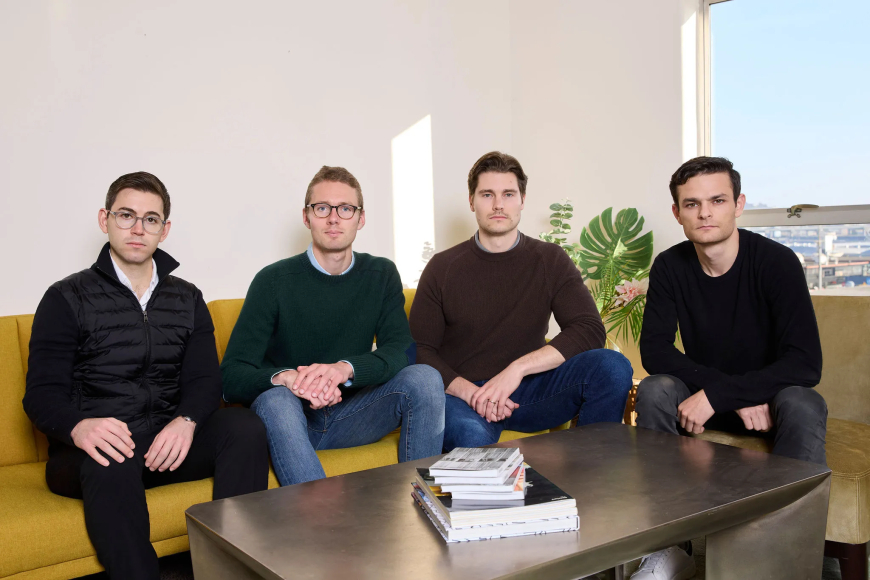
CMeier and Dent founded Chaialongside, co-founders Matthew McPartlon and Jacques Boitreaud. Dent said the early support, including shared office space, helped the team get off the ground. Now, little more than a year later, the company is drawing significant pharmaceutical partnerships and investor attention.
Dent attributes Chai's rapid growth to its technical depth and team focus. He said the company has built its technology entirely in-house, relying on highly customised model architectures rather than adapting existing large language models. General Catalyst's Viboch echoed that confidence, saying there are no fundamental barriers to deploying these models in drug discovery. While new drug candidates must still go through extensive testing and clinical trials, she believes AI-driven approaches can significantly compress discovery timelines and unlock classes of medicines that have historically been difficult to develop.
As interest in AI-powered drug discovery continues to grow, Chai Discovery's swift rise highlights both the promise and the high expectations surrounding the technology's role in shaping the future of pharmaceutical research.
What's Your Reaction?
 Like
0
Like
0
 Dislike
0
Dislike
0
 Love
0
Love
0
 Funny
0
Funny
0
 Angry
0
Angry
0
 Sad
0
Sad
0
 Wow
0
Wow
0