
































GM’s Next-Generation Battery Facility Could Transform Its EV Future
General Motors is accelerating its electric vehicle strategy through a new Battery Cell Development Centre and lithium manganese-rich battery technology. The facility aims to reduce EV costs, improve battery production, and bring affordable long-range electric vehicles to market faster.
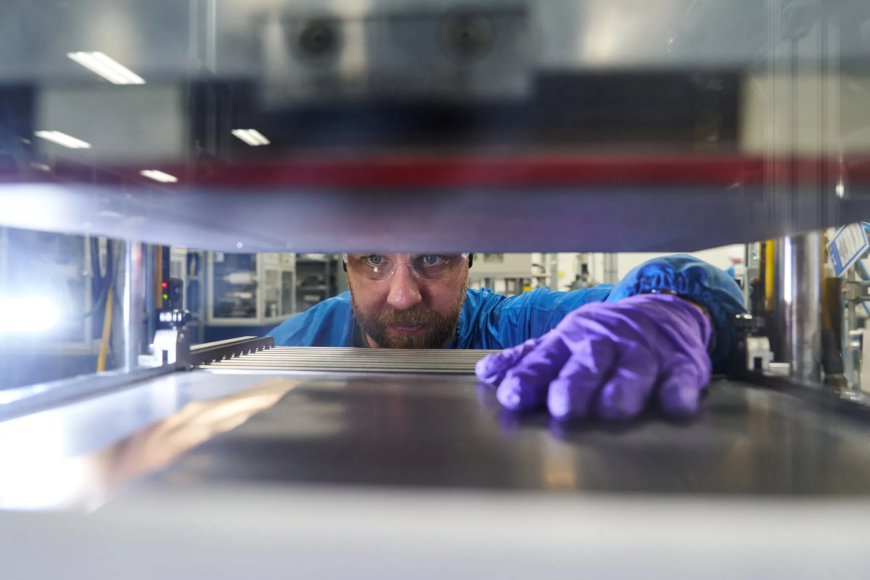
Tucked within the expansive grounds of General Motors’ Warren Technical Centre near Detroit is a new facility that could become central to the automaker’s electric vehicle ambitions.
The newly opened Battery Cell Development Centre (BCDC), a pair of modest-looking buildings spanning roughly 500,000 square feet, represents a key part of GM’s $900 million investment in battery technology. While unassuming from the outside, the facility is expected to help the company reduce EV battery costs and accelerate the rollout of next-generation electric vehicles.
At a time when some automakers are scaling back their EV plans, GM is using the new centre as part of a broader strategy to strengthen its electric-vehicle business. Company executives say the facility could shorten battery development timelines by about a year and help bring lower-cost battery technologies to market faster.
GM has faced challenges in the EV sector. Last year, the company recorded a $1.6 billion charge related to adjustments in its EV manufacturing operations, resulting in workforce reductions and production changes. Reports have also suggested that updates to some of its larger electric trucks and SUVs have been delayed.
A major focus of GM’s future strategy is a battery chemistry known as lithium-manganese-rich (LMR). Kurt Kelty, GM’s vice president of battery and sustainability and former Tesla battery executive, has championed the technology since joining the company.
“That’s really going to be our core battery technology moving forward,” Kelty said. “It’s expected to become a major part of our future product lineup.”
A New Direction for GM Batteries
GM’s EV journey reflects many of the challenges faced by the broader U.S. battery industry. Over the past two decades, battery innovation has advanced unevenly, while growing competition from Chinese manufacturers has forced automakers to rethink long-term plans.
One result of that shift is the gradual transition away from GM’s Ultium battery platform, which currently powers many of the company’s EVs Like several competitors, GM initially focused heavily on nickel-manganese-cobalt (NMC) batteries, a chemistry known for strong performance but also higher costs.
As material prices rose and supply chain concerns intensified, automakers began seeking more affordable alternatives. GM believes LMR batteries could offer a balance between performance and cost. According to the company, LMR delivers energy density close to that of the C batteries while approaching the affordability of lithium-iron-phosphate (LFP) technology used in lower-cost EVs
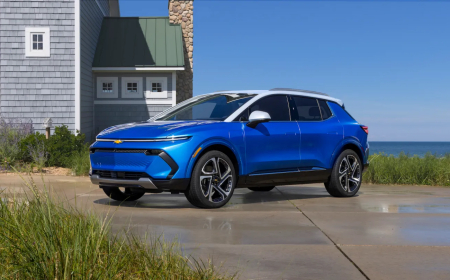
When GM first introduced LMR technology, it said the batteries could reduce costs by more than $6,000 in vehicles such as the Chevrolet Silverado EV while maintaining much of the truck’s range, which exceeds 400 miles. Such savings could help bring EV pricing closer to comparable gasoline-powered models.
However, developing a promising battery chemistry is only one part of the challenge. Scaling production to commercial levels is often the most difficult step. GM hopes to have LMR-powered vehicles on the road by 2028, making the success of the Battery Cell Development Centre especially important.
Bridging Research and Manufacturing
The BCDC fills a gap in GM’s battery development ecosystem. The company opened its Wallace Battery Cell Innovation Centre and its first battery gigafactory in 2022, but needed an intermediate step to connect laboratory discoveries with large-scale manufacturing.
The new facility functions as an advanced pilot production centre. Once fully operational, it will be capable of producing approximately 2,500 battery cells per day, equivalent to about half a gigawatt-hour annually. By comparison, the Wallace research centre next door produces only a few dozen experimental cells daily.
The purpose of the BCDC is to determine whether battery technologies developed in research settings can successfully transition into mass production.
Many promising battery concepts fail during scaling. According to industry research, a battery chemistry generally needs to achieve production yields above 85% within about 18 months to be considered commercially viable.
Kelty compares the process to scaling a family recipe to serve hundreds of guests.
“Once you know how to make the recipe in the lab, the challenge becomes figuring out how to make it consistently in large volumes,” he said. “The transition from small experimental cells to large-format EV batteries is never perfect.”
The BCDC is designed to make that transition smoother and less costly. Test production runs at the facility cost around $200,000, significantly less than testing directly within a full-scale battery factory.
“The equipment is very similar to what we use in large-scale production,” Kelty said. “That should make the handoff to manufacturing much easier.”
Although smaller than GM’s massive Tennessee battery facility, which spans 2.8 million square feet and produces roughly 45 gigawatt-hours annually, the BCDC remains substantially larger than the research centre beside it.
“The BCDC exists to bridge that gap,” said Mo Gallegos, who leads the facility for GM.
Using AI to Accelerate Battery Development
To improve efficiency and reduce costs, GM has increasingly turned to advanced simulation tools and artificial intelligence.
The company has invested heavily in computing infrastructure and has developed physics-based models that predict how changes in battery chemistry or production methods will affect performance.
“On the LMR program alone, we’ve logged more than 150 million CPU hours,” said Radu Theyyunni, director of global virtual electrification and powertrain at GM. “Many traditional engine programs never reach that level of computational usage.”
GM has also created a digital twin of the entire Battery Cell Development Centre. The virtual model includes equipment, wiring systems, control panels, and even detailed representations of mixing equipment used during battery production.
Engineers use the digital replica to test layouts, evaluate maintenance access, and simulate operational processes before equipment is fully commissioned.
“Does the equipment operate correctly? Does it function safely? Is the control system behaving as expected?” Gallegos said. “Those simulations help reduce debugging time and accelerate ramp-up.”
According to GM, these virtual testing efforts have already saved millions of dollars.
Preparing for the Next Stage of EV Growth
While EV sales growth in the United States has slowed somewhat, global demand continues to rise. Worldwide EV sales increased by roughly 20% last year, and many industry analysts expect long-term adoption to continue as battery costs decline.
If GM can successfully commercialise its LMR battery technology, the company could offer more affordable electric vehicles without sacrificing driving range, addressing one of the biggest concerns among consumers.
The first production batches of LMR cells are expected to begin coming off the BCDC lines later this year.
Over the next decade, battery innovation may become just as important to automakers as engine development was throughout the last century. GM’s ability to transform laboratory breakthroughs into mass-produced battery systems will play a major role in determining its position in the electric vehicle market.
Kelty often describes the company’s approach as developing “the right battery for the right application,” a philosophy that echoes GM’s long-standing goal of offering products tailored to a wide range of customers.
LMR may be the first major test for the Battery Cell Development Centre, but it is unlikely to be the last.
What's Your Reaction?
 Like
0
Like
0
 Dislike
0
Dislike
0
 Love
0
Love
0
 Funny
0
Funny
0
 Angry
0
Angry
0
 Sad
0
Sad
0
 Wow
0
Wow
0