





































Smart Tracking Label Aims to Reduce Cargo Theft With Real-Time Shipment Visibility
Discover how a new smart tracking label helps prevent cargo theft by providing real-time shipment visibility, improving supply chain security, and enabling faster cargo recovery.
Imagine receiving a phone call informing you that an entire shipment—24,000 bottles of tequila, for example—has disappeared while in transit. The obvious question would be: how could something that large vanish without anyone knowing where it went?
That scenario reflects a growing problem facing the global shipping industry. Cargo theft has become increasingly sophisticated, while logistics companies continue to struggle with limited visibility into goods once they leave ports, warehouses, or distribution centres. In many cases, shipments effectively disappear from view between major checkpoints, creating opportunities for theft, delays, and costly disruptions.
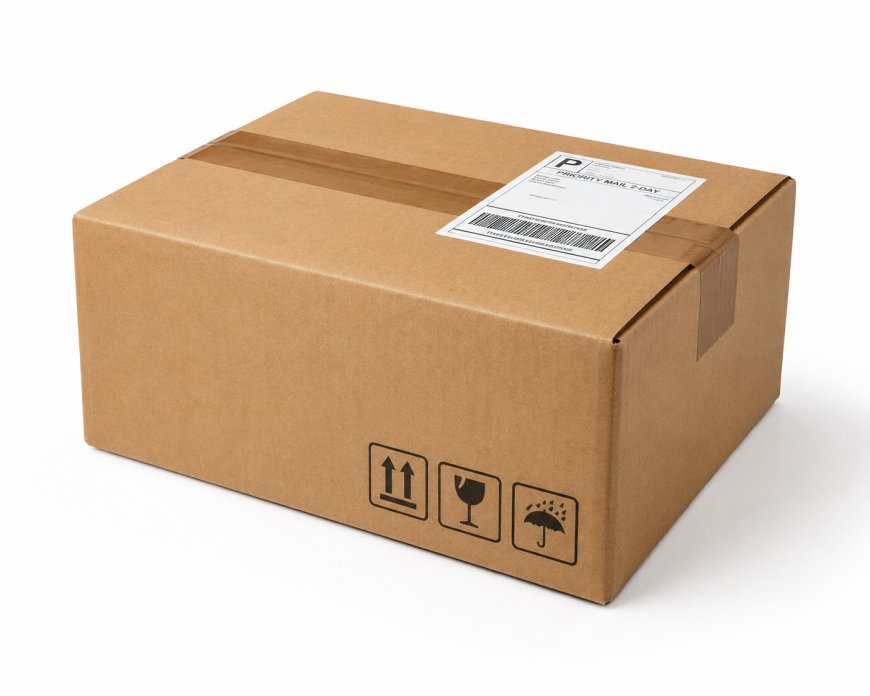
To address that challenge, fleet management company Samsara introduced a new product on Wednesday: the Samsara Tracking Label. Roughly the size of a business card, the adhesive label resembles an ordinary shipping label attached to boxes or pallets. Hidden inside, however, is a compact zinc battery and Bluetooth Low Energy technology that allow the label to communicate with Samsara’s extensive network of connected devices, providing customers with real-time location updates in a disposable form factor.
Although the company has offered asset-tracking products for several years, Samsara Vice President of Connected Equipment David Gal said previous solutions were often too large or too expensive for many shipping applications.
“Customers basically said: ‘We need something real-time, and we need something that can be small enough to mount on any piece of equipment,’” Gal explained. Those requests led Samsara to develop an earlier tracking product known as the Asset Tag, a device approximately the size of a wine cork.
While the Asset Tag solved real-time tracking challenges for some customers, it still extended beyond the surface of whatever it was attached to and remained too expensive for widespread use on standard shipments. It was also designed to be recovered and reused after delivery, limiting its usefulness for one-way shipments.
That customer feedback prompted Samsara’s engineering team to continue refining the concept, ultimately resulting in the new Tracking Label.
According to Gal, what distinguishes Samsara’s solution from many competing tracking technologies is the company’s existing connected-device ecosystem. Over the past several years, Samsara has equipped commercial vehicle fleets with millions of cameras, sensors, and connected devices designed to improve safety and operational efficiency. The new Tracking Label leverages that installed infrastructure as a massive Bluetooth detection network, allowing customers to receive highly accurate location updates throughout a shipment’s journey.
The company has already found additional ways to monetise that growing network. Earlier this year, Samsara introduced Ground Intelligence, a suite of AI-powered tools that detect road hazards, such as potholes, in real time by analysing data collected from vehicles already using its platform.
While Ground Intelligence primarily serves municipalities and local governments, the Tracking Label could represent a much larger commercial opportunity. Global shipping and logistics networks continue to face constant disruptions, and businesses increasingly want precise information about where shipments are at any given moment—whether they are delivering products to customers or waiting for critical manufacturing components.
Customers receive the Tracking Labels in a low-power sleep mode, which Gal said allows them to remain inactive for up to nine months before use. Once activated, the integrated zinc battery powers the Bluetooth radio for approximately 45 days. After the shipment is complete, the label is designed to be discarded rather than recovered. Gal noted that using a lithium battery would have made achieving that disposable design considerably more difficult.
Gal expects the labels to be used primarily for high-value or business-critical shipments, meaning the technology will likely appeal most to large enterprises rather than everyday consumer deliveries. However, he stressed that the benefits extend beyond preventing cargo theft. Continuous shipment visibility enables businesses to react more quickly to delays, reroute deliveries when necessary, and make better operational decisions before small disruptions become major problems.
“It shifts the paradigm from reactive to proactive. If you know something’s delayed, you can get ahead of it,” Gal said.
Samsara is not alone in trying to improve shipment visibility. In April, UPS announced plans to expand its use of RFID sensors to provide real-time package tracking throughout its logistics network.
However, Gal argues that RFID technology remains dependent on packages passing within range of RFID readers. If a shipment is diverted unexpectedly—or falls off a truck, either literally or figuratively—the Bluetooth-powered Tracking Label has a greater chance of continuing to report its location by connecting to Samsara’s constantly moving network of sensors installed across commercial fleets.
Although improving logistics efficiency is a major objective, Gal believes the technology could also have a significant impact on organised cargo theft.
“I have a feeling that we’ll bust some crime rings with this,” he said.
What's Your Reaction?
 Like
0
Like
0
 Dislike
0
Dislike
0
 Love
0
Love
0
 Funny
0
Funny
0
 Angry
0
Angry
0
 Sad
0
Sad
0
 Wow
0
Wow
0