



































Self-Driving Trucks Begin Testing on California Public Roads
Self-driving trucks are entering California public-road testing as Kodiak AI begins operations and Aurora Innovation receives a new DMV testing permit.
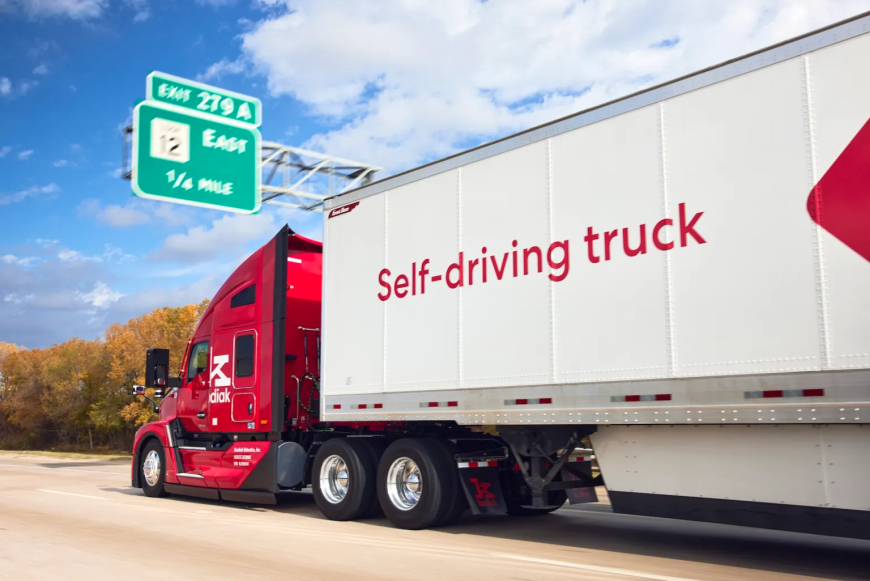
Self-driving trucks are now being tested on California public roads after Aurora Innovation and Kodiak AI received permits from the California Department of Motor Vehicles under the state’s new rules for heavy-duty autonomous vehicles.
Kodiak has already begun testing a small number of trucks, primarily near its Mountain View office. The permits require a trained human safety operator to remain behind the wheel during testing.
California opens roads to autonomous truck testing
California approved updated autonomous vehicle regulations on April 28, removing a longstanding restriction that prevented driverless vehicles weighing more than 10,000 pounds from being tested on public roads. The new framework creates a path for companies to test heavy-duty autonomous vehicles and eventually seek approval for driverless operations.
Aurora and Kodiak met DMV requirements covering insurance, vehicle registration, safety procedures, and qualifications for human safety drivers.
The permits include restrictions. Autonomous trucks generally cannot operate on roads with posted speed limits of 25 mph or less unless those roads are part of a direct route between permitted destinations.
The policy change is particularly significant for Aurora and Kodiak because both companies are based in California but previously concentrated much of their autonomous trucking activity elsewhere.
Aurora and Kodiak already operate outside California
Aurora launched a commercial self-driving truck service in Texas in May 2025, initially operating between Dallas and Houston. It later added routes connecting Fort Worth, El Paso, Phoenix and Laredo as it expanded its freight network.
Kodiak began commercial driverless operations in January 2025 in the Permian Basin in West Texas, initially using autonomous trucks in an off-road industrial environment. The company has since expanded to highway operations, including a Dallas-to-Houston route.
California’s decision to allow heavy autonomous truck testing remains controversial. Teamsters California recently sued the DMV in Alameda County Superior Court, arguing that regulators failed to adequately study and disclose the potential economic effects of autonomous trucking and did not sufficiently consider risks to motorists.
For now, the California permits represent supervised testing rather than fully driverless highway operations. Companies seeking to remove human safety operators will have to advance through additional stages of the state’s regulatory process before deploying autonomous heavy-duty trucks without a driver.
What's Your Reaction?
 Like
0
Like
0
 Dislike
0
Dislike
0
 Love
0
Love
0
 Funny
0
Funny
0
 Angry
0
Angry
0
 Sad
0
Sad
0
 Wow
0
Wow
0