































Tesla and SpaceX Invest $16.8 Billion to Build Massive Terafab Chip Factory in Texas
Tesla and SpaceX will invest $16.8 billion to begin building Terafab, a massive advanced semiconductor factory in Texas designed to produce chips for AI, robotics, autonomous vehicles, and space-based data centres.
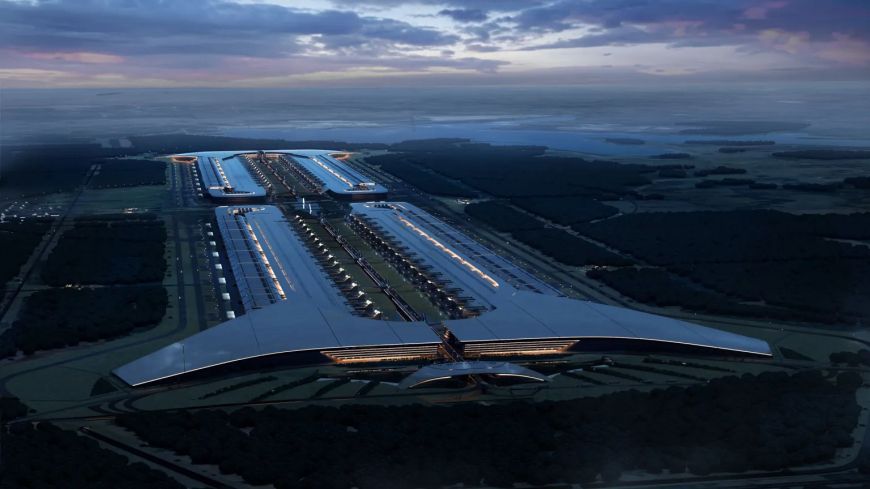
Tesla and SpaceX said Thursday they will invest an initial $16.8 billion to begin construction of Terafab, a massive advanced semiconductor factory the two Elon Musk-led companies are jointly developing in Grimes County, Texas, outside Houston.
The companies envision Terafab as a vertically integrated chip manufacturing complex spanning more than 100 million square feet of planned manufacturing space. SpaceX says the facility will employ at least 3,000 people from Grimes County and neighbouring Brazos County once operational.
Musk, who leads both Tesla and SpaceX, described the planned facility as potentially “the largest and most valuable building on Earth by far,” highlighting the extraordinary scale of the companies’ ambitions for producing their own computing hardware.
A factory built for the AI era
SpaceX describes Terafab as an advanced semiconductor fabrication facility designed to address the growing gap between global chip supply and the enormous computing demand expected from AI, robotics, autonomous vehicles and space-based computing.
The companies’ motivation is closely tied to Musk’s broader technology strategy. Tesla is developing millions of humanoid Optimus robots and autonomous Cybercabs, while SpaceX is pursuing satellites that can serve as data centres for AI training and inference. Those ambitions require significantly more computing power than existing chip production can provide.
SpaceX has previously suggested in regulatory filings that the project could eventually require as much as $119 billion through a multistage construction program. However, the company did not discuss Terafab during its first quarterly earnings call earlier this week.
Intel has also said it will contribute to the project, although the company has provided few details about the nature or scale of its involvement.
Chips for Tesla robots and SpaceX data centres
According to SpaceX, Terafab will combine chip manufacturing, packaging and testing in a single facility. The factory is expected to produce both advanced logic and memory devices, allowing the companies to control more of the semiconductor supply chain internally.
The company says the vertically integrated approach should allow it to make faster improvements to its computing hardware and deploy new systems more quickly.
The chips will be designed for several applications across Musk’s companies. Lower-power processors optimised for edge computing and inference could be used in Tesla’s Optimus robots and autonomous Cybercabs. At the same time, higher-performance chips would support SpaceX’s planned space-based data centres.
SpaceX says bringing these capabilities under one roof will enable faster development cycles and help the companies build computing infrastructure at a scale that would be difficult to achieve through conventional chip suppliers alone.
Water use and local concerns
The massive project has already generated debate among residents. SpaceX said it intends to use water from the nearby Gibbons Creek Reservoir rather than relying on local groundwater supplies.
The announcement came one day after a heavily attended county meeting where hundreds of residents raised concerns about the project, including the millions of dollars in tax incentives awarded to support Terafab and questions about the transparency surrounding the agreement.
Local officials have emphasised the potential economic and educational benefits of the project. Anderson-Shiro Consolidated Independent School District Superintendent Dr Sarah Borowicz said the agreement could expand opportunities for students and help prepare them for future jobs created by the development.
For Tesla and SpaceX, however, Terafab represents something much larger than a regional manufacturing project. It is a bet that controlling semiconductor production will become increasingly important as Musk’s companies attempt to build autonomous vehicles, humanoid robots, and large-scale AI computing infrastructure at unprecedented scale.
What's Your Reaction?
 Like
0
Like
0
 Dislike
0
Dislike
0
 Love
0
Love
0
 Funny
0
Funny
0
 Angry
0
Angry
0
 Sad
0
Sad
0
 Wow
0
Wow
0