



























Lime Debuts on Nasdaq, Marking a New Chapter as a Public Company
Lime has officially gone public on the Nasdaq after years of uncertainty. Learn about the Lime IPO, company valuation, stock debut, business growth, and what the public listing means for investors and the micromobility industry.
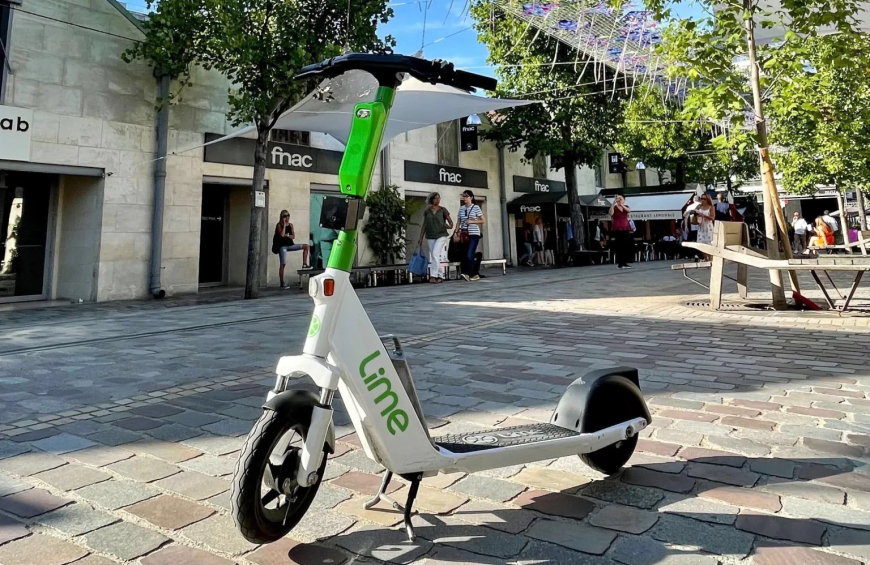
Micromobility company Lime has officially entered the public markets after raising $167 million through its initial public offering (IPO), bringing to a close nearly nine years as a privately held business marked by dramatic valuation swings, shifting market trends, and the challenges of navigating a global pandemic.
The scooter- and bike-sharing company, which counts Uber among its major investors, sold approximately 6.68 million shares at $25 per share, placing the offering in the middle of its previously announced price range of $24 to $26 per share. Trading began on the Nasdaq under the ticker symbol “LIME” on Wednesday afternoon, with the stock climbing roughly 9% during its first hour on the exchange.
The long-awaited market debut values Lime at approximately $1.66 billion, placing it just below the valuation achieved by rival micromobility company Bird when it went public via a special purpose acquisition company (SPAC) merger in 2021.
Reflecting on the milestone, Lime CEO Wayne Ting said the company’s journey has been anything but straightforward.
“Having that resilience and patience and belief and optimism that we would get through the toughest moments really paid dividends over the long run, because there were many days, weeks, months when I wasn’t sure if Lime was going to make it past the next three months, four months,” Ting said during an interview on Wednesday. “To be here today as a public company feels incredibly rewarding, and it took a lot of heart, sweat, and tears to get to this point.”
Lime has explored going public for several years. Following a $523 million funding round in 2021, Ting indicated the company hoped to pursue an IPO in 2022. He revisited those plans in 2023, explaining that Lime was waiting for more favourable market conditions before moving forward.
According to Ting, however, market timing alone was never the deciding factor. He wanted Lime to demonstrate that it had become a far more resilient and financially sustainable business than some of its former competitors, including Bird.
“We felt like we needed to demonstrate we were going to be a self-sustaining, profitable, free cash flow positive business, and that only happened over the last three years, where we had three years of free cash flow positive results,” he said. “I think the timing is right because the business is strong. We still have a lot of growth ahead of us.”
The capital raised through the IPO is expected to play an important role in strengthening Lime’s balance sheet. In documents filed during its IPO in May, the company acknowledged “substantial doubt” about its ability to continue operating without additional financing. Lime disclosed that it intends to use the proceeds to address nearly $1 billion in liabilities, with more than half of those obligations becoming due before the end of this year. While a portion of that debt is convertible, the company noted that without the IPO, it would have needed to secure financing through alternative sources.
Those financial pressures reflect the difficult environment that has challenged much of the micromobility industry in recent years. Even during periods of strong consumer demand, many operators have struggled to establish sustainable business models. Bird ultimately filed for bankruptcy protection after becoming a public company. At the same time,e several other competitors either merged, such as Tier and Dott, were removed from major stock exchanges, including Micromobility.com, or ceased operations entirely, as was the case with Superpedestrian.
Despite those industry-wide difficulties, Lime has steadily improved its financial performance. Revenue increased from $521 million in 2023 to $686.6 million in 2024 before reaching $886.7 million last year. The company also significantly reduced its net losses, cutting them from $122.3 million in 2023 to $33.9 million in 2024, although losses rose slightly to $59.3 million during 2025. On an adjusted basis, excluding depreciation, Lime reported gross profit of more than $400 million in 2025.
A significant driver of that growth has been the company’s international expansion. Lime now operates across 230 cities spanning 29 countries worldwide. At the same time, the company remains closely connected to Uber, which owns roughly 24% of Lime and generated more than 14% of Lime’s revenue last year by allowing users in select cities to rent Lime scooters and bicycles directly through the Uber app.
Ting attributed Lime’s stronger financial position to continuous improvements in operational efficiency, lower unit costs, and extensive use of software and machine learning to optimise operations across individual cities. He believes becoming a publicly traded company will allow Lime to strengthen those competitive advantages even further.
“It’s more capital for us to invest in growth and expanding Lime, in investing back into our technology. I feel like a lot of the advantages that we have, being the only scaled operator, the only profitable operator, are only going to amplify now that we’re public,” Ting said. “It’s a real game of inches business, and we’re constantly looking for this 1%, 2% improvement.”
Ting also expects Lime’s new public company status to strengthen its relationships with city governments that issue operating permits.
“I know a lot of cities don’t like the fact that they sometimes would bring an operator into the market and that operator will go out of business in six to 12 months. They want a long-term sustainable partnership, and now that we’re public, our financials are available to any city regulator looking to decide who’s going to be a good long-term partner,” he said.
What's Your Reaction?
 Like
0
Like
0
 Dislike
0
Dislike
0
 Love
0
Love
0
 Funny
0
Funny
0
 Angry
0
Angry
0
 Sad
0
Sad
0
 Wow
0
Wow
0