






































India Moves to Reshape UPI Business Model With Merchant Fee Framework
India has introduced legislation that could allow merchant charges on some UPI transactions, creating a potential new revenue model for the country’s digital payments network.
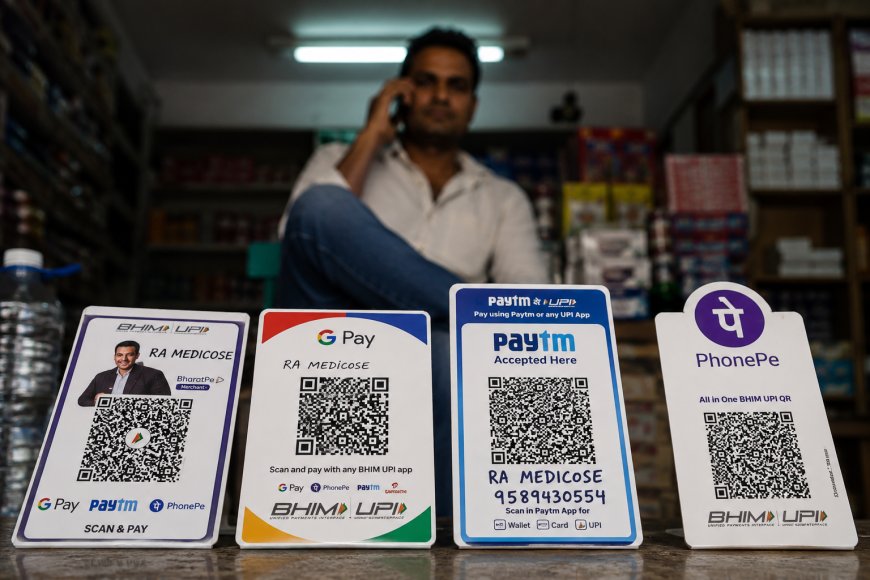
India has taken the first legislative step toward reshaping the business model of its Unified Payments Interface (UPI), creating a legal framework that could eventually allow merchants to pay fees on certain UPI transactions while keeping consumer payments free.
The proposed legislation does not immediately introduce merchant charges or define which transactions would be affected. Instead, it establishes the legal basis for future changes to India’s zero-merchant-discount-rate (MDR) policy, under which businesses have not paid fees to accept UPI payments since 2020.
The move comes as UPI has become the backbone of India’s digital payments ecosystem. According to the National Payments Corporation of India (NPCI), which operates the network, UPI processed a record 23.66 billion transactions worth ₹29.88 trillion, or about $313.4 billion, during July.
India eliminated merchant discount rates on UPI payments in January 2020 to accelerate adoption of the government-backed payment network. Since then, the system has relied largely on government incentives to support its operation and continued expansion.
Industry seeks a sustainable funding model.
The proposed policy follows years of discussions involving India’s finance ministry, the Reserve Bank of India, and payment companies over how to finance the rapidly expanding payments infrastructure. Banks and fintech firms have argued that maintaining free merchant acceptance has become increasingly difficult as transaction volumes, technology investments and cybersecurity costs continue to rise.
Pine Labs Chief Executive Officer Amrish Rau welcomed the proposal, saying on X that continued investment from startups, fintech companies and banks would be necessary if UPI is to reach broader adoption and expand internationally.
Rau said allowing the industry to recover part of its investment from merchants while continuing to keep peer-to-peer and consumer payments free would place the payments network on a more sustainable financial footing.
Although the legislation itself does not specify fee structures, industry analysts believe it could become the foundation for a new revenue model across India’s digital payments ecosystem.
Analysts estimate billions in additional revenue.
Investment firm Jefferies said in a report published Tuesday that introducing merchant charges of between 15 and 30 basis points on higher-value UPI transactions could generate an additional ₹50 billion to ₹100 billion, or roughly $525 million to $1.05 billion, in annual revenue by fiscal year 2028.
According to a report by the Economic Times last month, officials are considering limiting any future merchant charges to larger businesses instead of applying them across all merchants using the UPI network.
Brokerage firm Bernstein also suggested that such an approach could preserveUPI’ss consumer-friendly model while creating a meaningful revenue opportunity for banks and payment companies. The firm noted that transactions above ₹2,000, approximately $21, account for only about 4% of payment volumes but nearly 70% of the total value processed through the network.
Global impact and market implications
The legislation is also expected to attract attention in countries where UPI has already been introduced, including Singapore, the United Arab Emirates and France, as policymakers monitor how India evolves the economics of its digital payments infrastructure.
Any future fee structure could have important implications for the companies that dominate India’s UPI market. According to NPCI data, Walmart-owned PhonePe and Alphabet’s Google Pay together account for nearly 80% of all UPI transaction volumes. However, the extent to which either company benefits will ultimately depend on how any merchant charges are allocated among banks, payment applications and other participants within the payments ecosystem.
What's Your Reaction?
 Like
0
Like
0
 Dislike
0
Dislike
0
 Love
0
Love
0
 Funny
0
Funny
0
 Angry
0
Angry
0
 Sad
0
Sad
0
 Wow
0
Wow
0