





















Marc Lore predicts AI will make opening a restaurant easier for everyone
Marc Lore says artificial intelligence could soon help anyone launch and manage a restaurant with lower costs, automation, and smarter operations.
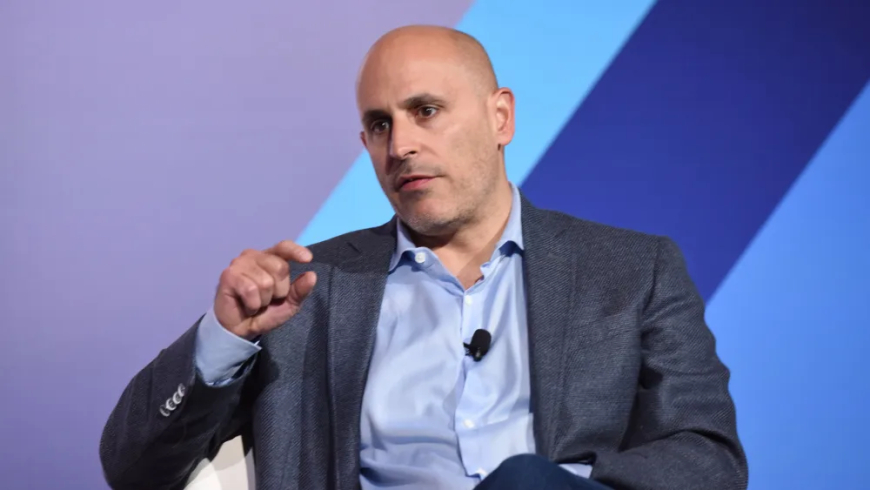
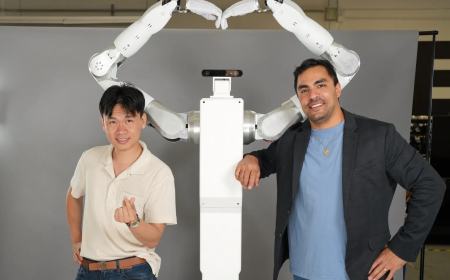
Marc Lore, the veteran e-commerce entrepreneur who previously sold startups to Amazon and Walmart, is planning to integrate AI into his latest venture, Wonder Deeply.
At the centre of those plans is Wonder Create, an initiative designed to enable anyone — from food entrepreneurs to social media influencers — to use AI to create and launch their own restaurant brand in under a minute. The virtual restaurant would then go live across Wonder’s expanding network of tech-enabled kitchen locations, which currently stands at 120 sites and is expected to grow to 400 next year.
Lore’s startup, a vertically integrated dining and delivery platform, has evolved significantly from its original food truck concept to fast-casual restaurant locations with seating capacities of around 10-20 people. However, these are far from traditional restaurants. Lore describes them as “programmable cooking platforms” capable of operating as 25 different restaurant types by cuisine, all within electric kitchens that are becoming increasingly automated with robotics.
Speaking during The Wall Street Journal’s Future of Everything conference this week, Lore explained that these kitchens operate using a 700-ingredient library. The “restaurants” operating in these locations are actually multiple brands operating simultaneously within the same infrastructure.
Alongside teams of up to 12 workers in each kitchen, the cooking process increasingly involves technology such as robotic arms and conveyor systems. Wonder recently acquired Spice Robotics, the company behind an automated bowl-making machine previously used by Sweetgreen. Next year, Wonder also plans to introduce what Lore described as an “infinite sauce machine,” capable of preparing around 80% of all sauces commonly found in recipes online today.
Wonder Create was first announced earlier this year as a platform that would allow anyone to launch their own restaurant brand and recipes using Wonder’s software infrastructure.
During the conference, Lore expanded on how AI will power the process, comparing the system to “a Shopify front end with an AI prompt.”
“You type in what kind of restaurant you want to build. It builds the restaurant — AI does — in under a minute. It does the name, branding, description, pictures, pricing, health information, and all the recipes for your restaurant,” Lore explained during the interview. Users would then be able to refine the prompt as needed, and once finalised, the restaurant could instantly launch across Wonder’s network of locations.
The company currently operates 120 of these “programmable cooking platforms,” with expectations to expand that number to 400 next year. Lore noted that adding robotics into the workflow is not necessarily intended to reduce staffing levels. Instead, the aim is to increase kitchen output dramatically.
“We have about 7 million throughput capacity with 12 people,” he said. “We see a path to getting to 20 million throughput out of 2,500 square feet with just 12 people. The goal also is … I guess by 2035, to have 1,000 unique restaurants operating out of the 2,500 square feet,” Lore added.
The broader vision behind these AI-generated restaurant concepts is to let people experiment with food businesses in entirely new ways. Existing restaurateurs, for instance, could test customer reactions to recipes before introducing them at physical restaurant locations.
Lore also outlined additional use cases, including enabling influencers to monetise their audiences through their own virtual restaurant brands without the complexity of launching full restaurant chains.
“It could be a mega-influencer, a micro-influencer — anyone that wants to monetise their following,” Lore said. “Or it could be a private trainer that wants to make specific bowls. It could be a not-for-profit. It could be Disney for marketing their new movie. Anybody can make a restaurant.”
Whether consumers and creators will fully embrace the idea remains uncertain. Ghost kitchens — a similar concept that promises brands the ability to sell food without owning restaurants — faced numerous challenges in the early 2020s, with several well-known operators scaling back operations or shutting down after struggling to maintain customer loyalty.
Wonder’s additional layers of automation and AI are intended to solve some of those problems, though the model itself remains largely untested at a massive scale.
The example of MrBeast Burger highlighted many of the issues ghost kitchens encountered. The brand faced widespread complaints about inconsistent food quality, largely because its operations relied on many different contracted kitchens and staff members. Wonder’s increasingly automated, standardised programmable kitchens are designed to eliminate that inconsistency.
Lore acknowledged there are still operational limitations. Wonder’s kitchen systems — including the robotic components — cannot yet handle more specialised food preparation techniques such as tossing pizza dough or preparing sushi rolls. As a result, the company’s current focus remains on relatively simpler foods such as burgers, fried chicken, chicken wings, and bowls.
The broader strategy also ties into Lore’s previous acquisitions, including Grubhub and Blue Apron. Grubhub contributes its large-scale delivery business, while Blue Apron supports Wonder’s meal-kit ambitions.
Wonder is now increasingly focused on acquiring restaurant brands as well. Earlier this year, the company purchased New York City-based Blue Ribbon Fried Chicken for $6.5 million.
“When you buy a brand — and you can buy a brand that has 10 locations, or even 50 locations — and then overnight put it in 1,000, there’s just an incredible arbitrage there,” Lore said.
What's Your Reaction?
 Like
0
Like
0
 Dislike
0
Dislike
0
 Love
0
Love
0
 Funny
0
Funny
0
 Angry
0
Angry
0
 Sad
0
Sad
0
 Wow
0
Wow
0