




































NewCore Raises $66 Million to Build Digital Identity Infrastructure for AI Agents
NewCore has secured $66 million to develop identity infrastructure for AI agents, enabling secure authentication, permissions, and management as autonomous digital workers become increasingly common across enterprises.

Cybersecurity startup NewCore officially emerged from stealth mode on Monday after announcing $66 million in funding, positioning itself to address what it believes will become a major challenge for enterprises adopting AI agents: securely authenticating, managing, and governing digital workers at scale.
The seed financing round was led by cybersecurity-focused venture capital firm Cyberstarts, with additional backing from Index Ventures and Evolution Equity Partners. Following the investment, NewCore has been valued at approximately $300 million.
Businesses are increasingly viewing AI agents not simply as software tools but as active participants in the workplace. Last year, Goldman Sachs tested the AI coding assistant Devin as if it were a new employee. At the same time, McKinsey revealed earlier this year that roughly 25,000 AI agents already operate alongside its 60,000-person workforce. NewCore is building its business around the belief that organisations will eventually need to manage these software-based workers in much the same way they oversee human employees.
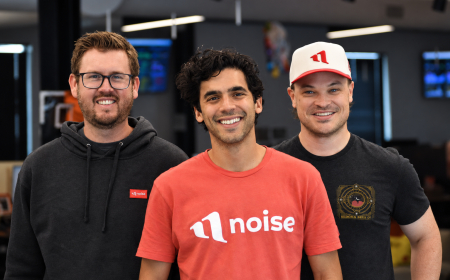
According to co-founder and chief executive Zohar Alon (pictured above, centre), the opportunity arises from what he sees as one of the weakest areas in enterprise cybersecurity today: identity management. Alon, who founded cloud security company Dome9 before Check Point acquired it, said he and his co-founders concluded that existing identity platforms are not equipped to support a future in which AI agents work alongside human staff.
“We know for sure that the scale and the complexity that those things [AI agents] are going to add to 15- or 20-year-old identity platforms are going to break them,” Alon said.
Alon launched NewCore alongside chief technology officer Amihai Neiderman (pictured above, right), a former Unit 8200 research leader and founder of healthcare AI company Nym Health, as well as chief commercial officer Erez Yarkoni (pictured above, left), who previously served as chief information officer at both T-Mobile USA and Telstra.
The company’s platform is designed to manage both human and AI agent identities within a single system. Rather than treating AI agents as traditional machine credentials or service accounts, NewCore argues they should function as first-class identities with dedicated permissions, lifecycle management, access controls, and revocation capabilities similar to those assigned to human employees.
Alon said the concept for NewCore first began to take shape in 2023 while reviewing the technology spending of a business using an established identity management provider. After seeing the size of the customer’s software bill, he assumed they must have been highly satisfied with the service.
“I said, ‘You must be extremely happy with them,’” Alon recalled. “He said, ‘No, I’m not.’”
That conversation reinforced his belief that enterprise identity management had become a large but relatively stagnant market, dominated by established providers facing little meaningful competitive pressure.
Major identity vendors, including Okta and Microsoft’s Entra platform, have already started introducing AI agent capabilities. However, Alon believes those additions merely extend platforms originally built around human employees. In contrast, NewCore was designed from the ground up for organisations where humans, machines, and AI agents all operate together as part of the workforce.
“The traditional vendors give you an agentic way to deal with identity, but it’s on the side — it’s not integrated,” Alon said. As one example, NewCore has implemented what it describes as a “split-key” architecture, separating sensitive identity credentials between customers and the platform itself to remove any single point of compromise.
The company also provides an “Agentic Skill” integration package for AI coding assistants, including Anthropic’s Claude Code, OpenAI’s Codex, and Cursor. The integration enables those AI systems to access enterprise applications using managed identities rather than manually issued credentials. Employees can also approve, review, or revoke AI agent permissions through NewCore’s mobile application, creating what Alon described as an additional layer of human oversight as businesses increasingly deploy autonomous AI systems.
NewCore has expanded its workforce to more than 50 employees across the United States and Israel. According to Alon, the platform currently has fewer than 10 paying customers and is working with more than 10 design partners. He added that the company expects to begin charging customers commercially later this summer.
Alon believes AI agents could outnumber human employees at many technology-focused businesses within the next few years. That outlook echoes recent comments from TCS chairman N. Chandrasekaran, who suggested AI agents could eventually match the size of TCS’s workforce.
According to Alon, identity management will likely be among the first enterprise systems to come under pressure as organisations deploy AI agents at scale. He argues businesses will ultimately require entirely new methods for authorising, monitoring, managing, and revoking access for software workers operating throughout enterprise environments.
“It’s inevitable,” Alon said about AI agents becoming a significant part of the workforce. “The question is whether we’re going to build the guardrails in time.”
What's Your Reaction?
 Like
0
Like
0
 Dislike
0
Dislike
0
 Love
0
Love
0
 Funny
0
Funny
0
 Angry
0
Angry
0
 Sad
0
Sad
0
 Wow
0
Wow
0