






































Niv-AI emerges from stealth to boost GPU performance efficiency
Niv-AI comes out of stealth with technology designed to improve GPU performance and efficiency, helping AI workloads run faster while reducing compute costs.
Electricity has become one of the most critical resources powering artificial intelligence, yet advances in processing techniques are outpacing data centre operators’ ability to manage power consumption effectively. As a result, some facilities are forced to throttle GPU usage by up to 30%.
“There is so much power squandered in these AI factories,” Nvidia CEO Jensen Huang said during a keynote at the company’s annual GTC conference. “Every unused watt is revenue lost,” the company emphasised during the presentation.
A new startup, Niv-AI, has now come out of stealth mode with $12 million in seed funding, aiming to address this challenge by measuring GPU power consumption more precisely and developing systems to optimise it.
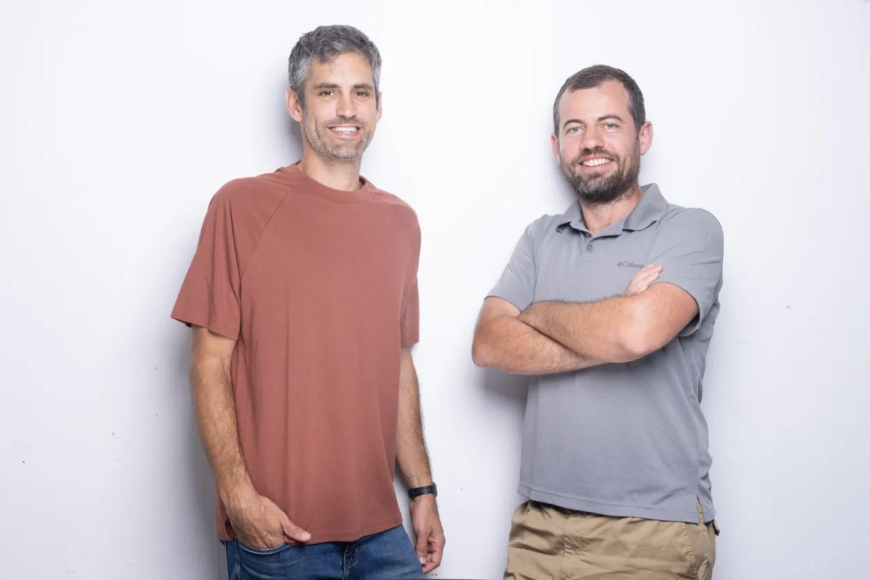
Based in Tel Aviv, the company was founded last year by CEO Tomer Timor and CTO Edward Kizis. Glilot Capital, Grove Ventures, Arc VC, Encoded VC, Leap Forward, and Aurora back it. Niv-AI has not disclosed its valuation.
As AI labs operate thousands of GPUs simultaneously to train and run large-scale models, the hardware experiences rapid, millisecond-level spikes in power demand. These spikes occur as GPUs switch between computation-heavy tasks and communication with other processors.
Such fluctuations make it difficult for data centres to balance their energy usage with the grid. To avoid power shortages, operators often rely on temporary energy storage solutions or reduce GPU workloads. Both approaches ultimately lower the return on investment for costly hardware.
“We just can’t continue building data centres the way we build them now,” said Lior Handelsman, a partner at Grove Ventures and a member of Niv-AI’s board.
Niv-AI’s initial focus is to gain a detailed understanding of power usage patterns. The company is deploying rack-level sensors capable of tracking GPU power consumption at millisecond intervals. These sensors are being tested both in Niv-AI’s own setups and with design partners.
By analysing this data, the startup aims to map how different deep learning tasks affect power usage and develop strategies to smooth demand spikes, enabling data centres to make better use of their existing infrastructure.
The company also plans to build an AI-driven system trained on this data, designed to predict and coordinate power loads across facilities. This system would act as a kind of “copilot” for data centre engineers, helping them manage energy use more efficiently.
Niv-AI expects to roll out an operational version of its system in several U.S. data centres within the next six to eight months. The approach could be particularly valuable as hyperscalers face increasing challenges in building new facilities due to land constraints and supply chain limitations.
The founders see their technology as a crucial “intelligence layer” connecting data centres with the electrical grid.
“The grid is actually afraid of the data centre consuming too much power at a specific time,” Timor said. “The problem we’re looking at is a problem with two sides of the rope. One is to help data centres use more GPUs and get more value from the power they’re already paying for. On the other hand, it’s about creating more stable and responsible power profiles between data centres and the grid.”
What's Your Reaction?
 Like
0
Like
0
 Dislike
0
Dislike
0
 Love
0
Love
0
 Funny
0
Funny
0
 Angry
0
Angry
0
 Sad
0
Sad
0
 Wow
0
Wow
0