
































Nuro begins testing autonomous vehicle technology on Tokyo streets
Nuro has started testing its autonomous driving technology on public roads in Tokyo, marking an important step in expanding robot delivery and self-driving systems in Japan.
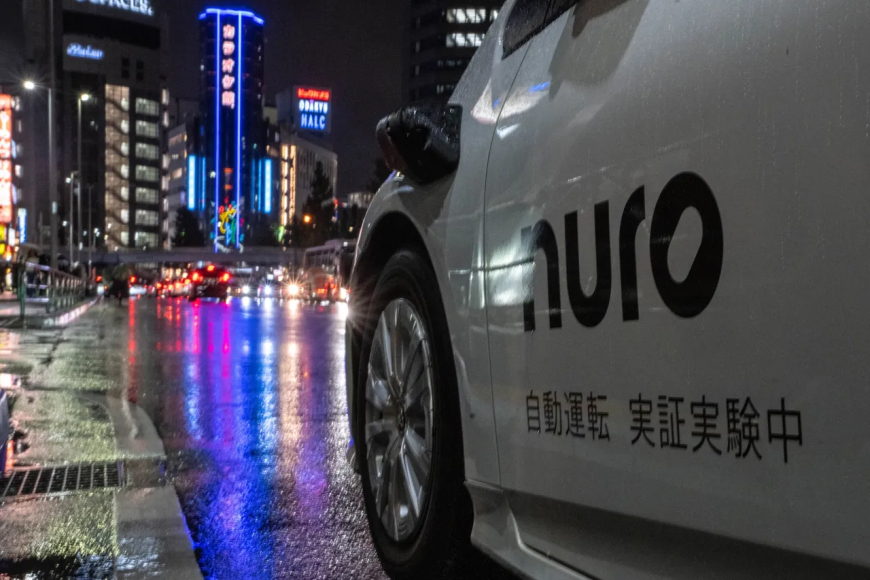
Nuro, the Silicon Valley startup backed by Nvidia, Uber, and SoftBank, has started testing its autonomous vehicle technology in Japan.
Toyota Prius vehicles fitted with Nuro’s self-driving software — with human safety operators behind the wheel as a backup — began operating on public roads in Tokyo last month. The testing represents the startup’s first expansion outside the United States, following a major shift in its business model two years ago.
Nuro said testing in Japan presents a range of new challenges, including different driving habits and road regulations. In Japan, vehicles drive on the left side of the road, and Tokyo’s streets are heavily congested. Road signs and lane markings also differ from those in the U.S. The company, which opened offices in Tokyo last August, did not say how many vehicles are currently in its test fleet or when it might begin operating them without a human safety operator behind the wheel.
Still, the company suggested in a blog post announcing the Tokyo tests that more international expansion could follow.
“Our autonomous operations in Tokyo are the beginning of the compounding benefits of global deployment,” the company wrote.
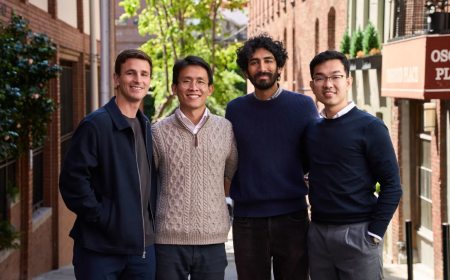
Nuro was founded in 2016 by former engineers from Google’s early self-driving car project, Dave Ferguson and Jiajun Zhu. The company originally focused on developing and operating a fleet of low-speed, on-road delivery robots. Its early vision and strong founding team attracted major attention, including a $940 million investment from SoftBank Vision Fund in 2019.
Nuro generated significant buzz in its early years, but rising development costs and a broader wave of industry consolidation pushed the company to reduce headcount and rethink its business model. In 2024, it moved away from its low-speed delivery bots and instead chose to license its technology to automakers and mobility providers, including ride-hailing and delivery companies.
According to Nuro, its autonomy stack is built on an end-to-end AI foundation model that allows the system to learn while driving. The company refers to this strategy as “zero-shot autonomous driving” and says it enabled its software to navigate public roads in Tokyo without any prior training on Japanese driving data. U.K.-based startup Wayve, which recently raised $1.2 billion, has adopted a similar end-to-end AI approach for its self-driving system.
Nuro says that although this AI strategy is intended to be broadly capable, it does not come at the expense of safety. The company said it performs closed-course testing for every new version of its universal autonomy model and also evaluates performance and edge cases through simulation. Once vehicles are placed on public roads, they are manually driven while Nuro’s software runs in what it calls “shadow mode.” In that setup, the foundational AI model generates what it would do, but those commands are not actually sent to the vehicle’s controls.
Nuro then reviews those outcomes to determine whether the system is ready to operate autonomously on public roads.
The company has continued to attract both investor support and industry attention for its approach to self-driving software. Last year, Nuro raised $203 million in two tranches as part of a Series E round that included returning investor Baillie Gifford and new backers Icehouse Ventures, Kindred Ventures, Nvidia, and Pledge Ventures. Uber also took part in the round after saying it would make a “multi-hundred-million-dollar” investment in Nuro as part of a broader agreement with electric vehicle maker Lucid.
What's Your Reaction?
 Like
0
Like
0
 Dislike
0
Dislike
0
 Love
0
Love
0
 Funny
0
Funny
0
 Angry
0
Angry
0
 Sad
0
Sad
0
 Wow
0
Wow
0