





































Satellite Gains the Ability to Identify Objects Without Human Guidance
A new satellite has demonstrated the ability to identify objects independently using onboard artificial intelligence. Learn how autonomous space technology could improve Earth observation, disaster response, defence, and future space missions.
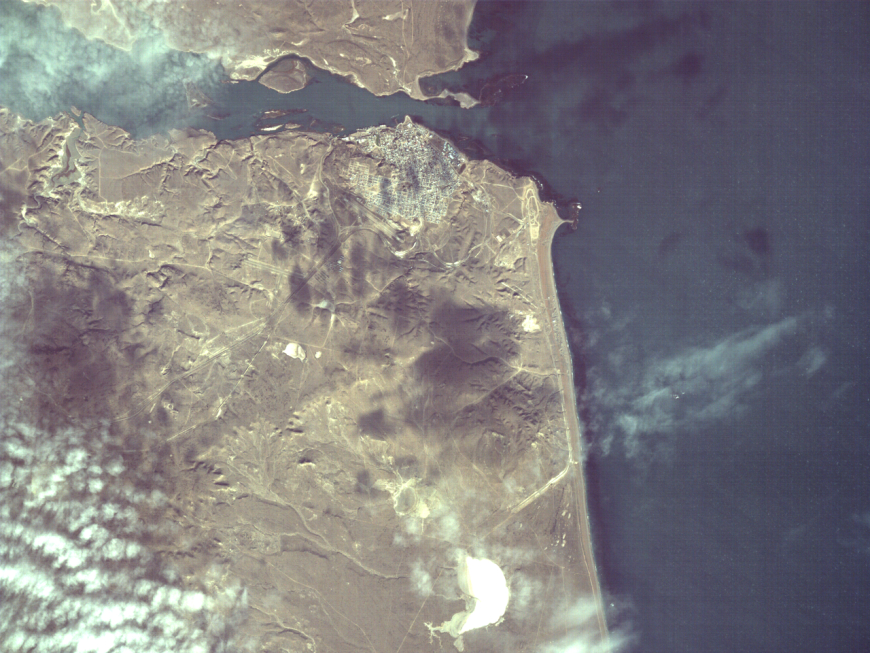
For the first time, an Earth observation satellite has successfully identified targets without relying on human analysts on the ground. The milestone, achieved in April, represents the first publicly reported deployment of a vision-language model (VLM) in orbit and provides an early indication of how artificial intelligence could significantly expand the capabilities—and value—of space-based sensing systems.
Traditionally, Earth observation satellites transmit massive volumes of imagery and sensor data back to analysts on the ground. Those analysts either inspect the information manually or use machine learning software to determine what is happening. Aboard YAM-9, however, a satellite developed by space infrastructure company Loft Orbital, software created by NASA’s Jet Propulsion Laboratory. enabled the spacecraft to identify areas of interest by responding directly to natural language prompts.
The demonstration was powered by Google DeepMind’s Gemma 3, a vision-language model specifically designed for edge computing applications, allowing it to operate efficiently on limited hardware far from traditional data centres. Unlike conventional language models, VLMs combine image analysis with contextual reasoning. During testing, researchers instructed the model to locate places where natural landscapes intersect with human development or identify infrastructure surrounding railway hubs, and the onboard system completed those tasks.
The achievement is important for two major reasons. In the near term, onboard AI could dramatically improve the usefulness of Earth observation satellites by filtering and prioritising data before it is transmitted to Earth, reducing the enormous volume of raw imagery analysts currently need to process. Looking further ahead, the project also demonstrates the feasibility of operating increasingly sophisticated AI infrastructure directly in space.
“It opens the door to always-on, patrol layers in space,” said Paul Lasserre, Loft Orbital’s head of AI. “If you have a VLM, you can have logic—like ‘monitor this border for me, and let me know when something is suspicious,’ and interact back and forth with the satellites.”
Loft Orbital builds spacecraft that serve as flexible platforms for third-party customers, operating under a business model that resembles infrastructure-as-a-service rather than traditional satellite manufacturing. One recent contract involved designing, launching, and operating six satellites for EarthDaily, which will analyse and commercialise the data gathered by those spacecraft. YAM-9 was launched during the autumn of 2025 as a technology demonstrator for Loft’s orbital AI programme and carries an Nvidia Jetson Orin AGX GPU, one of the leading processors currently used for space-based computing.
Juan Delfa Victoria, a technical leader within NASA JPL’s artificial intelligence group, led the development of NAVI-Orbital. This software platform served as the operating framework for the Gemma 3 vision-language model. Although Gemma 3 itself is commercially available, engineers have had to significantly optimise the supporting software by reducing library dependencies and memory requirements, enabling it to operate efficiently in the demanding space environment.
While this represents the first publicly reported use of a vision-language model in orbit, similar developments are likely to follow. Planet Labs already operates satellites equipped with Jetson Orin processors. At present, the company primarily uses those systems for relatively straightforward object detection, but a company spokesperson said research into broader AI capabilities—including VLMs—is actively underway.
Kepler Communications, which operates the largest collection of GPUs currently deployed in orbit, declined to confirm whether it has already used vision-language models because of confidentiality agreements with customers. However, the company acknowledged that its orbital computing environment has already supported “several undisclosed use cases” since those satellites entered service in January.
“Now that we’ve proven the concept, that’s really the direction of travel,” Lasserre said. He explained that the long-term objective is to build a constellation capable of delivering real-time observation across virtually any location on Earth, estimating that between 50 and 100 satellites comparable to YAM-9 would be required to achieve that goal. Loft Orbital currently operates 12 spacecraft in orbit.
The experience gained from deploying relatively compact AI models in space is also expected to guide future efforts to establish much larger orbital computing systems, particularly in critical areas such as power efficiency and memory management, where the space environment imposes strict operational constraints.
Beyond commercial applications, the technology could also support entirely new scientific capabilities. The original concept behind NAVI-Space emerged when Juan Delfa Victoria and NASA JPL researcher Taran Cyriac John began exploring intelligent digital assistants for astronauts conducting missions on the Moon or Mars.
“We’re thinking, okay, you have astronauts wearing pressurised suits, and you know they cannot be tapping on a keyboard, whatever they want to do is complex,” Delfa Victoria said. “So, how about we provide an assistant, like in video games and in movies, where you see an AI which is interactive?”
Just don’t expect anyone to start calling it HAL 9000.
What's Your Reaction?
 Like
0
Like
0
 Dislike
0
Dislike
0
 Love
0
Love
0
 Funny
0
Funny
0
 Angry
0
Angry
0
 Sad
0
Sad
0
 Wow
0
Wow
0