




























Startup Founders Expose Venture Capital Horror Stories as Investors Face Public Scrutiny
Tech founders are publicly sharing troubling experiences with venture capital firms, including ghosting, withdrawn term sheets, discrimination claims, and unprofessional behaviour by investors. The viral discussion highlights growing demands for accountability and transparency in startup funding.

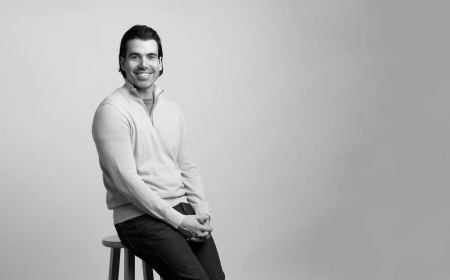
The conversation began when entrepreneur, podcaster, and Late Checkout Studio founder Greg Isenberg shared a story about a venture capitalist falling asleep during an important fundraising presentation. Isenberg, whose holding company has launched multiple startups, including one later acquired by WeWork, posted an account that quickly resonated with founders across the industry.
“I was once pitching in a boardroom at a top-three VC firm for a $15 million Series A round,” Isenberg wrote. “There were 12 people in the meeting. One of the general partners completely fell asleep for more than 30 minutes. Nobody mentioned it, and everyone continued with the presentation.”
Stories involving sleeping investors soon dominated the discussion. Founders described situations where venture capitalists not only appeared tired but were fully asleep during meetings.
Among those sharing experiences was Zynga founder Mark Pincus. He recalled looking at the friend who had arranged the meeting and asking whether he should continue presenting after noticing the investor asleep. The answer was yes.“It felt like a combination of Weekend at Bernie’s and Silicon Valley,” Pincus wrote.
Surprisingly, several founders noted that sleeping through a pitch did not always prevent investors from participating in a funding round. Some reported receiving investment offers shortly afterwards.
Liz Wessel, founder of HR startup WayUp and now a partner at First Round Capital, shared that during her company’s Series A fundraising process, one prominent investor fell asleep. At the same time, another appeared visibly unhappy throughout the meeting.
“Two hours after the investment committee meeting, they called and said they were sending over a term sheet,” Wessel wrote. She added that her company ultimately declined the investment, a decision that reportedly surprised the firm involved.
The sheer volume of similar stories prompted former Andreessen Horowitz partner Arianna Simpson to joke that venture capital seemed to be experiencing a widespread narcolepsy problem.
Beyond sleeping investors, founders described a range of other fundraising frustrations. Several recounted situations in which investors issued term sheets only to withdraw at the last moment, while others vanished entirely after expressing strong interest.
Some founders said certain investors continued to request updates and act like stakeholders despite never actually investing. One entrepreneur even claimed that a venture capitalist later sought a share of acquisition proceeds despite never completing the promised investment.
Uber co-founder Travis Kalanick shared one of the more unusual stories. He recalled discovering that an investor was attempting to leave rather than attend a scheduled meeting. Determined not to lose the opportunity, Kalanick followed the investor to the parking lot and continued his pitch from the passenger seat of the investor’s car.
Not every story was negative. Some entrepreneurs emphasised that many venture capitalists remain supportive, professional, and genuinely helpful partners. Others even shared positive experiences and long-term relationships formed through fundraising.
Still, many founders viewed the public discussion as a rare moment of transparency.
“I love this moment,” Pincus wrote. “Founders no longer feel afraid to call out VCs for bad behaviour”
The Stories That Drew the Most Attention
Among the most widely discussed contributions was that of Cloudflare co-founder and CEO Matthew Prince.
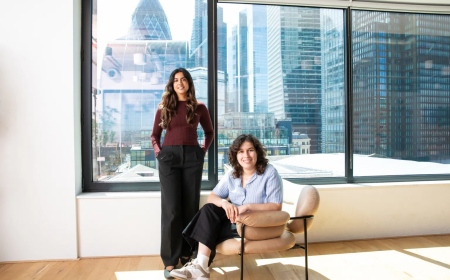
Prince revealed that a partner at Sequoia Capital once declined to invest in Cloudflare because he allegedly believed a woman could not successfully lead a security infrastructure company. The individual in question was Cloudflare co-founder and COO Michelle Zatlyn.
Considering Cloudflare’s current position as a publicly traded company with a market capitalisation exceeding $80 billion and billions in annual revenue, many observers noted that the assessment proved inaccurate.
Sequoia partner Shaun Maguire responded publicly, saying he greatly respected Zatlyn and asking Prince to identify the individual involved. Prince declined to reveal the name but suggested Maguire could probably make an educated guess.
Prince also shared another story involving prominent investor Vinod Khosla. According to Prince, Khosla once offered to invest and then suggested that he remove his co-founders and take control of their equity.
Prince said he was so offended by the proposal that he never spoke with Khosla again and eventually blocked his phone number.
At the same time, Prince was careful to acknowledge Khosla’s accomplishments, describing him as an exceptionally intelligent investor with a remarkable track record.
As with many recollections shared online, the exact details of the conversation remain difficult to verify. Still, the openness with which Prince discussed one of Silicon Valley’s most influential investors attracted considerable attention.
Not all of Prince’s q involved negative experiences. He recalled expecting a casual introductory meeting with Marc Andreessen, co-founder of Andreessen Horowitz, only to arrive and find the entire investment team waiting for a formal pitch.
Unprepared for the situation, Prince failed to make the impression he had hoped for and was ultimately rejected.
“I framed the rejection letter,” he joked.
One of the lighter stories came from entrepreneur and investor Julie Fredrickson. She recalled receiving a warning from a venture firm associate before arriving for a meeting. The associate explained that a rock formation visible outside the office window bore an unfortunate resemblance to male anatomy.
As a result, Fredrickson said she has permanently referred to the firm in her mind as “Dickrock Ventures.”
While Silicon Valley firms received much of the criticism, founders also shared experiences involving international investors. Venture capitalists themselves joined the discussion, recounting awkward fundraising experiences with limited partners and institutional backers.
Taken together, the stories offered a rare glimpse into a process that is often conducted behind closed doors. They highlighted how fundraising remains deeply relationship-driven, frequently unpredictable, and shaped by significant power imbalances between founders and investors.
Perhaps Isenberg summarised the experience best.
“If you’re raising money right now, remember that every founder has stories like these,” he wrote. “The process is strange, and the power dynamics can be strange too.”
One additional lesson may also emerge from the conversation: when Marc Andreessen agrees to a meeting, it is probably safe to assume he intends to make it count.
What's Your Reaction?
 Like
0
Like
0
 Dislike
0
Dislike
0
 Love
0
Love
0
 Funny
0
Funny
0
 Angry
0
Angry
0
 Sad
0
Sad
0
 Wow
0
Wow
0