

































Uber Launches AV Labs to Collect Driving Data for Robotaxi Partners
Uber has launched a new AV Labs division to collect real-world driving data for autonomous vehicle partners as demand grows for training data to improve robotaxi systems.
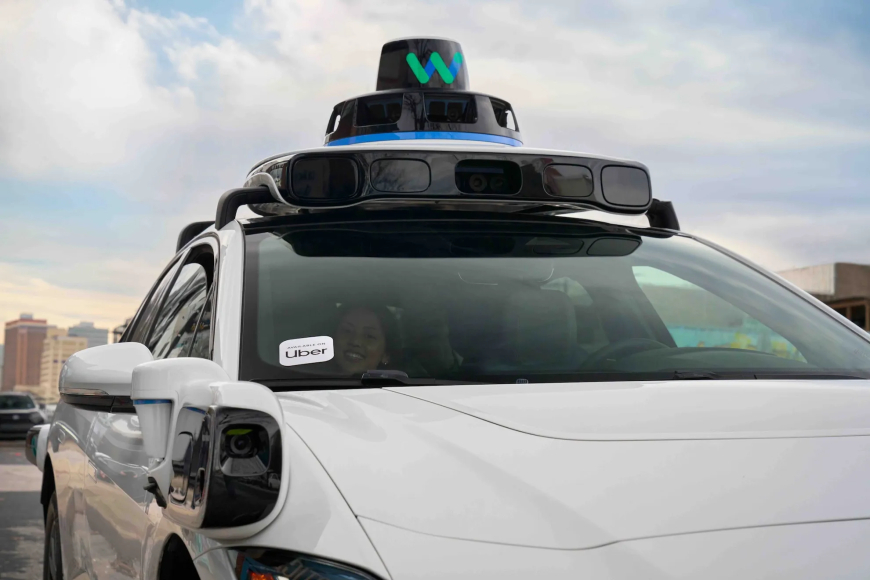
Uber has introduced a new division, AV Labs, as it looks to support its growing roster of autonomous vehicle partners with one thing they increasingly need: driving data.
The company works with more than 20 autonomous vehicle developers. While Uber has no plans to return to building its own robotaxis, it believes it is uniquely positioned to help partners improve their own robotaxis. Uber said AV Labs will deploy company-operated vehicles equipped with sensors to collect real-world driving data that can be shared with partners such as Waymo, Waabi, and Lucid Motors. No formal contracts have been signed yet.
Uber emphasized that AV Labs does not signal a return to in-house robotaxi development. The company shut down its autonomous vehicle program after a 2018 fatal crash involving a test vehicle and sold the unit in 2020 as part of a deal with Aurora. Instead, AV Labs will focus on data collection rather than vehicle autonomy.
The initiative comes as the self-driving industry shifts away from rigid, rules-based systems toward approaches that rely more heavily on reinforcement learning. That shift has made large volumes of real-world driving data increasingly valuable, particularly for addressing rare and complex edge cases.
According to Uber, the companies most interested in AV Labs data are often those that already collect significant amounts themselves. That reflects a broader realization across the industry that improving autonomous systems is essentially a volume problem — the more real-world scenarios models see, the better they perform.
A physical ceiling on data
Autonomous vehicle companies face a natural limitation: the size of their fleets caps the amount of data they can gather. Simulations can help, but they don’t fully replicate the unpredictability of real roads. Uber argues that nothing replaces driving in live environments — and doing so at scale — to uncover unusual or difficult situations.
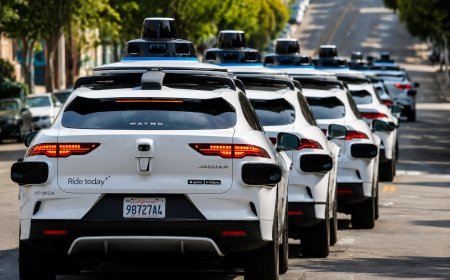
Even companies with years of experience can run into issues. Waymo, which has tested and operated autonomous vehicles for more than a decade, has recently seen its robotaxis caught illegally passing stopped school buses. Uber’s leadership believes broader access to driving data could help prevent or address such problems earlier.
Praveen Neppalli Naga, Uber’s chief technology officer, told TechCrunch that expanding the pool of real-world data could allow autonomous vehicle companies to identify weaknesses in their systems before they become widespread.
For now, Uber says it does not plan to charge partners for access to AV Labs data.
“Our goal, primarily, is to democratize this data,” Naga said. “The value of this data and having partners’ AV technology advance is far greater than whatever short-term revenue we could generate.”
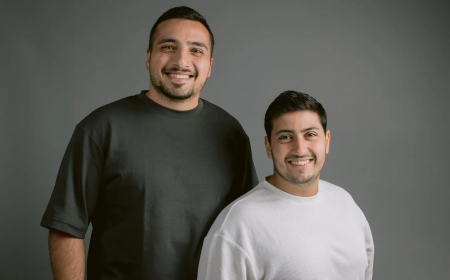
Danny Guo, Uber’s vice president of engineering, said the focus is first on building the underlying data foundation before worrying about monetization. “If we don’t do this, we really don’t believe anybody else can,” Guo said. “As someone who can help unlock and accelerate the entire ecosystem, we think it’s our responsibility to take this on.”
Sensors, prototypes, and early stages
AV Labs is starting small. At the moment, it operates a single vehicle — a Hyundai Ioniq 5 — though Uber says it isn’t committed to any specific model. Guo said the team is still in the hands-on phase, installing lidar, radar, and camera systems.
“We’re literally still screwing sensors onto the car,” Guo said, adding that it will take time before the fleet scales to dozens or hundreds of vehicles. “But the prototype exists.”
Partners won’t receive raw data streams. Instead, Uber plans to process and structure the information so it can be more easily integrated into partners’ systems. This semantic layer would feed into how autonomous driving software interprets environments and plans routes in real time.
Guo also described an intermediate step in which a partner’s autonomous-driving software could be run in “shadow mode” within AV Labs vehicles. In that setup, the software’s decisions would be compared with those of the human driver. Any discrepancies would be flagged and shared with the partner, highlighting areas where the system diverges from human behaviour.
That approach is designed not only to identify weaknesses, but also to help autonomous systems behave in ways that feel more natural and human.
A familiar model
The strategy closely mirrors how Tesla has trained its own autonomous software over the past decade by collecting data from customer vehicles. Uber’s effort operates at a far smaller scale, but company leaders say scale isn’t the primary goal.
Instead, Uber expects to focus on targeted data collection tailored to each partner’s needs. With ride-hailing operations in hundreds of cities worldwide, the company can deploy vehicles in specific locations where partners want more data.
“We operate in around 600 cities,” Guo said. “If a partner tells us they’re interested in a particular city, we can deploy vehicles there.”
Naga said Uber expects AV Labs to grow to several hundred employees within a year and intends to move quickly. While he sees a future in which Uber’s broader ride-hailing fleet could eventually help collect additional data, the company is starting with a dedicated division to lay the groundwork.
From Uber’s perspective, the pitch from partners has been simple. “They’re telling us, ‘Give us anything that helps,’” Guo said. “The amount of data Uber can collect outweighs what most companies can do on their own.”
What's Your Reaction?
 Like
0
Like
0
 Dislike
0
Dislike
0
 Love
0
Love
0
 Funny
0
Funny
0
 Angry
0
Angry
0
 Sad
0
Sad
0
 Wow
0
Wow
0