






























Uber plans to deploy 500 data-mapping vehicles across roads this year
Uber will deploy 500 data-collection vehicles this year to gather mapping and road data to support navigation, autonomous driving, and mobility services.
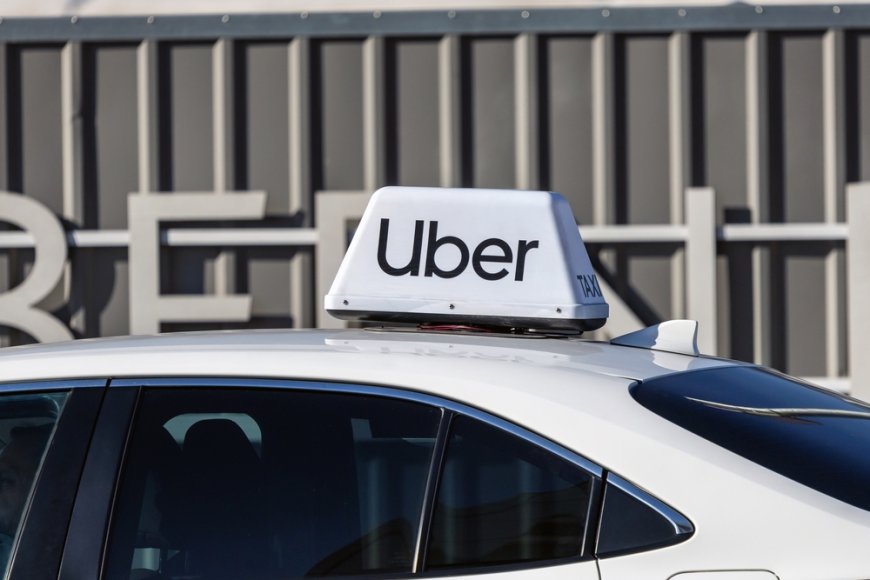
Uber unveiled a new prototype vehicle on Wednesday that will play a central role in collecting real-world driving data for the company’s expanding network of autonomous vehicle partners, including Avride, Waymo, and WeRide.
The newly revealed vehicle is not a futuristic concept car or a radically redesigned robotaxi. Instead, it is a Hyundai Ioniq 5 electric vehicle equipped with an extensive array of sensors mounted across its roof and exterior. Uber had previously disclosed plans for the project earlier this year, but the company is now providing a closer look at the vehicle and its broader strategy.
While the vehicle’s appearance may seem relatively conventional aside from its sensor package, the project represents several important milestones for Uber’s autonomous-vehicle ambitions.
Most notably, it is the first vehicle the company has assembled itself, with assistance from an external partner, since Uber sold its self-driving vehicle division to Aurora in 2020. The program also marks a major step forward for Uber’s AV Labs initiative, a division launched earlier this year to collect and distribute high-quality driving data to the company’s growing list of autonomous-vehicle technology partners.
Uber announced that it plans to deploy approximately 500 of these specially equipped Hyundai electric vehicles across global markets during the year. According to the company, the fleet will be capable of collecting roughly 2 million miles of high-fidelity driving data every month to support the development and training of autonomous driving systems.
The company expects around 50 of the vehicles to be operating on public roads by the summer.
Each Hyundai Ioniq 5 in the program is equipped with an extensive suite of sensors. The vehicles feature 14 cameras, eight solid-state lidar units, and nine radar sensors. The modifications are being carried out through a partnership with Roush Performance, which is responsible for integrating the sensor systems into the vehicles.
All sensor information is processed through Nvidia’s Dual Drive Thor autonomous vehicle computing platform, which serves as the central hub for handling the enormous volume of data generated during operation.
Uber also indicated that the hardware configuration is not necessarily final. The company said it plans to continue refining and updating the sensor suite as the requirements of its autonomous vehicle partners evolve.
However, Uber’s objective extends beyond simply collecting raw driving information. The company says its broader ambition is to create what it describes as one of the world’s most geographically diverse autonomous driving datasets.
If successful, the resulting platform would provide partners with a comprehensive, time-synchronised, 360-degree view of driving environments. The stitched and integrated data could then be used to train and improve self-driving software systems across a wide range of operating conditions and locations.
Uber is not starting from scratch in this effort. The company noted that it has already accumulated substantial amounts of driving data from thousands of vehicles operated by fleet partners in dozens of cities worldwide. Many of those vehicles are equipped with outward-facing cameras that continuously capture roadway conditions and traffic scenarios.
In addition, Uber has gathered information from hundreds of Lucid Air vehicles used by fleet partners throughout the United States and Europe over the last two years.
According to the company, Uber’s AV Labs division is currently analysing these existing datasets and preparing to significantly expand its data collection efforts through the newly modified Hyundai Ioniq 5 fleet.
The sensor-equipped vehicles themselves will be operated by Uber’s fleet partners, helping the company gather larger and more diverse datasets without needing to manage every vehicle directly.
The AV Labs initiative forms part of Uber’s broader strategy around autonomous transportation. Earlier this year, the company introduced a separate business unit known as Uber Autonomous Solutions.
That division focuses on providing operational support services to autonomous transportation businesses, including robotaxi fleets, self-driving trucking operations, and sidewalk delivery robot networks. The goal is to help companies manage the day-to-day logistics and infrastructure required to operate autonomous systems at scale.
With hundreds of data-collection vehicles and continued investment in autonomous mobility services, Uber is positioning itself as a key infrastructure and operations partner in the self-driving vehicle ecosystem. The company’s latest initiative shows it believes access to large-scale, high-quality driving data will remain critical to developing and deploying future autonomous transportation technologies.
What's Your Reaction?
 Like
0
Like
0
 Dislike
0
Dislike
0
 Love
0
Love
0
 Funny
0
Funny
0
 Angry
0
Angry
0
 Sad
0
Sad
0
 Wow
0
Wow
0