






































Why the AI World Is Entering a New Era of Strange Behaviours
Explore why the AI world is showing unexpected and repetitive behaviours, what is causing AI models to become “loopy,” and how developers are working to improve reliability, accuracy, and user trust.
The conversation around AI is increasingly shifting toward a concept known as “loops,” a technique that many industry experts believe could become the next major advancement in AI-powered software development.
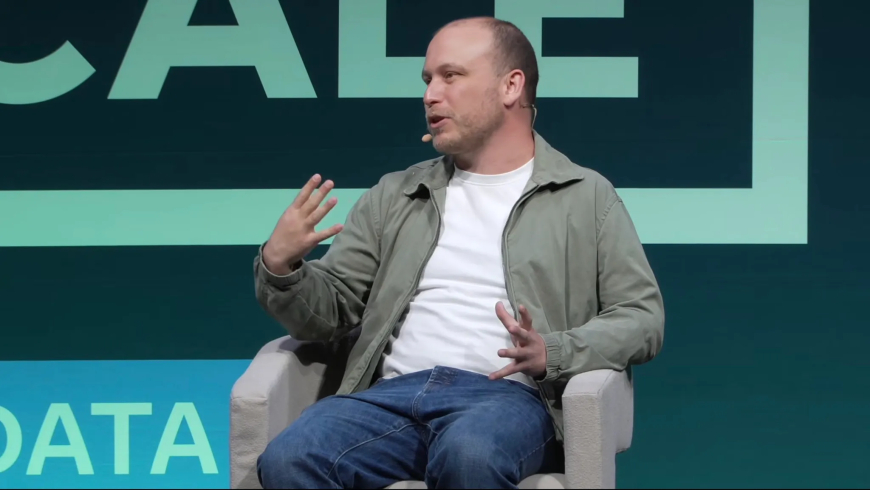
During Meta’s @Scale conference on Friday, Claude Code creator Boris Cherny was asked whether AI loops represented the industry’s next hype cycle or a genuine technological breakthrough.
Cherny responded without hesitation, saying the concept is very real.
He explained that software development has rapidly evolved over the past few years. Developers initially wrote code manually before transitioning to AI agents capable of generating code. According to Cherny, the industry is now entering a new phase in which AI agents are creating prompts for other AI agents that then generate the code themselves. He argued that this shift toward loops is just as significant as the earlier move from handwritten code to AI coding assistants.
Later in his presentation, at around the 32-minute mark in the conference video, Cherny described several looping systems he uses in his workflow. One continuously examines software architecture for potential improvements, while another searches for duplicated abstractions that can be consolidated. These agents submit pull requests just like human developers, and because software projects constantly evolve, the agents continue operating without interruption.
The concept presents a powerful new approach to AI-assisted development, particularly given Cherny’s influence in the field. Until now, much of the focus on agentic AI has centred on managing individual agents by defining clear objectives, monitoring progress, and ensuring they remain within the intended scope. AI loops extend that idea by allowing multiple agents to work continuously in the background, performing ongoing tasks without a defined endpoint. While that requires a significant level of trust in AI systems, rapidly improving models could make this approach an important step toward automating increasingly complex work.
The underlying concept is not entirely new. Recursive loops, where functions repeatedly call themselves until a specific condition is met, have long been a fundamental topic in introductory computer science courses. The difference is that modern AI loops rely on non-deterministic decision-making, with AI subagents determining when a process should conclude rather than relying on fixed stopping conditions. Once developers began assigning tasks to AI systems, some form of recursive AI supervising other AI became almost inevitable.
Unlike traditional programming, however, agentic loops can be remarkably straightforward. One widely discussed technique is the Ralph Loop, named after Ralph Wiggum. The method periodically summarises everything an AI model has completed, then asks whether it has achieved its assigned objective. This helps prevent models from drifting off course during long-running tasks by repeatedly resetting their focus until the work is finished.
AI loops can also be viewed as part of the broader movement toward greater test-time compute. Earlier this month, OpenAI researcher Noam Brown suggested that modern AI models can solve nearly any problem if provided with sufficient computing resources. Under that perspective, one way to complete difficult tasks is to continue allocating compute until an acceptable result is reached. This is especially effective for iterative challenges such as improving software code, where AI systems can repeatedly make incremental enhancements until reaching a desired quality threshold. As in Cherny’s example, the improvements can continue indefinitely as long as computing resources remain available.
That approach, however, comes with high costs. Like other forms of agentic AI, continuous AI loops consume tokens far more rapidly than conventional chatbot interactions. Because these systems are designed to run continuously rather than to stop after a single response, computing expenses can grow without a defined upper limit. While that may benefit companies such as Anthropic, whose business model revolves around selling AI compute, organisations deploying these systems may face substantial operating costs.
Even so, if AI loops are applied to the right types of problems and paired with effective oversight for token usage, model drift, and other common AI challenges, the potential productivity gains could ultimately outweigh the additional expense.
What's Your Reaction?
 Like
0
Like
0
 Dislike
0
Dislike
0
 Love
0
Love
0
 Funny
0
Funny
0
 Angry
0
Angry
0
 Sad
0
Sad
0
 Wow
0
Wow
0