
































Why the US Restrictions on Anthropic AI Models Were Never About Jailbreaking
The US government’s restrictions on Anthropic’s advanced AI models were driven by national security and export control concerns rather than fears of AI jailbreaks. Learn what prompted the policy and its broader impact on the AI industry.
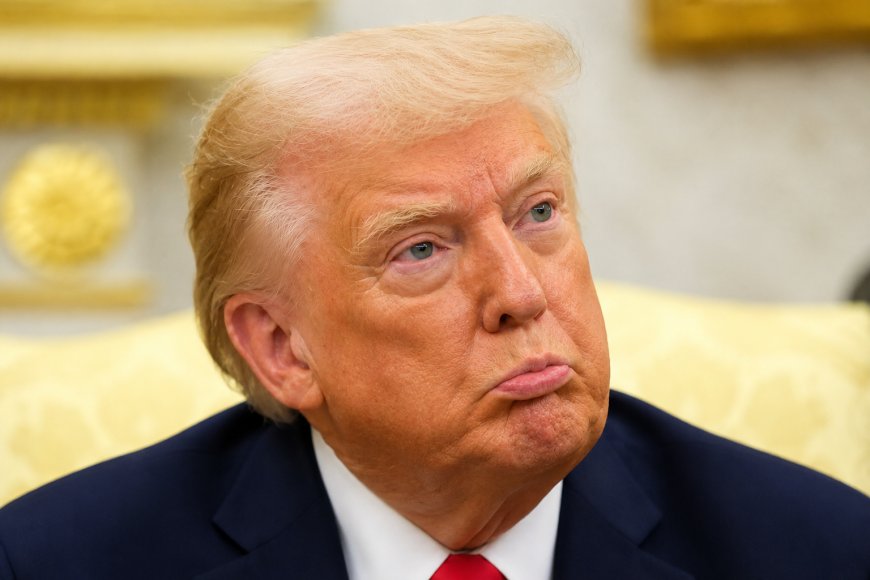
The U.S. government’s enforcement order directed at Anthropic, which ultimately compelled the company to withdraw its latest AI models just before the weekend, could prove to be a significant warning for American technology companies—not only AI developers but the broader software industry as well.
To recap the sequence of events: On Friday afternoon, the U.S. Department of Commerce sent Anthropic a letter invoking an infrequently used export control directive that prohibited non-U.S. citizens, including Anthropic’s own employees, from accessing its Fable 5 and Mythos 5 models. The directive cited an unspecified national security concern. According to Anthropic, the order may be connected to an alleged method of bypassing the models’ safety guardrails. However, it cannot confirm that because the government’s letter reportedly contained no detailed explanation. The document itself has not been released publicly.
In response, Anthropic suspended access to both of its flagship AI models for all users worldwide to ensure compliance with the government’s directive. As a result, the U.S. government was able to force a technology company to take its newest AI systems offline through rapid, unilateral action that did not appear to require judicial approval.
The Trump administration’s intervention on Friday demonstrates that even the rapidly expanding AI industry remains vulnerable to direct government action. It also sends a broader message to technology companies: comply with government directives or risk having products removed from the market.
Citing unnamed sources, Axios reported that tensions between Anthropic and the Trump administration—rather than a purely technical concern involving the AI models—played a significant role in the decision to issue the export control order. The report described the dispute as stemming largely from “personality differences” between the two sides.
Developments that emerged over the weekend have further raised questions about the reasoning behind the government’s decision.
Katie Moussouris, a cybersecurity researcher, industry veteran, and founder of Luta Security, wrote in a blog post that Anthropic recently shared with her a confidential research paper describing an alleged guardrail bypass affecting Fable 5. According to The Wall Street Journal, the paper was authored by security researchers at Amazon. Moussouris said Anthropic sought her independent assessment of the findings.
In her analysis, Moussouris explained how the researchers demonstrated the reported bypass but argued that the technique itself should never have triggered an export control. She said the distinction largely came down to how requests were phrased. Rather than directly asking the AI model to review software for security flaws, the researchers instead asked it to repair vulnerable code. Although the wording differed, she argued the practical outcome remained essentially the same.
“The behaviour described in the paper cannot meaningfully be fixed, and any attempt would only weaken the model for defence,” Moussouris wrote, criticising the export restrictions as rushed, excessive, and fundamentally misguided.
Since then, Moussouris and dozens of leading cybersecurity professionals have publicly urged the Trump administration to withdraw the export control order. In an open letter, they described the decision to remove advanced AI-powered cybersecurity capabilities from defenders as “dangerous.”
Previous U.S. administrations have also faced criticism for broad national security decisions affecting technology. During the 2010s, for example, revisions to export regulations governing cybersecurity tools were drafted so broadly that legitimate vulnerability research and defensive security work risked being unintentionally restricted.
In contrast, critics argue that the current export directive appears more retaliatory than precautionary.
Justin Hendrix, editor of Tech Policy Press, said the administration’s decision is “likely to raise alarms in foreign capitals about the reliability of American AI for critical applications.” According to Hendrix, the broader message is that U.S.-based AI companies may not be able to operate independently of federal government political intervention.
To date, the Trump administration has not publicly explained the precise reason it invoked the export control directive. Questions, therefore, remain unanswered. Did government officials misunderstand the research paper and overreact? Did Amazon chief executive Andy Jassy raise concerns with senior officials that prompted the response, whether out of caution or competitive tension? Was there a misunderstanding during internal discussions, or did the administration use the directive as leverage against Anthropic, a company with which it reportedly already had a strained relationship? It is also possible that officials underestimated the wider consequences of the order and are now attempting to limit the fallout.
As Hendrix observed, “the climate is one of a cloud of suspicion that senior officials are picking favourites based on personal and political factors.” Regardless of the underlying motivation, the outcome has established a significant precedent regarding the extent of influence the U.S. government may seek to exercise over the release and availability of American-developed software.
Today, the action targeted Anthropic. Tomorrow, critics argue, it could just as easily be directed at another technology company.
What's Your Reaction?
 Like
0
Like
0
 Dislike
0
Dislike
0
 Love
0
Love
0
 Funny
0
Funny
0
 Angry
0
Angry
0
 Sad
0
Sad
0
 Wow
0
Wow
0