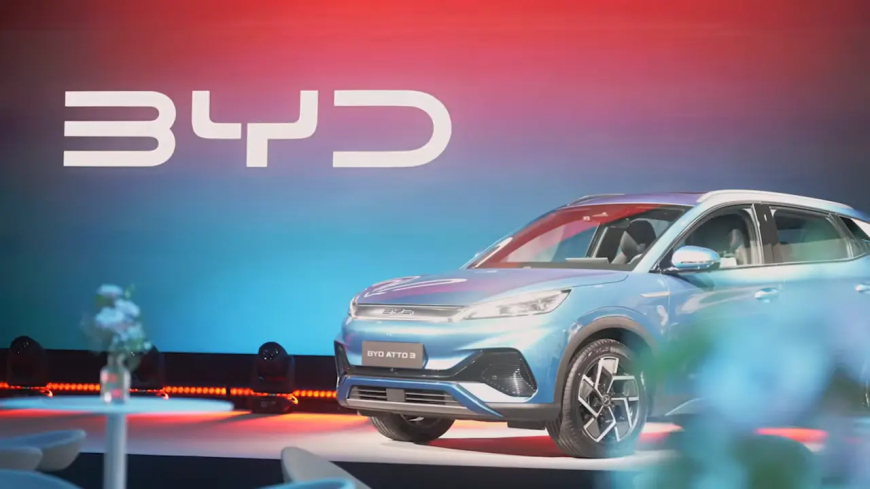
Chinese automaker BYD introduced a new battery pack on Thursday that it says can charge from 10% to 70% in just five minutes. Reaching nearly 100% takes around four additional minutes.
Charging times like that would go a long way toward eliminating one of the main remaining advantages of internal combustion vehicles: refuelling speed. According to BYD, even in extremely cold conditions of –4°F, or –20°C, the battery can charge from 20% to 97% in less than 12 minutes. The new pack, called the Blade Battery 2.0 system, is expected to debut in the Yangwang U7, a full-size luxury sedan.
There is, however, one major limitation to the headline-grabbing figure. The Yangwang U7 sedan — and any future BYD vehicle fitted with this next-generation battery pack — will only be able to achieve those ultra-fast charging speeds when connected to one of BYD’s new Flash Charging EV chargers, which can deliver up to 1.5 megawatts of electricity.
Even so, BYD is likely hoping this eye-catching charging technology will help drive sales and strengthen its position in the ongoing price war among Chinese automakers, many of which are rapidly rolling out newer, more advanced EVs
The Shenzhen-based company was once one of the standout holdings in Warren Buffett’s Berkshire Hathaway portfolio. Buffett’s firm bought a 10% stake in the carmaker in 2008 for $230 million, well before BYD became a recognised Tesla rival and a household name. Berkshire sold its remaining shares in 2025, generating a return of more than 20 times its original investment.
Today, BYD is the largest EV manufacturer in the world — a lead that rivals such as Tesla and several Chinese automakers are eager to challenge. Although BYD remains ahead of competitors such as Li Auto, Xpeng, Xiaomi, and Zeekr, it has recently seen a decline in sales. The company reported that its combined sales volume for January and February 2026 fell by about 36% compared with the same period a year earlier.
Its next-generation battery technology could help the company both win new customers and retain current ones.
The new Blade Battery 2.0 achieves these rapid charging speeds by using lithium iron phosphate (LFP) chemistry. Automakers are increasingly backing LFP because it can reduce EV costs by avoiding expensive materials such as cobalt and nickel. BloombergNEF estimates that LFP battery packs currently cost about $81 per kilowatt-hour, compared with $128 per kilowatt-hour for nickel manganese cobalt, or NMC, packs.
Because LFP is less energy-dense than chemistries like NMC, it cannot store as much energy in the same space, which limits overall driving range. That is why Western automakers have mostly used LFP cells in their more affordable models. But BYD is betting that if charging can be made fast enough, LFP batteries could become acceptable for use in well beyond entry-level electric vehicles.
Before launching Flash Charging, BYD had introduced a 1-megawatt charging setup for an earlier sedan, the Han L. That system used two separate 500 kW charging cables, both of which had to be plugged into the car simultaneously. In comparison, the fastest chargers commonly available in the U.S. and Europe typically top out at around 350 kW, though more 500 kW chargers are now appearing.
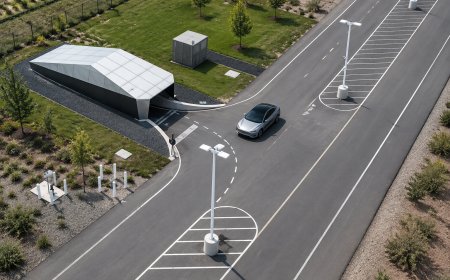
BYD’s Flash Charging stations use cables suspended from overhead towers, allowing them to reach either side of the vehicle. That design should also make the charging process easier, since the cables and plugs are likely quite heavy and difficult to handle safely at that level of power. BYD said it has already completed 4,200 Flash Charging stations across China and is aiming to add roughly 16,000 more before the end of the year. It is worth noting, however, that the company also uses the “Flash” branding for its 1-megawatt chargers. BYD also said it plans to install grid-scale batteries at these charging sites to reduce pressure on the electricity grid.
In the U7 full-size sedan, the battery is rated to provide just over 1,000 kilometres, or 621 miles, of range under the China Light-Duty Vehicle Test Cycle, or CLTC. That testing cycle is generally seen as optimistic. Compared with the more realistic EPA testing standard, CLTC tends to overstate range by roughly 35%. In real-world driving conditions, the vehicle could deliver over 400 miles on a full charge.
That is still less range than the Lucid Air Grand Touring, which the EPA rates at 512 miles from a full 117 kWh battery pack. But if BYD’s system really can add 240 miles of range in five minutes, that kind of comparison may end up mattering a lot less.







































 Like
0
Like
0
 Dislike
0
Dislike
0
 Love
0
Love
0
 Funny
0
Funny
0
 Angry
0
Angry
0
 Sad
0
Sad
0
 Wow
0
Wow
0