
























Even Realities Reaches $1 Billion Valuation After $150 Million Funding Round Backed by Meituan and Tencent.
Even Realities has secured $150 million in fresh funding, led by Meituan and Tencent, bringing its valuation to $1 billion. Learn how the smart glasses startup plans to expand its AI-powered wearable technology and global presence.
The competition in the smart glasses market continues to accelerate. Just last month, Meta and Snap introduced new smart glasses, highlighting the industry’s growing race to combine artificial intelligence with wearable devices. As major technology companies push forward, emerging startups such as Even Realities are establishing themselves as serious competitors.
Even Realities, a Shenzhen-based startup founded three years ago, has secured $150 million in a pre-Series B funding round led by Meituan alongside existing investor Tencent. The latest investment values the company at $1 billion. Founder and CEO Will Wang said that while many competitors are concentrating on camera-equipped smart glasses focused on content creation and AI, Even Realities is taking a different approach by prioritising display-first technology that delivers information directly into the wearer’s field of vision without compromising personal privacy.
The company’s earlier investors include several prominent Chinese firms, among them HSG, formerly known as Sequoia China.
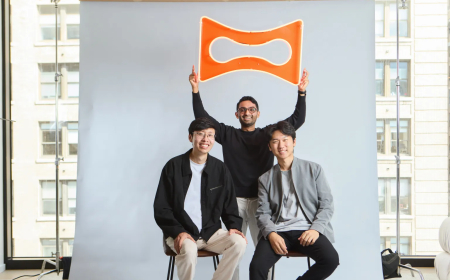
Even Realities was established in 2023 by a team that included several former Apple engineers. Wang previously worked on both the Apple Watch and iPhone, while other co-founders came from technology companies and luxury eyewear brands, including Lindberg. The startup moved quickly after its formation, launching its first product, the Even G1, in 2024. According to Wang, it was the lightest smart glasses on the market at the time to use waveguide display technology.
The company exceeded its own goal of selling 10,000 units and, according to Wang, became the first business in its category to surpass that sales milestone. The strong market response also enabled Even Realities to raise capital more rapidly than expected while expanding its workforce from approximately 30 to 40 employees in 2024 to between 300 and 400 people today.
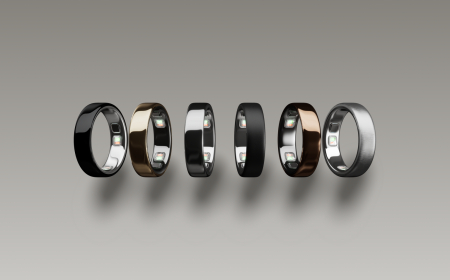
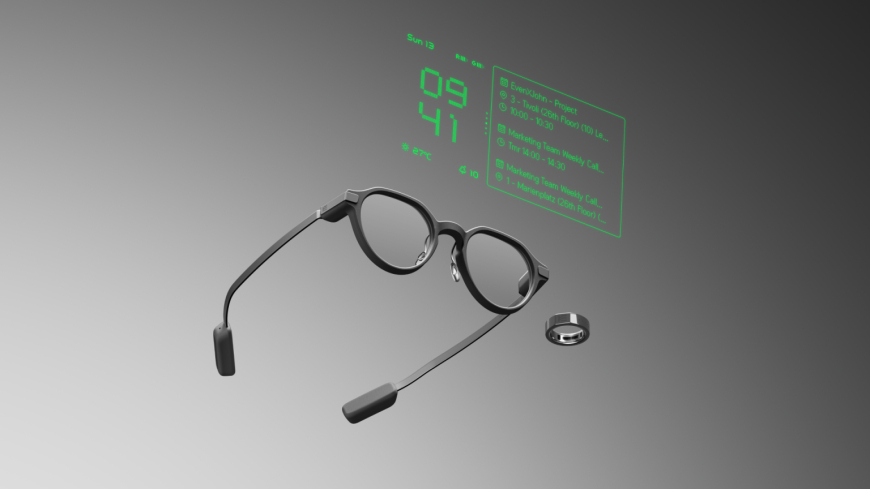
Its newest flagship product, the Even G2, was introduced last November. Unlike many competing smart glasses, the device does not include a built-in camera. Instead, it relies on a heads-up display integrated into the frame to present information directly to the wearer. Navigation is handled through the companion Even R1 smart ring, allowing users to control the interface with simple taps and swipe gestures.
Wang said removing the camera is an important part of the company’s privacy strategy, although it represents only one element of its overall philosophy. He believes smart glasses are likely to become the most personal computing devices people use because they remain on the wearer’s face throughout the day. As a result, both comfort and privacy have been designed into the hardware and software from the beginning. Features such as live language translation convert spoken audio into text without storing voice recordings, and user data is encrypted. At the same time, the company’s infrastructure has been built to comply with Europe’s strict privacy regulations.
Among its most popular features is Conversate, an AI-powered assistant that monitors conversations in real time, explains unfamiliar terminology, suggests follow-up responses, and later synchronises a summary of the conversation to the user’s smartphone.
Despite those AI capabilities, Wang said Even has invested most heavily in optical engineering, arguing that display technology is what truly distinguishes smart glasses from other consumer electronics.
“With a phone or a watch, the display is just a conventional OLED or LCD screen. Smart glasses are the first product category to rely on optical displays, which require an entirely different technology stack; you have to design the microchip, the optics, and the waveguide together. That’s where we’ve invested the most,” Wang said.
To support that strategy, the company developed its own optical platform known as Even HAO, short for Holistic Adaptive Optics. The proprietary system integrates the microchip, waveguide technology, and prescription-lens compatibility from the outset of the design process rather than combining independently developed components later.
More than half of Even Realities’ customers are based in the United States, which has become the company’s fastest-growing market and home to most of its developer community. Although all manufacturing takes place in China across several production facilities, the company currently does not sell its products in the Chinese market. Instead, its primary markets include the United States, Japan, South Korea, Europe, and the Middle East.
“The demand there is significant, so we want to make sure we’re prepared first,” Wang said.
Even positions its products at the premium end of the smart glasses market while still generating strong sales volumes. Wang said the business is already profitable. According to the company, most customers are male professionals aged 30 to 50, and an internal survey found that roughly one-third of users hold executive positions within their organisations.
The Even G2 smart glasses retail for $599 before taxes. Customers who require prescription lenses or choose to add the Even R1 smart ring typically spend an additional $200 to $300, bringing the average purchase price to approximately $1,000.
What's Your Reaction?
 Like
0
Like
0
 Dislike
0
Dislike
0
 Love
0
Love
0
 Funny
0
Funny
0
 Angry
0
Angry
0
 Sad
0
Sad
0
 Wow
0
Wow
0