





































Everbloom Built an AI to Turn Chicken Feathers into Cashmere
Everbloom uses AI technology to create sustainable, biodegradable fibres from poultry feathers and cashmere waste, offering affordable alternatives to polyester and cashmere. Learn how their eco-friendly process is transforming the textile industry by reducing waste and lowering environmental impact.
Cashmere sweaters have become a wardrobe staple, thanks to their soft, lightweight, and warm feel. However, the increasing affordability of cashmere often comes with a catch. Traditionally, cashmere is sourced from the fine undercoat of specific goat breeds. Typically, one goat will produce only four to six ounces (113 to 170 grams) of cashmere per year. As demand grows, this limited supply poses a challenge for the industry.
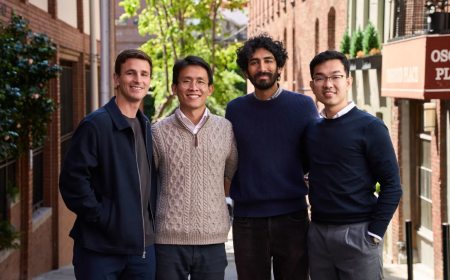
Sim Gulati, co-founder and CEO of Everbloom, has been addressing this challenge by creating a more sustainable and cost-effective alternative to traditional cashmere. He explained, "The producers of raw materials are actually under a lot of stress. With the advent of $50 cashmere sweaters, goats are being sheared more often, leading to a decrease in the quality of the fibre, and creating unsustainable herding practices."
Rather than attempt to change herding practices or convince consumers to buy only high-quality cashmere, Gulati and his team at Everbloom developed an innovative solution: upcycled materials that are nearly indistinguishable from real cashmere. The startup has raised over $8 million in funding from investors such as Hoxton Ventures and SOSV to develop this technology.
Braid.AI: Transforming Waste into High-Quality Fibre
Everbloom developed an AI-powered materials science tool called Braid.AI, designed to fine-tune parameters to create fibres with different properties. While cashmere is the AI's primary target, the system can also replicate other textiles.
The process begins by collecting waste materials from across the fibre supply chain. These include cashmere and wool farms, mills, and even down bedding suppliers. Everbloom plans to expand its collection efforts to other waste streams, including chicken feathers, a material rich in keratin, a key protein in fibre production. All of these waste materials share one common element — they are made of keratin.
Once the waste materials are gathered, they are chopped to size and combined with proprietary compounds. This mixture is then pressed through a plastic extrusion machine, which shapes the material by forcing it through a die. The pellets produced by this process are then fed into spinning machines, which are traditionally used to make polyester fibres. Gulati explains, "That equipment is used for 80% of the textile market, so we are essentially a drop-in replacement."
A New Approach to Sustain "bility
The chemical reactions that transform waste into new fibres occur within these two machines. By adjusting the formulation and the machines' processing, Everbloom can create a variety of fibres that replicate polyester, wool, cashmere, and more. One of the most significant advantages of Everbloom's process is that its fibres are fully recyclable, including the polyethene.
Gulati further emphasised the sustainability of Everbloom's approach, noting that the components used in production are biodegradable. Everbloom is conducting accelerated testing to validate the hypothesis and confirm that the environmental impact of its fibres is significantly lower than that of traditional textiles.
Making Sustainability Affordable
One of Everbloom's main goals is to make its fibres economically viable for both brands and consumers. Gulati rejects the idea of a "sustainable premium," which suggests that eco-friendly products should be priced higher. "For a material to 'be successful — both in the supply chain and for the consumer — you have to have both a product benefit and an economic benefit to everyone who touches the product," he said. "That's what we're aiming for . "That's revolutionising the textile industry by offering an affordable, sustainable, and eco-friendly alternative to traditional materials like cashmere. By using waste products and ensuring all its fibres are biodegradable, the company is setting a new standard for the fashion industry. The hope is that this approach will reduce material costs and provide an accessible, green alternative for consumers and brands alike.
What's Your Reaction?
 Like
0
Like
0
 Dislike
0
Dislike
0
 Love
0
Love
0
 Funny
0
Funny
0
 Angry
0
Angry
0
 Sad
0
Sad
0
 Wow
0
Wow
0