Google announced on Monday a significant update to its NotebookLM research platform, introducing a range of new features and transitioning to Gemini 3.5 as the tool’s default model. The company is also integrating Antigravity-powered software capabilities designed to assist users with research tasks and the creation of various types of content.
The move mirrors Google’s broader strategy of enhancing its products with advanced AI capabilities, similar to how it has expanded coding-related functionality across its search experiences to improve question-and-answer interactions.
According to Google, the latest update allows users to start a conversation about a project directly in NotebookLM, after which the tool can help build a knowledge base by recommending relevant sources via its research features and Google Search. The capability may assist users in locating primary-source material in different languages or in discovering additional content by authors related to their topic of interest.
Previously, NotebookLM required users to upload or provide their own source materials before they could begin building a knowledge repository and extracting insights from it.
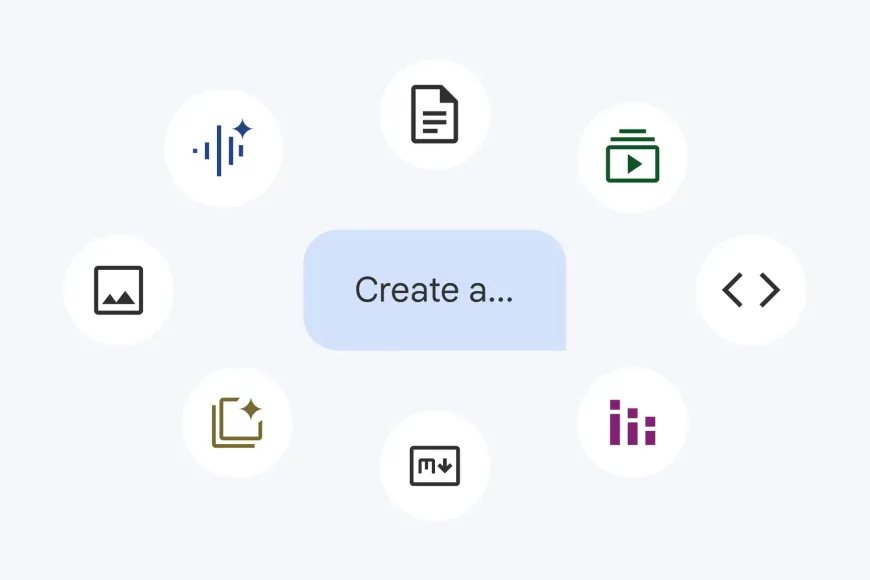
Google also said that users can now provide more detailed instructions when requesting outputs from NotebookLM, enabling the tool to generate content in a variety of formats. In addition, generated results can be edited after creation. The platform now supports exports across multiple formats, including data visualisations and charts in .png and .svg; documents such as PDFs, .docx files, Markdown files, and text documents; Nano-banana-powered images; structured data formats, including .csv and .json; and Microsoft Excel and PowerPoint files.
Last year, Google introduced a “Deep Research” mode to support structured online research. As part of the latest rollout, NotebookLM will now display detailed steps in the chat interface that explain how it reached its conclusions, giving users greater visibility into the reasoning process and an opportunity to verify the generated results.
Google stated that the new capabilities are available starting today for Google AI Ultra subscribers and Workspace business customers with AI Ultra Access or AI Expanded Access. The company said it plans to make the updates available to a broader group of users over time.