





































How a Potential SpaceX IPO Could Expand Elon Musk’s Influence
A future SpaceX IPO could strengthen Elon Musk’s financial position, broaden investor participation, and increase his influence across the space and technology sectors.

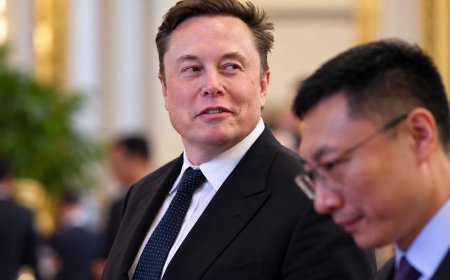
Elon Musk already exerts enormous influence across the companies he leads, but nowhere is that authority more pronounced than at SpaceX. While Musk carries the title of “TechnoKing” at Tesla, his position within SpaceX gives him a level of power rarely seen at a company of its size and valuation.
That degree of control became clearer following the publication of SpaceX’s IPO filing on Wednesday, which outlined how the company intends to operate once it goes public.
After the offering, Musk will continue serving as Chief Executive Officer, Chief Technology Officer, and Chairman of SpaceX’s board. Although his voting stake will decline from its current level of approximately 85%, he is expected to retain more than 50% of total voting power. That majority position effectively allows him to maintain control over board appointments and major corporate decisions, making it extremely difficult for shareholders to challenge his leadership.
The filing also highlights several governance measures that limit the influence of outside investors. SpaceX has adopted provisions that restrict certain shareholder legal actions and benefits from a corporate legal framework in Texas, where the company is incorporated. Texas has emerged as a more business-friendly jurisdiction, particularly after Musk championed moving Tesla’s incorporation from Delaware to the state.
SpaceX directly acknowledges this concentration of authority in its IPO documents, telling prospective investors that the company’s structure will significantly limit or even prevent shareholders from influencing corporate matters or the election of directors.
Greater Control Than Other Tech Founders
Over the past two decades, technology founders have increasingly retained power over public companies through dual-class share structures. Companies such as Google and Meta adopted similar arrangements, granting founders enhanced voting rights relative to ordinary shareholders.
However, legal experts argue that SpaceX’s governance structure goes considerably further.
According to Ann Lipton, a law professor at the University of Colorado, Musk’s influence over SpaceX effectively removes the three primary mechanisms shareholders traditionally use to hold executives accountable.
The first mechanism is voting power.
SpaceX utilises a dual-class share structure in which Musk owns 93.6% of the company’s Class B super-voting shares. These shares will not be offered to public investors during the IPO. Even after the company goes public, Musk is expected to retain majority voting control, qualifying SpaceX as a “controlled company” under stock exchange rules.
Controlled companies may opt out of certain governance requirements, including certain rules related to independent oversight. As a result, ordinary investors purchasing Class A shares will not receive the same governance protections typically available to shareholders in companies fully subject to Nasdaq’s corporate governance standards.
Because Musk will maintain voting control, he will have the authority to approve or reject virtually any proposal requiring shareholder consent. Major strategic decisions—including mergers, acquisitions, and other transformative corporate actions—could ultimately be made without the support of public shareholders.
This represents a significant contrast to Tesla, where Musk controls only about one-fifth of the voting power and has faced ongoing battles over compensation and corporate influence. In recent years, he repeatedly pushed for larger ownership stakes and compensation packages, eventually receiving shareholder approval for an enormous stock-based award.
A Stronger Legal Shield
The second traditional shareholder tool involves litigation.
By incorporating in Texas, SpaceX has established significant barriers to shareholder lawsuits. Under Texas law, investors generally cannot bring derivative lawsuits unless they own at least 3% of the company’s shares. Based on SpaceX’s anticipated valuation of approximately $1.75 trillion, such a threshold would require ownership worth more than $50 billion.
Derivative lawsuits allow shareholders to sue directors or executives on behalf of the company itself. These legal actions have played a major role in corporate governance disputes, including challenges involving Tesla’s executive compensation packages.
SpaceX’s governing documents also direct many disputes either to the Texas Business Court—an institution that began operating only in 2024—or to mandatory arbitration. Legal experts suggest these provisions make shareholder challenges significantly more difficult than under previous legal frameworks.
According to Lipton, Delaware courts have increasingly scrutinised controlled-company structures in recent years. While founders could maintain enhanced voting power through dual-class shares, Delaware’s legal system provided shareholders with additional oversight mechanisms. By relocating corporate governance to Texas, SpaceX is operating within a framework that many observers view as considerably more favourable to controlling shareholders.
Reduced Impact of Shareholder Exit
The third traditional form of shareholder influence is the ability to sell stock and negatively affect a company’s valuation.
Lipton argues that even this mechanism may have less impact in SpaceX’s case due to the company’s expected inclusion in major stock market indexes shortly after its public offering.
SpaceX has successfully advocated for changes to Nasdaq rules governing index additions, accelerating the timeline for inclusion in the Nasdaq 100. Rather than waiting months, the company could potentially join the benchmark index within weeks of its public debut.
Index inclusion often creates substantial demand because large institutional investors and retirement funds automatically purchase shares of companies added to major indexes. As a result, traders frequently buy stocks ahead of index inclusion, anticipating that additional demand will drive prices higher.
According to Lipton, this dynamic may provide support for SpaceX’s stock price even if some investors become concerned about governance issues. Traditionally, dissatisfied shareholders could sell their holdings, reducing the company’s valuation and applying pressure on management. However, automatic institutional buying could offset some of that impact.
Not everyone agrees with that assessment. Chan Ahn, a former executive at Goldman Sachs and JPMorgan and the current CEO of the tokenised private equity company Tessera, acknowledged that rapid index inclusion could support SpaceX’s valuation. Nevertheless, he noted that investors can still sell their shares if they disagree with the company’s governance structure.
While that option remains available, critics argue that its effectiveness as a disciplinary tool may be diminished compared with traditional public companies.
The Financial Rewards Ahead
Beyond maintaining control, Musk also stands to benefit financially from SpaceX’s future growth on a scale rarely seen in corporate history.
The IPO is expected to significantly increase his personal wealth, potentially positioning him as the world’s first trillionaire. In addition, SpaceX has awarded Musk a compensation package consisting of one billion Class B shares.
Those shares are tied to ambitious performance conditions. They will not fully vest unless SpaceX reaches a valuation of $7.5 trillion and achieves one of Musk’s most ambitious long-term goals: establishing a permanent human settlement on Mars with at least one million residents.
Although that objective may appear extraordinarily distant, the award's structure still provides Musk with substantial advantages before the vesting requirements are met.
According to documents attached to the IPO filing, Musk retains voting rights associated with these shares even before they vest. He can also use them as collateral when securing loans, a strategy frequently employed by ultra-wealthy individuals to access liquidity without selling stock and triggering taxable gains.
Technically, borrowing against those shares requires board approval. However, because Musk controls the board, any such decision would ultimately remain under his influence.
If the shares are eventually sold, they convert into ordinary common stock. Yet the filing also notes that Musk may transfer them into trusts while preserving their enhanced voting rights.
That provision has fueled speculation that SpaceX’s governance structure could extend beyond Musk himself. Given his large family and the ability to preserve voting power through trust arrangements, some observers believe the company’s current structure may allow for long-term family influence over SpaceX well into the future.
As SpaceX moves toward what could be the largest IPO ever, investors are presented with a company that combines extraordinary growth ambitions with an unusually concentrated leadership structure. The filing makes clear that while public shareholders may gain exposure to one of the world’s most valuable private companies, meaningful control will remain firmly in Musk’s hands.
What's Your Reaction?
 Like
0
Like
0
 Dislike
0
Dislike
0
 Love
0
Love
0
 Funny
0
Funny
0
 Angry
0
Angry
0
 Sad
0
Sad
0
 Wow
0
Wow
0