
































New Startup Aims to Solve Robotaxi Cleaning and Charging Challenges
A new startup is developing infrastructure that automatically helps robotaxis recharge, clean, and prepare for their next trip, reducing downtime and improving autonomous fleet efficiency.
Walk through the streets of San Francis,, co and it’s easy to spot driverless vehicles travelling without passengers, either waiting for someone to book a ride or making their way to distant depots for charging and cleaning. These empty trips, known in the industry as deadhead miles, are among the biggest obstacles to profitability for robotaxi operators.
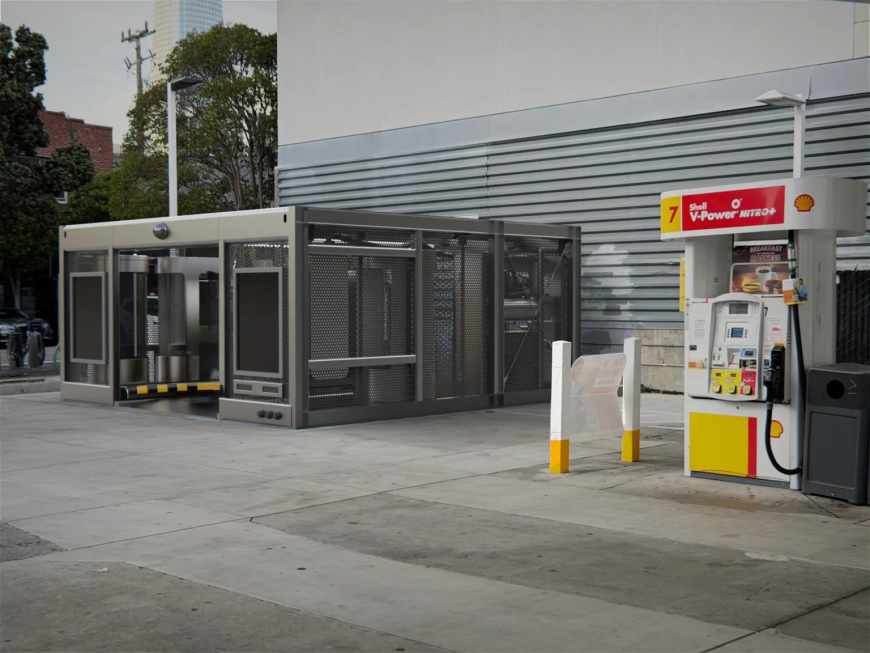
Aseon Labs, a startup based in Redwood City, California, believes it has a solution. The company is developing automated service pods, each roughly the size of a parking space, that can be distributed across cities to inspect, clean, and recharge autonomous taxis. Described by the company as robotic pit stops for the robotaxi industry, the concept has already attracted strong investor interest.
Aseon Labs has secured $10 million in seed funding through a round led by Crane Venture Partners. The investment also included participation from Y Combinator, Expa—the venture firm founded by Uber co-founder Garrett Camp—Robin Hood Ventures, and Founders Capital. Several angel investors also joined the round, including serial entrepreneur and former Google executive Adrian Aoun, Mercury founder and CEO Immad Akhund, Zimride co-founder Rajat Suri, and operators and founding team members from Anthropic, Nuro, Turo, and Revolut.
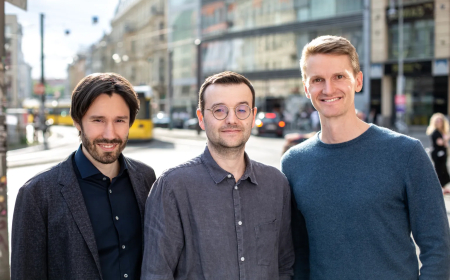
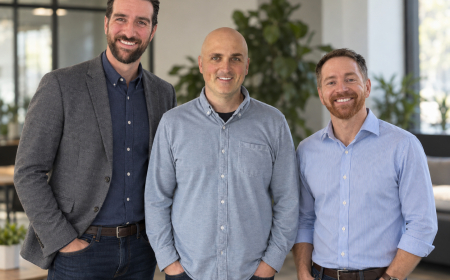
The company remains in its early development phase. According to Aseon Labs co-founder and CEO George Kalligeros, the newly raised capital will fund the construction of five prototype pods, expand the company’s six-member robotics and engineering team to around twelve employees, and help secure the locations required to establish its service network.
“To reach economic parity with ride-hailing—which is where we need to get with self-driving cars—and to stop really subsidising the cost, you need the utilisation to go up,” Kalligeros said. “You need the robotaxi in continuous operation during the entirety of the demand curve of the day.”
The company’s core argument is that a citywide network of distributed autonomous service pods would dramatically reduce deadhead miles and ultimately help robotaxi operators build profitable businesses.
Neither Kalligeros nor co-founder and Chief Operating Officer Dan Keene came from the autonomous vehicle sector. Instead, they bring extensive experience in developing and scaling businesses that combine hardware with real estate infrastructure. Before launching Aseon Labs, Kalligeros worked as a mechanical design engineer at Bentley Motors and Tesla. In 2016, he and Keene founded Pushme, a startup focused on battery-swapping infrastructure for micromobility fleets. Pushme was expanding its battery-swap network across Europe before Tier Mobility acquired it in January 2020.
“The parallel I’ll draw is that SoftBank basically tasked us with putting this across as many markets as made sense for Tier within a very short and compressed period of time,” Kalligeros said. “The playbook became: how do we sprinkle the locations across the centre of the city, where it makes sense, but at the same time, make it easy to deploy as non-permanent infrastructure?”
Aseon Labs is now applying that same strategy to the autonomous vehicle industry.
While studying the market, the founders visited autonomous vehicle depots where robotaxi fleets undergo inspections, maintenance, cleaning, and charging. Because land near city centres is expensive, many operators locate these facilities farther from the areas where most ride-hailing demand is concentrated.
“Depot infrastructure is the key requirement for the launch of a new city for any AV operator,” Kalligeros said. “And what happens in the depot right now—the operational backbone of autonomy, really—is not fully baked.”
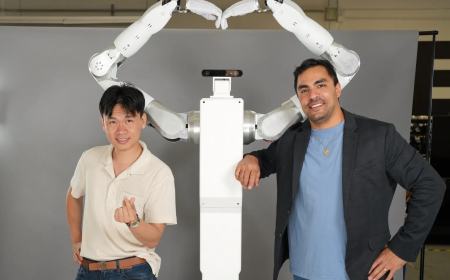
That led the founders to develop compact, self-powered, autonomous service pods that can be positioned throughout a city and easily relocated when necessary. Each unit is equipped with cameras for vehicle inspections and robotic arms capable of retrieving forgotten belongings and cleaning vehicle interiors. Since the pods are classified as temporary structures, Aseon Labs can avoid lengthy permitting procedures while retaining the flexibility to move units if a particular location fails to deliver the expected results.
The pods are designed to operate on propane generators or other portable power sources, and they can also connect to existing electrical infrastructure through partnerships with EV charging providers. According to Kalligeros, the long-term goal is for the units to function autonomously, though the first deployments will include on-site staff.
Aseon Labs is also deliberately avoiding attempts to automate every possible scenario. Instead, the company relies on computer vision and AI—particularly vision-language-action models commonly used in modern robotics—to identify situations the system should leave to human workers. For instance, if cameras detect melted chocolate on a vehicle’s rear seat, the robotic arm will avoid attempting to clean it because doing so could spread the stain. The vehicle would instead be recharged and sent directly to the operator’s central depot, where a human technician can address the issue.
Although Aseon Labs has not yet signed agreements with any robotaxi operators, Kalligeros said the concept has generated considerable industry interest. “Pretty much everyone wants to try it,” he said.
What's Your Reaction?
 Like
0
Like
0
 Dislike
0
Dislike
0
 Love
0
Love
0
 Funny
0
Funny
0
 Angry
0
Angry
0
 Sad
0
Sad
0
 Wow
0
Wow
0