




























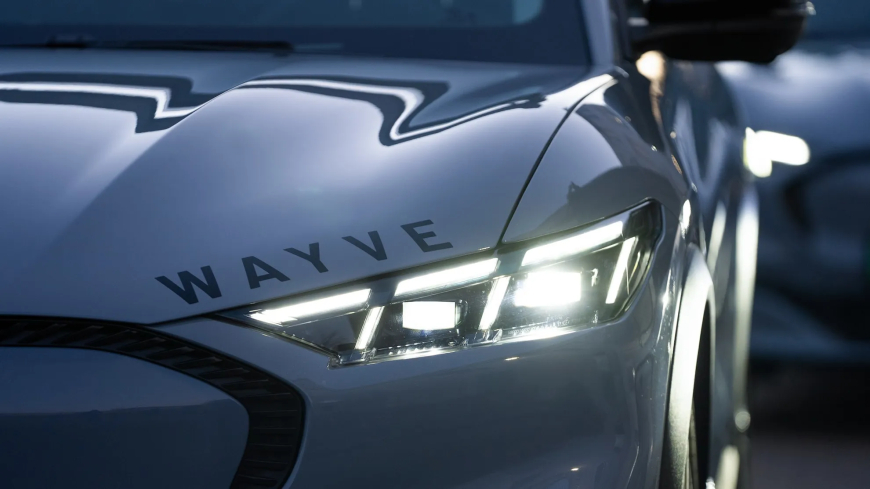
Wayve Opens $85M Employee Share Sale at $8.5 Billion Valuation
Wayve has launched an $85 million employee tender offer at an $8.5 billion valuation, allowing staff to sell vested shares while strengthening talent retention and investor confidence.
Employees have to wait years for an acquisition or public listing; many companies are using tender offers as a retention strategy. By allowing employees to realise some of the value of their equity, startups hope to encourage key talent to remain with the company rather than leave for competitors or launch new ventures after their stock options vest.
Several high-profile AI startups have recently completed similar employee liquidity programmes. These include Decagon, which develops AI customer service agents for companies such as Duolingo and Hertz; ElevenLabs, known for its AI voice generation and speech synthesis technology; Linear, a project management platform designed for software teams; and Clay, a sales and marketing automation company that has completed two employee tender offers within the past nine months.
Such liquidity events have become possible because investors remain eager to acquire additional stakes in fast-growing AI businesses, even at premium valuations, expecting those companies to become significantly more valuable in the future.
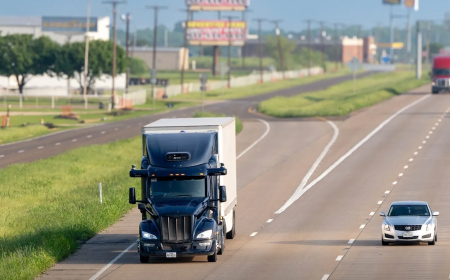
Wayve differentiates itself through a self-learning approach to autonomous driving. Instead of relying on pre-built high-definition maps like many competing self-driving systems, the company’s software uses an end-to-end neural network that learns driving behaviour directly from real-world data, an approach its founders compare to how humans learn to drive through experience.
As part of its ambition to develop a general-purpose AI driving system capable of operating across different countries, vehicle types, and road environments, Wayve has expanded rapidly over the past year. The company has more than doubled its workforce, growing to approximately 1,200 employees.
Looking ahead, Wayve plans to begin robotaxi pilot programmes with Uber later this year. Separately, the company is preparing to integrate its AI-powered driving software into Nissan’s next-generation driver assistance systems beginning in 2027.
What's Your Reaction?
 Like
0
Like
0
 Dislike
0
Dislike
0
 Love
0
Love
0
 Funny
0
Funny
0
 Angry
0
Angry
0
 Sad
0
Sad
0
 Wow
0
Wow
0