




































Indian Entrepreneur Invests $30 Million to Launch AI-Powered Alternative to Microsoft Office.
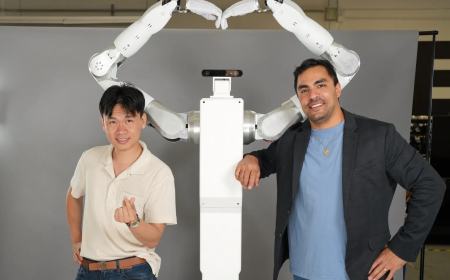
Indian entrepreneur Bhavin Turakhia has invested $30 million of his own money to launch Neo, an AI-native productivity platform designed to compete with Microsoft Office and Google Workspace by reimagining workplace software for the AI era.

Indian entrepreneur Bhavin Turakhia is making a $30 million personal investment, believing that the enterprise software market still has room for a new AI-native platform. His latest startup, Neo, is based on the idea that workplace applications created before the AI era cannot simply be enhanced with chatbot features—they need to be rebuilt from the ground up for artificial intelligence.
Turakhia, 46, has a long history of launching ambitious technology ventures. Over the past two decades, he has co-founded companies including Directi, Radix, Titan, and banking software provider Zeta. Many of those businesses were initially funded with his own money before attracting outside investors, and he is following the same strategy with Neo.
Speaking to TechCrunch, Turakhia said he is personally financing the venture because he believes artificial intelligence represents a technological shift significant enough to justify creating an entirely new generation of workplace software rather than modifying existing products.
“If you want to build an iPhone, you can’t take the parts of a Nokia and somehow convert them into an iPhone,” he said.
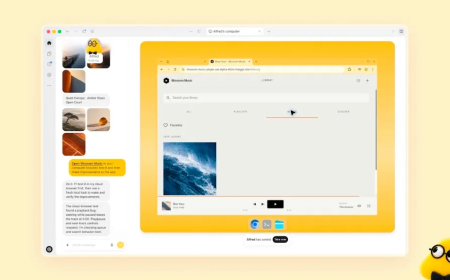
Neo was launched internally in April this year as an enterprise work platform that combines project management, document creation, file storage, and artificial intelligence within a single product. According to Turakhia, the objective is to make AI an active contributor to employees’ everyday work rather than a separate assistant users consult independently.
Turakhia believes many established software companies face an inherent disadvantage because they are attempting to integrate AI into products that were originally designed before the rise of generative AI. He said Neo was built specifically for the AI era and remains model-agnostic, allowing enterprise customers to switch between AI models rather than becoming dependent on a single provider.
He is not the only entrepreneur pursuing this strategy. Investor Chamath Palihapitiya also initially financed enterprise AI coding startup 8090 with his own capital before the company announced a $135 million funding round earlier this week.
Even so, Turakhia is entering one of the most competitive segments in the technology industry. Major players, including Microsoft, Google, and Salesforce, are rapidly embedding AI capabilities into their workplace software. At the same time, companies ranging from AI leaders such as Anthropic and OpenAI to productivity-focused startups like Notion and Superhuman are all competing to redefine how businesses incorporate AI into their daily operations.
Turakhia, however, argues that enterprise software has never been a winner-takes-all industry. In his view, capturing only a small percentage of worldwide enterprise AI spending would still create a business larger than any he has previously built.
“Even if we end up with 2% to 5% market share, that’s larger than anything I’ve built so far,” he said.
Over the past several months, Neo has been used internally across Turakhia’s businesses, including Zeta. The company now plans to begin rolling out the platform to mid-sized organisations over the coming months, initially focusing on knowledge workers in technology, consulting, and professional services.
Turakhia also said Neo’s first version was developed in just three months, with artificial intelligence playing a major role throughout the software development process. He estimates that before the arrival of generative AI, completing the same work would have required well over a year and a substantially larger engineering team.
The Bengaluru-based startup currently has a workforce of around 45 employees, including 18 software engineers. Turakhia told TechCrunch that Neo expects to expand to roughly 100 employees by the end of the year, with most of its new hires focused on AI specialists and software engineers.
What's Your Reaction?
 Like
0
Like
0
 Dislike
0
Dislike
0
 Love
0
Love
0
 Funny
0
Funny
0
 Angry
0
Angry
0
 Sad
0
Sad
0
 Wow
0
Wow
0