
































Memories AI develops visual memory systems for wearables and robotics
Memories AI is creating a visual memory layer for wearables and robots, enabling devices to store, recall, and understand real-world interactions in real time.
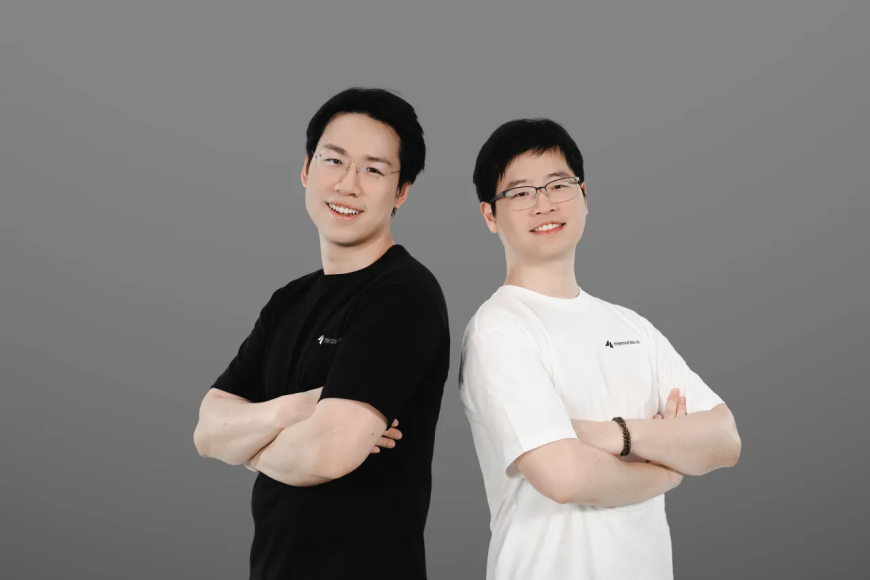
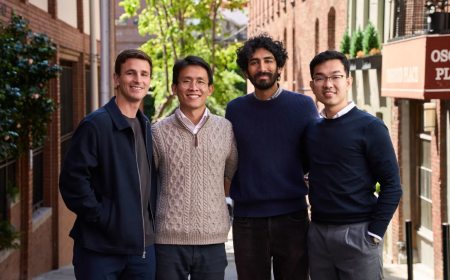
Shawn Shen believes that for artificial intelligence to operate effectively in the physical world, it must be able to remember what it sees. His company, Memories.ai, is working to develop that capability by leveraging Nvidia’s AI technologies to build infrastructure that enables wearables and robots to store and recall visual experiences.
At Nvidia’s GTC conference on Monday, Memories.ai announced a collaboration with the semiconductor company. As part of the partnership, the startup is using Nvidia’s Cosmos-Reason 2 — a reasoning-based vision-language model — along with Nvidia Metropolis, a framework for video search and summarisation, to further advance its visual memory technology.
Shen explained that he and his co-founder and CTO, Ben Zhou, came up with the idea while working on the AI system behind Meta’s Ray-Ban smart glasses. During that work, they began questioning how users would meaningfully interact with such devices if they couldn’t easily retrieve and revisit the visual data being recorded.
After exploring the market and finding no existing solutions focused on visual memory for AI, they decided to leave Meta and build the technology themselves.
“AI is already doing really well in the digital world. What about the physical world?” Shen said. “AI wearables, robotics need memories as well. … Ultimately, you need AI to have visual memories. We believe in that future.”
The concept of AI memory itself is still relatively recent. OpenAI introduced memory features to ChatGPT in 2024 and refined them further in 2025. Similar capabilities have also been introduced by Elon Musk’s xAI and Google’s Gemini. However, Shen pointed out that most of these developments focus on text-based memory, which is easier to structure and index but less useful for systems that rely on visual input to interact with the real world.
Memories.ai, founded in 2024, has raised a total of $16 million so far. This includes an $8 million seed round completed in July 2025 and an additional $8 million extension. The funding was led by Susa Ventures, with participation from Seedcamp, Fusion Fund, Crane Venture Partners, and others.
Shen said that building a functional visual memory system requires two key components: infrastructure capable of embedding and indexing video data in a format that can be stored and retrieved efficiently, and sufficient training data to teach the system how to interpret and recall visual information.
To address this, the company launched its large visual memory model (LVMM) in July 2025. Shen described it as a smaller-scale version of Gemini Embedding 2, a multimodal model designed for indexing and retrieval introduced earlier this month.
For gathering training data, Memories.ai developed its own hardware device called LUCI. Worn by designated “data collectors,” the device captures video used to train the model. Shen noted that the company has no intention of becoming a hardware manufacturer or selling these devices. Instead, they created LUCI because existing off-the-shelf video recorders prioritized high-definition footage at the cost of efficiency and battery life, which did not align with their needs.
The company has since released a second-generation version of its LVMM and has partnered with Qualcomm to run the technology on Qualcomm’s processors starting later this year.
Memories.ai is also collaborating with several major wearable technology companies, although Shen declined to name them. While there is already some commercial interest, he believes the larger opportunity lies ahead as the markets for wearables and robotics continue to develop.
“In terms of commercialization, we are more focused on the model and the infrastructure, because ultimately we think the wearables and robotics market will come, but it’s probably just not now,” Shen said.
What's Your Reaction?
 Like
0
Like
0
 Dislike
0
Dislike
0
 Love
0
Love
0
 Funny
0
Funny
0
 Angry
0
Angry
0
 Sad
0
Sad
0
 Wow
0
Wow
0