

































Mira Murati returns to public view with a measured approach
Former OpenAI executive Mira Murati is re-emerging in the AI industry spotlight, taking a cautious approach as interest in AI leadership and innovation continues to grow.
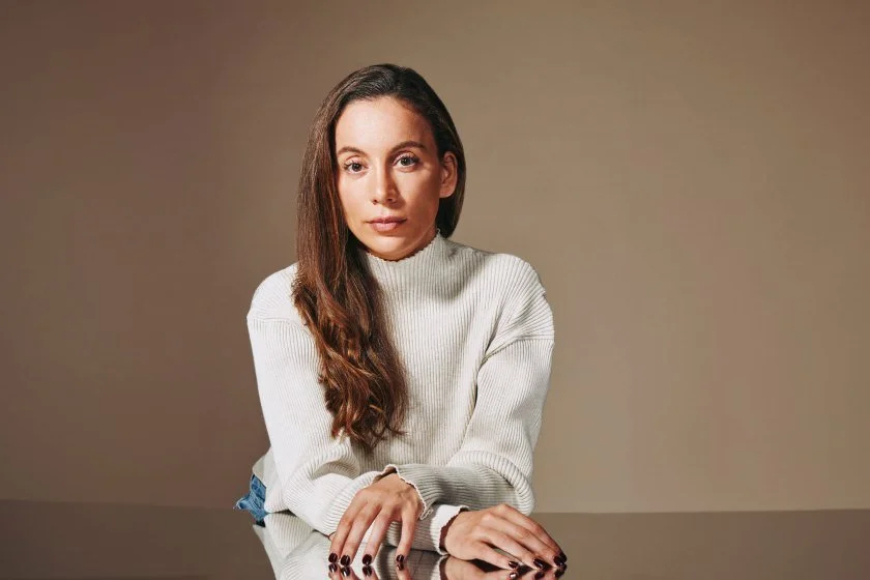
Mira Murati has never been known as a highly visible public figure. During her time at OpenAI, she played a central leadership role but rarely served as the company’s primary spokesperson. Since launching her own venture, Thinking Machines Lab, she has maintained an even lower profile. That is why her appearance at a Bloomberg event in San Francisco on Thursday, marking her first major media interview in roughly a year and a half, attracted considerable attention, despite her careful approach to discussing plans.
The timing of the appearance appears deliberate. Over the last eighteen months, Thinking Machines Lab has largely operated out of the spotlight, focusing on fundraising, recruiting researchers, and developing products. So far, the company has released Tinker, an API designed to fine-tune open-source AI models, while continuing to build its broader vision behind the scenes.
Meanwhile, the competitive landscape has only become more intense. OpenAI, where Murati spent six years and served as chief technology officer for two of those years, remains at the centre of constant media attention. Anthropic has continued to gain momentum across the AI industry. At the same time, Elon Musk’s AI venture xAI has become increasingly prominent after being integrated into SpaceX ahead of the company’s anticipated public offering. Against that backdrop, remaining entirely out of public view offers diminishing advantages. Even as a growing company, you need visibility to remind the market of your presence.
Murati used the Bloomberg interview to provide a glimpse into Thinking Machines Lab’s direction without revealing too much. She discussed what the company calls “interaction models,” describing them as a different approach to AI interfaces. Unlike most current AI systems that rely on a simple prompt-and-response structure, these models are designed to process continuous streams of text, audio, and video data at approximately 200-millisecond intervals.
According to Murati, the objective is to create systems that can better understand the natural flow of human communication, including interruptions, mid-sentence corrections, pauses for reflection, and other subtle conversational cues that occur in real time. However, she emphasised that the technology remains in its early stages and stopped short of providing a concrete timeline for a public launch.
The discussion also revisited the period that brought Murati into the public spotlight more than at any other point in her career: the turbulent week in November 2023 when OpenAI’s board removed Sam Altman as chief executive and appointed Murati as interim CEO.
Reflecting on that period, often referred to internally as “the blip,” Murati said she felt confident in the decisions she made at the time. She explained that protecting both the organisation’s mission and its employees provided a consistent framework for navigating an exceptionally uncertain situation. From her perspective, those priorities helped guide decisions that may have appeared chaotic to outside observers.
Murati suggested that without her involvement during those critical days and the immediate aftermath, OpenAI could have faced far greater instability. At the same time, she acknowledged that acting with clear intentions does not necessarily guarantee clear outcomes. Looking back, she said she would have sought more information and advocated for a more structured transition process before major decisions were implemented.
One topic she avoided addressing directly was whether she believed the outcome of that episode was positive. When asked if she still trusts Altman, Murati chose not to answer directly, instead shifting the conversation toward broader concerns about governance across the AI industry.
She argued that the issue extends beyond any one individual or organisation. In her view, too many critical decisions in artificial intelligence are concentrated in the hands of too few people. While leadership quality certainly matters, she suggested that stronger governance structures and accountability mechanisms are equally important. Organisations can drift from their original intentions, and even capable leaders can make mistakes. Murati indicated that the industry has often focused more on personal trust than on building durable systems of oversight.
The interview also touched on the departures of several notable researchers from Thinking Machines Lab in recent months, an issue Murati has rarely addressed publicly. She downplayed concerns, explaining that creating a frontier AI company from the ground up naturally accelerates organisational changes that might otherwise take several years.
Murati also acknowledged the role of compensation in today’s AI talent market, where increasingly large financial packages have become commonplace. However, she suggested that money alone rarely determines career decisions. Drawing laughter from the audience, she remarked that when she starts her day, her focus is not on defeating competitors but on building valuable technology.
The conversation eventually turned toward broader questions surrounding artificial intelligence and its long-term impact on society. Concerns about job displacement, economic disruption, and the misuse of AI systems continue to dominate public discussions, including fears that advanced technologies could be used to facilitate dangerous activities.
Murati responded with characteristic caution. Born in Albania and speaking with a subtle Eastern European accent, she rejected both extreme optimism and extreme pessimism regarding AI’s future. According to her, neither a utopian nor a dystopian outcome is inevitable.
Instead, she argued that society is currently at a pivotal moment where the choices made by governments, companies, researchers, and citizens will shape the direction artificial intelligence ultimately takes. Nevertheless, she cautioned that if people relinquish oversight too early and allow systems to develop without sufficient human guidance, the future could evolve in ways that are dramatically different from today — and not necessarily for the better.
Her appearance offered few dramatic announcements, but it provided a rare glimpse into the thinking of one of the AI industry’s most influential yet least publicly visible leaders as she continues building Thinking Machines Lab while reflecting on the challenges and responsibilities facing the next generation of artificial intelligence.
What's Your Reaction?
 Like
0
Like
0
 Dislike
0
Dislike
0
 Love
0
Love
0
 Funny
0
Funny
0
 Angry
0
Angry
0
 Sad
0
Sad
0
 Wow
0
Wow
0