




























Rivian Launches Customer Deliveries of Its New R2 Electric SUV
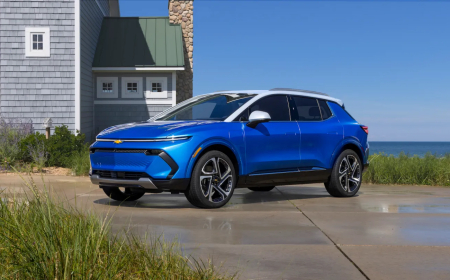
Rivian has officially begun customer deliveries of the R2 electric SUV, a more affordable EV designed to expand the brand’s reach. The R2 plays a key role in Rivian’s growth strategy, combining advanced technology, strong performance, and competitive pricing for mainstream buyers.
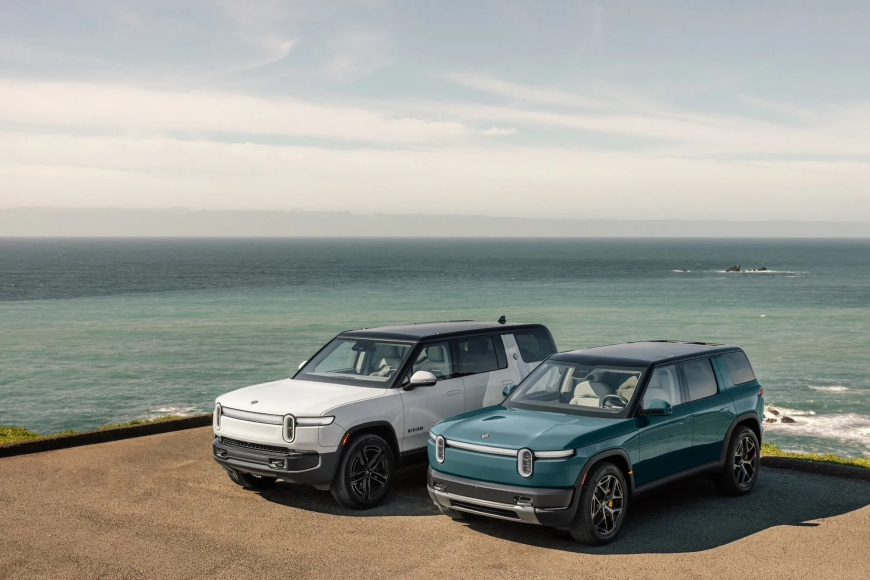
Rivian officially started delivering its new R2 electric SUV to paying customers on Tuesday, marking a major milestone as the EV maker pushes toward larger-scale production and broader market adoption.
Founder and CEO RJ Scaringe has described the R2 as “maybe the most important thing we’ve launched to date,” highlighting its significance not only for Rivian’s growth but also for the company’s long-term autonomous vehicle ambitions.
Priced from around $58,000, the R2 brings many of the features and design elements of Rivian’s larger R1 SUV into a smaller and more affordable package. Rivian also plans to introduce a version priced below $50,000 in 2027, followed by an even lower-cost model expected to start at around $45,000 later that year.
The company aims to rapidly increase production and deliveries during the second half of 2026. Rivian has said it expects to deliver between 20,000 and 25,000 R2 SUVs before the end of the year. Achieving that target would make the R2 one of the fastest-scaling EV launches in U.S. history.
Looking ahead, Rivian plans to produce and sell hundreds of thousands of R2 vehicles annually. Manufacturing has already begun at the company’s plant in Normal, Illinois, while a second factory under construction in Georgia is expected to begin operations in late 2028.
The R2 arrives during a challenging period for the U.S. electric vehicle market. The Trump administration has eased environmental regulations that encouraged automakers to transition away from gasoline-powered vehicles. At the same time, Congress eliminated the $7,500 federal EV tax credit that helped make electric cars more affordable. Several traditional automakers have also scaled back or delayed EV plans, and Tesla has recently reported declining sales.
At the same time, global EV demand continues to grow, particularly in markets where lower-cost electric vehicles are becoming increasingly available. Chinese automakers have expanded production of affordable EVs, prompting some countries to reconsider import policies. Earlier this year, Canada reduced tariffs on Chinese-made electric vehicles to address rising vehicle costs.
Scaringe has framed these market conditions as an opportunity for Rivian. With fewer new EV models entering the U.S. market, the R2 has the potential to become one of the most attractive options available to consumers.
Rivian is also placing significant emphasis on autonomous driving capabilities. The company outlined plans late last year to gradually expand the R2’s self-driving features, with the long-term goal of creating a vehicle capable of fully autonomous operation.
That strategy received a major boost in March when Uber announced a deal worth up to $1.25 billion with Rivian. The agreement could see as many as 40,000 R2 vehicles deployed as robotaxis on Uber’s ride-hailing platform in the coming years.
As Rivian begins deliveries, the R2 is expected to play a central role in the company’s efforts to expand production, reach new customers, and strengthen its position in the evolving electric and autonomous vehicle markets.
What's Your Reaction?
 Like
0
Like
0
 Dislike
0
Dislike
0
 Love
0
Love
0
 Funny
0
Funny
0
 Angry
0
Angry
0
 Sad
0
Sad
0
 Wow
0
Wow
0